Key takeaways:
- Russia said it stopped firing toward Kherson at 01:00 GMT Tuesday; Ukraine’s human rights commissioner confirmed the ceasefire had begun.
- A White House statement released Friday said Melania Trump secured an agreement to allow aid into Oleshky and prepare a safe passageway for civilians.
- Al Jazeera reported that up to 2,000 people remain in Oleshky; the BBC reported a Ukrainian estimate of some 6,000 in the town and surrounding areas.
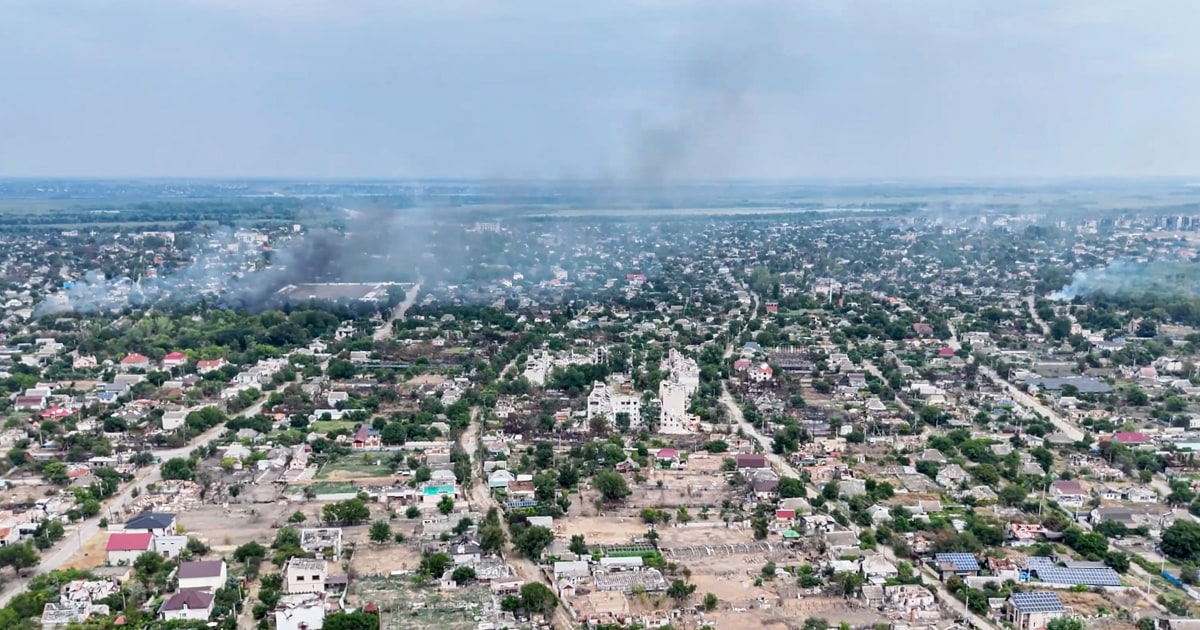
A ceasefire took effect Tuesday around the Russian-occupied Ukrainian town of Oleshky, clearing the way for a humanitarian mission after months of warnings that residents were running short of food and medicine.
Russia’s Defence Ministry said it stopped firing toward the Ukrainian-held city of Kherson, across the Dnipro River from Oleshky, at 01:00 GMT to prepare for the operation. Ukraine’s human rights commissioner, Dmytro Lubinets, confirmed that the ceasefire had begun. “As head of the Ukrainian negotiating team, I confirm that the Ukrainian side is honouring its commitments,” he wrote on Facebook.
The White House said in a statement released Friday that US First Lady Melania Trump had secured an agreement for Ukraine and Russia to temporarily stop military action in Oleshky, allowing aid to enter and preparations to begin for civilian evacuations through a designated safe passageway. Al Jazeera reported that Pope Leo XIV was also involved in securing the agreement.
Doctors, medicine, food and water are expected to reach the town before evacuation corridors open, according to negotiators cited by Al Jazeera. The White House said civilian representatives from both sides would visit residents in their homes to assess what assistance they need.
Oleshky, on the Russian-held bank of the Dnipro, had about 24,000 residents before Russian troops seized it in the first days of the February 2022 invasion. Accounts differ on how many people remain. Al Jazeera reported that up to 2,000 are still in the town and, according to the United Nations, have been unable to leave because of mines and drone attacks. The BBC reported that Ukraine estimates some 6,000 people remain in Oleshky and its surrounding areas; the BBC also reported that 200 children are among those still there.
Melania Trump said the remaining population was primarily elderly and urgently needed medical care, medicine, food and clean water. “The people of Oleshky have limited electricity, live amid mined roads, and endure regular military attacks,” she said in the White House statement.
The United Nations Human Rights Monitoring Mission in Ukraine said no food deliveries had reached Oleshky since the end of May, NBC News reported. NBC said people who escaped or spoke with relatives in the town described residents relying on homegrown produce, while others had reportedly resorted to eating grass. The Kremlin acknowledged last month that food and medical supplies were not getting through and said its military was working to address the problem.
Kyiv accuses Russian forces of mining roads around Oleshky and using residents as human shields. Russia blames Ukrainian drone strikes for what it calls a siege that has blocked aid, according to NBC News. The town has also suffered extensive war damage and flooding after the destruction of the nearby Kakhovka Dam in 2023, Al Jazeera reported.
The duration of the truce remains unclear. Al Jazeera reported that it is due to run through Saturday or longer, while NBC News said neither military had specified an end date. Ukrainian President Volodymyr Zelenskyy said Sunday that it could last several days while Russian forces clear mines and Ukrainian forces verify that routes are safe. He also voiced concern that Russia would try to steer evacuees toward its territory.







Be First to Comment