Key takeaways:
- Jamaica’s petition asks whether slavery in Jamaica was legal under English law, whether it violated international law and whether Britain has a legal duty to provide redress.
- Buckingham Palace said King Charles has a constitutional role in the petition process but no role in deciding the substance of the claim.
- Grange will also meet British Museum officials to discuss returning cultural artefacts taken from Jamaica during the colonial era.
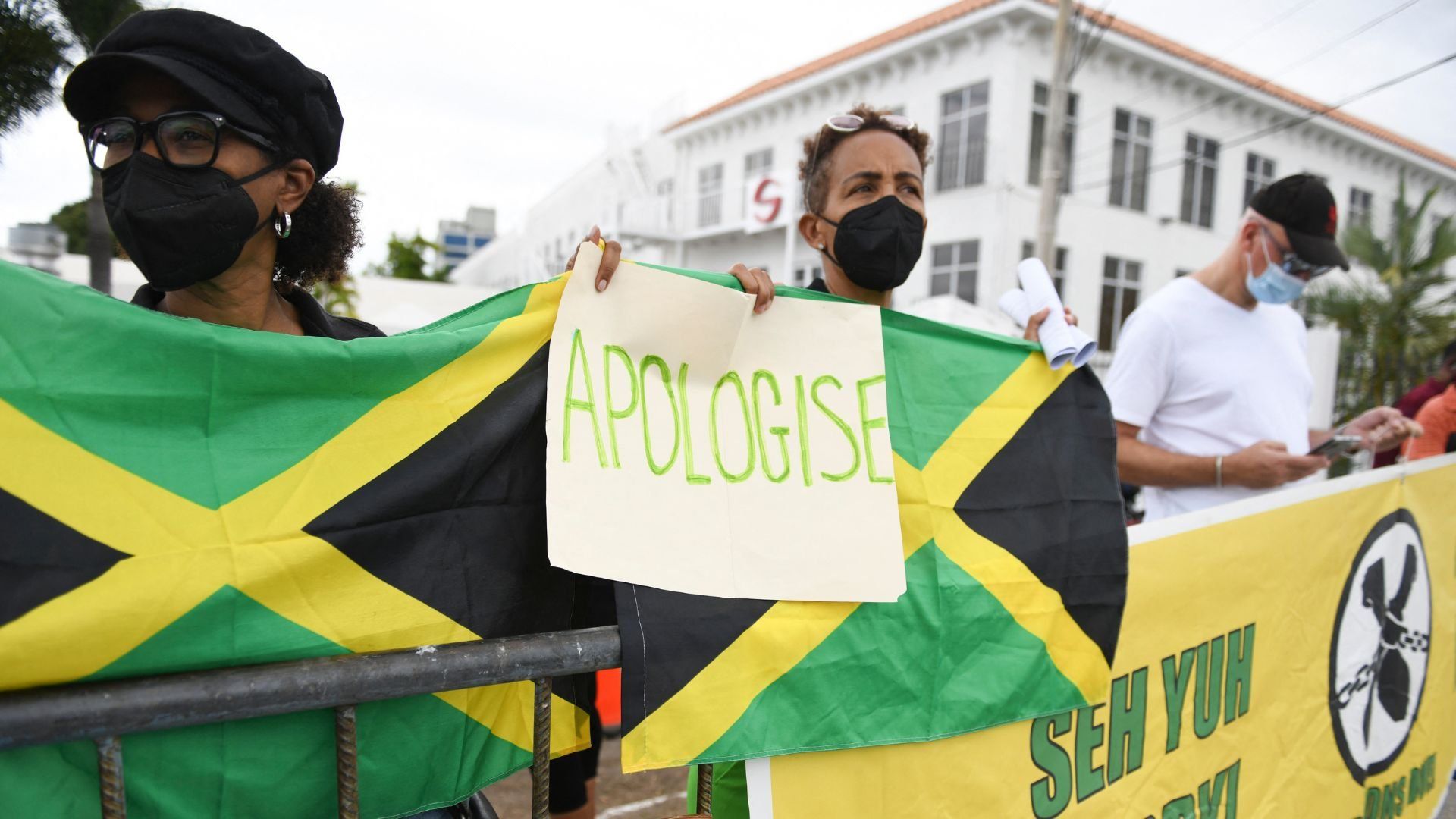
Jamaica will ask King Charles III to put legal questions about slavery before the country’s highest court, a step officials say could shape the island’s long-running push for reparations from Britain.
Culture Minister Olivia Grange is leading a Jamaican delegation to the United Kingdom on Monday to submit a petition addressed to the King, who remains Jamaica’s head of state. The petition asks him to refer three questions to the Judicial Committee of the Privy Council in London, Jamaica’s highest court of appeal.
The questions seek guidance on whether the enslavement of Africans in Jamaica was legal under English law, whether it violated international law, and whether Britain now has a legal duty to provide redress for the harm caused by slavery.
Grange said the move could pave the way for a “long outstanding settlement for the hundreds of years of the most horrific abuse that our African ancestors endured.” She said she would not speculate on whether Jamaica was asking Britain to pay reparations now.
“We want the answers. Once we get the answers, or once we get a response to those questions, then the next steps will be determined,” she said.
Jamaica’s Ministry of Culture, Gender, Entertainment and Sport said the visit is intended “to advance Jamaica’s push for reparations for the African ancestors who suffered under hundreds of years of enslavement.” The Jamaican delegation said this is the first time a British Commonwealth state will use this legal route “for the cause of reparatory justice,” Al Jazeera reported.
The petition is not a demand for payment. Under the Judicial Committee Act of 1833, the British monarch has authority to refer legal matters to the Privy Council for an advisory opinion. Buckingham Palace has said the King has no personal discretion over whether to make the referral and no role in deciding the substance of the claim.
“We understand the Jamaican government is seeking a petition to be heard before the Judicial Committee of the Privy Council,” a Buckingham Palace spokesperson said, according to Al Jazeera.
A Palace spokesperson also said: “His Majesty has on many occasions expressed his personal and wholehearted commitment to promoting greater understanding around the issue of slavery and finding ways to address historic wrongs for the benefit of communities today.” Buckingham Palace has been working with Jamaica’s governor general to ensure the petition is correctly lodged, the BBC reported.
British merchants enslaved and forcibly transported 600,000 to 1 million Africans to Jamaica between the 17th century and the early 19th century, according to Al Jazeera. After slavery was abolished across most of the British Empire in 1833, the British government compensated slave owners. The BBC reported the payment as £20 million; Al Jazeera reported it as $27 million, equal to about 40 percent of the Treasury’s annual income. The loans used to fund the compensation were paid off in 2015.
“Up to 2015, Britain was paying the slave masters, because we were being considered property,” Grange said. “The question really should be: if in modern times we’re still paying back the slave masters for the property that was our people, our ancestors, for property that was because of the abolition of slavery, then why shouldn’t we be pursuing some remedy at this time?”
Al Jazeera reported that the Jamaican government estimates the country is owed about $10 billion, while Britain has repeatedly refused to pay reparations for historical slavery.
During the UK visit, Grange is also scheduled to meet British Museum officials to discuss “the repatriation of cultural artefacts taken from Jamaica” during the colonial era.
“They are priceless, they are significant to the story of Jamaica and we are working to bring them home,” she said.
In 2015, then-Prime Minister David Cameron ruled out reparations during a visit to Jamaica. Speaking to members of Jamaica’s parliament, he called slavery “abhorrent in all its forms” and said he hoped the two countries could “move on from this painful legacy and continue to build for the future.”







Be First to Comment