Key takeaways:
- Duane “Keffe D” Davis, 63, was found guilty in Las Vegas in the 1996 killing of Tupac Shakur and remains jailed until his Oct. 13 sentencing.
- Prosecutors said Davis provided the gun and ordered the attack after Shakur and Marion “Suge” Knight were involved in a fight with Davis’ nephew earlier that night.
- Defense attorney Michael Sanft argued prosecutors lacked physical evidence placing Davis in Las Vegas or inside the Cadillac used in the shooting.
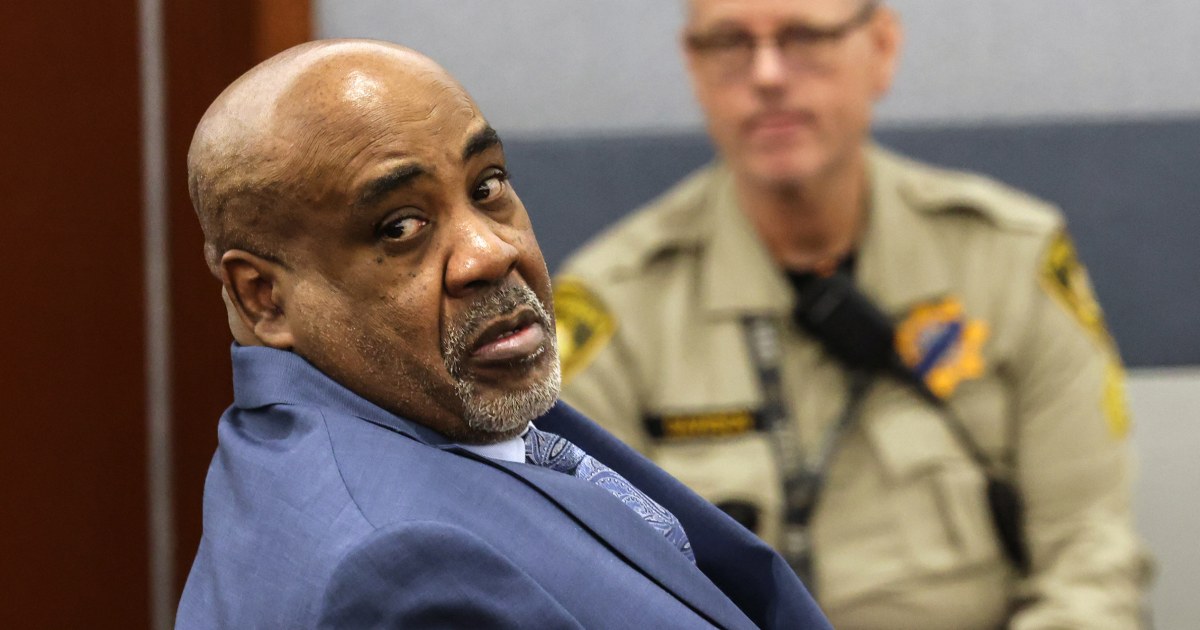
A Las Vegas jury found Duane “Keffe D” Davis guilty Monday in the 1996 killing of Tupac Shakur, delivering the first conviction in a murder case that has followed hip-hop for nearly three decades.
Davis, 63, was convicted of murder with a deadly weapon, with the intent to promote, further or assist a criminal gang. NBC News described the conviction as first-degree murder with use of a deadly weapon. He had pleaded not guilty and could face life in prison. District Judge Carli Kierny ordered him to remain jailed until sentencing on Oct. 13, NBC News reported. Davis indicated he plans to appeal.
The jury reached its verdict in less than three hours after a trial that lasted roughly two weeks. Jurors heard testimony from 24 prosecution witnesses and three defense witnesses over nine days, CBS News reported.
After the verdict was read, Shakur’s sister, Sekyiwa “Set” Shakur, cried and reached back to someone seated behind her. Davis’ son, also in the courtroom, covered his face with one hand.
Prosecutors said Davis, a former “shotcaller” for the South Side Compton Crips in Los Angeles, orchestrated the shooting after Shakur and Death Row Records co-founder Marion “Suge” Knight were involved in a fight with Davis’ nephew, Orlando “Baby Lane” Anderson, at the MGM Grand Hotel in Las Vegas earlier that night.
Chief Deputy District Attorney Binu Palal told jurors that Davis acquired a gun and “went hunting” for Shakur and Knight after the fight. Jurors watched grainy VHS security video and heard testimony from former law enforcement officers about the altercation.
Shakur, 25, was stopped at a red light in Las Vegas on Sept. 7, 1996, when a white Cadillac pulled up beside him and shots were fired. Knight was wounded but survived. Shakur died six days later.
Prosecutors did not argue that Davis pulled the trigger. They said he was criminally responsible because he provided the gun and ordered the attack. Under Nevada law, someone who helps another person commit murder can be convicted of the crime. Davis is the only person still alive among the four men prosecutors said were in the Cadillac.
“Who fired is not the question,” Palal told jurors.
The case turned heavily on Davis’ own statements over many years. Prosecutors said he repeatedly placed himself inside the Cadillac, including in interviews and in his 2019 memoir, “Compton Street Legend.” Palal acknowledged that Davis’ accounts changed but said the key facts remained the same.
“The core facts remain. The material facts remain,” Palal said.
In another closing argument, Palal said Davis had long admitted responsibility. “For nearly 18 years, Duane Davis has told the police, television, books, YouTube interviewers, anybody that will listen,” he said, according to NBC News. “He has told he is responsible for the murder of Tupac Shakur. Tell him you hear him. Find him guilty.”
Davis’ defense attorney, Michael Sanft, argued that prosecutors had no physical evidence placing Davis in Las Vegas or inside the Cadillac on the night of the shooting. He cited the absence of surveillance footage, phone records, receipts, photos or other records tying Davis to the crime scene.
“They have nothing in this case that says that man was here in Las Vegas on Sept. 7, 1996,” Sanft said, pointing toward Davis.
Sanft said Davis fabricated or embellished his accounts for money and notoriety and argued that investigators failed to corroborate his claims. “Just because someone says something, is that enough?” he told reporters last week, according to NBC News. “That is the question of the day.”
Prosecutors said Davis’ memoir helped revive the investigation. They also pointed to a 2008 proffer agreement with federal investigators, under which Davis believed he had immunity while discussing Shakur’s killing, though prosecutors said it did not shield him from future prosecution.
The age of the case shaped the evidence presented at trial. Prosecutors warned jurors that material collected in the 1990s differed from what police gather today, including hotel surveillance video. Former law enforcement officers testified that uncooperative witnesses, conflicting statements and a culture of silence complicated the investigation for decades.




Be First to Comment