Key takeaways:
- Trump joined Michael Cohen by phone Thursday for Cohen’s WABC radio show, with the full interview expected to air Sunday at 5 p.m. ET.
- Cohen was a central witness in Trump’s 2024 hush-money trial, which ended with Trump’s conviction on 34 counts of falsifying business records.
- Cohen wrote in January that he felt “pressured and coerced” in testimony against Trump, but later said information he provided to New York investigators was “truthful and accurate.”
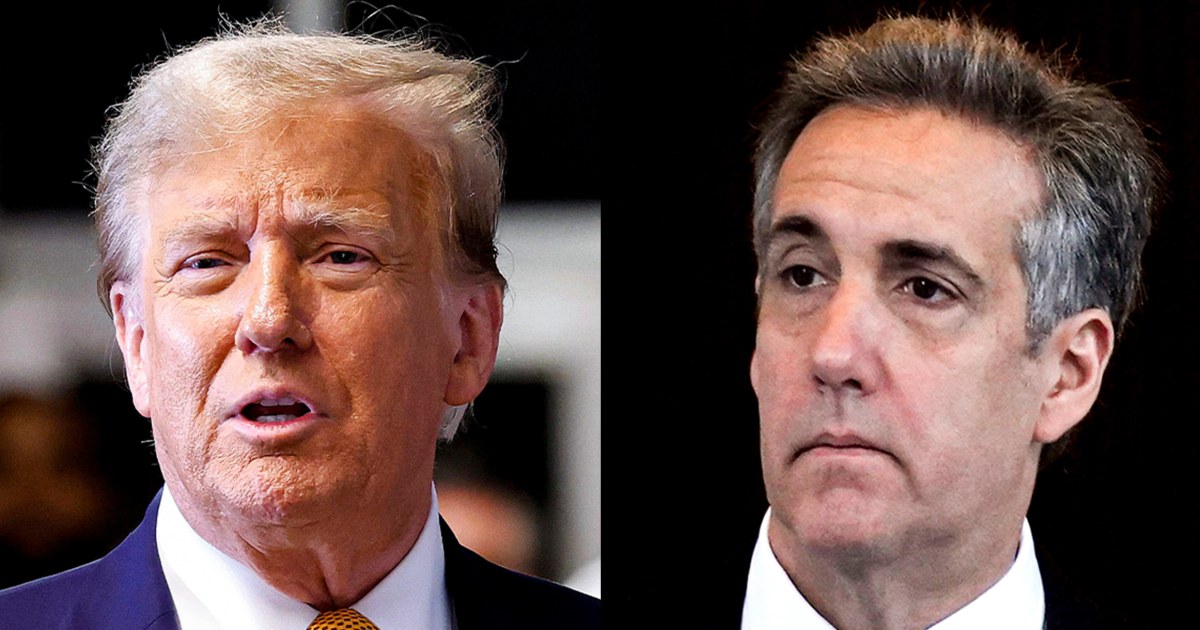
Donald Trump and Michael Cohen, once close allies and later bitter courtroom adversaries, have publicly reunited in a radio interview that marked their first public conversation in eight years.
Trump joined Cohen by phone Thursday for Cohen’s WABC radio show, “When You Know, You Know,” after an apparent reconciliation between the president and his former longtime lawyer and fixer. The full interview is expected to air Sunday at 5 p.m. ET.
The exchange was a striking turn for two men whose relationship helped shape multiple legal cases against Trump. Cohen was a central witness in Trump’s 2024 criminal trial over hush-money payments to adult film star Stormy Daniels. Trump was found guilty on 34 counts of falsifying business records in connection with efforts to interfere with the 2016 election.
During an excerpt released Thursday, Cohen referred to Trump as “boss” and reminded him of his combative television appearances defending Trump’s 2016 campaign. Trump replied, “You were a good advocate and then they weaponized you like nobody’s ever been weaponized, like few have been.”
“Well, maybe just you and I, sir,” Cohen said.
“Yeah, me too,” Trump responded. “But they weaponized you. They weaponized a lot of people. And I respect the fact that you recanted everything you said, and that’s a big, that’s a big thing that you did, that’s a very big thing.”
Asked earlier Thursday on CNN whether he was taking back anything he had said about Trump, Cohen said, “What was said is said, and that’s where I stand with it.” NBC News reported that Cohen said before the interview aired: “There are things that he said to me that I have never heard before. It was a great interview, and people will be shocked when they hear it.”
Cohen used the broadcast to emphasize reconciliation, quoting a Bible verse about forgiveness, playing “Why Can’t We Be Friends?” and later, as “Reunited” played in the background, telling listeners: “Yeah, reunited, and it feels so good.” He said he did not want his feud with Trump to define his life.
“The good memories don’t cease to exist simply because terrible ones followed them,” Cohen said. “True loyalty doesn’t mean pretending that you were never hurt. Reconciliation doesn’t mean surrendering your principles or rewriting facts. It simply means deciding that your story doesn’t have to end in its worst chapter.”
In a Substack post Thursday, Cohen wrote that the interview was rooted in forgiveness. “Forgiveness doesn’t require amnesia. It requires the courage to stop allowing yesterday to dictate tomorrow,” he wrote.
Their relationship began to unravel in 2018, when Cohen pleaded guilty to charges including campaign finance violations tied to hush-money payments made on Trump’s behalf, tax evasion, bank fraud and lying to Congress. He was sentenced to three years in prison, served more than a year behind bars and completed the rest of his sentence in home confinement. He was also disbarred in New York.
At his sentencing, Cohen said, “My weakness can be characterized as a blind loyalty to Donald Trump,” adding that “time and time again I felt it was my duty to cover up his dirty deeds.” In 2019 congressional testimony, he called Trump “a racist,” “a conman” and “a cheat.”
Cohen later testified in cases that led to a civil judgment of hundreds of millions of dollars against Trump’s company and the criminal conviction on falsifying business records. Trump has denied wrongdoing. In 2023, he filed a $500 million lawsuit accusing Cohen of violating their attorney-client relationship, then dropped it later that year before a scheduled deposition.
Cohen’s public posture shifted after Trump returned to office. In January, he wrote on Substack that he had felt “pressured and coerced” to provide testimony that would help prosecutors build cases against Trump. The Manhattan district attorney’s office and New York attorney general’s office have said their investigations were not politically motivated.
Trump’s lawyers are now citing Cohen’s comments in appeals of the criminal conviction and civil judgment. The New York attorney general’s office said in a March filing that Cohen’s unsworn post did not show he gave false information and noted that Cohen later said information he provided was “truthful and accurate.”








Be First to Comment