Key takeaways:
- Trump told reporters, “Yeah, I will be,” when asked whether he expects to meet Kim Jong Un this year.
- The Wall Street Journal reported Trump is seeking a meeting possibly around the November APEC summit in Shenzhen, China.
- Trump ordered U.S. participation in the Ulchi Freedom Shield exercises with South Korea cut in half, citing his relationship with Kim and calling the drills hostile.
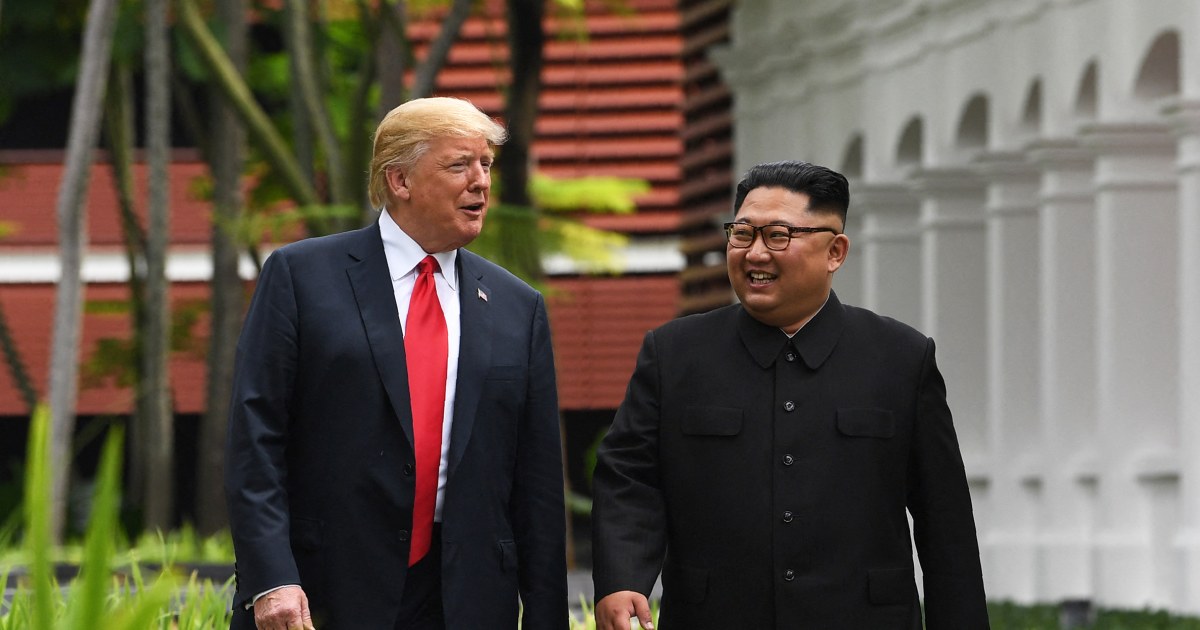
President Donald Trump said Wednesday that he expects to meet North Korean leader Kim Jong Un this year, signaling a possible return to direct diplomacy with Pyongyang after ordering a reduction in U.S. participation in joint military exercises with South Korea.
Asked at the White House whether he expected to meet Kim later this year, Trump replied, “Yeah, I will be.”
The White House has not confirmed plans for a meeting, and Pyongyang has not announced one. The Wall Street Journal reported that Trump is seeking to arrange talks soon, possibly around the November APEC summit in Shenzhen, China, which Trump plans to attend. The newspaper reported that Trump has directed aides to contact the North Korean government in hopes of restarting talks aimed at getting Kim to abandon his nuclear weapons program.
The United States does not have formal diplomatic relations with North Korea. Trump and Kim met three times during Trump’s first term, in Singapore in 2018, in Vietnam in 2019 and at the demilitarized zone later that year, when Trump became the first sitting U.S. president to step inside North Korea. Those meetings did not produce a denuclearization agreement.
Since then, North Korea has expanded its nuclear program. Analysts believe the country now has dozens of nuclear warheads. Trump put the number at 57 on Wednesday, though NBC News reported it was unclear how he arrived at that figure.
“I get along with him,” Trump said of Kim. “And you know what, the fact that I get along with him, that’s a good thing, not a bad thing. He has 57 very powerful nuclear weapons. Should have never allowed it to happen. They should have never allowed it. If I were president, I wouldn’t have allowed it. But he’s got them.”
Trump declined to say whether he and Kim were again exchanging letters. “I can’t tell you that,” he told reporters.
North Korea’s official news agency said Kim’s sister, Kim Yo-jong, was not aware of any recent communication between Kim and Trump, according to NBC News.
Kim has not indicated a willingness to give up the nuclear program. CBS News reported that he has said he wants the United States and the wider international community to recognize North Korea as a nuclear power and has ruled out talks based on denuclearization.
Trump’s comments came days after he ordered a scaled-back U.S. role in the annual Ulchi Freedom Shield exercise with South Korea. The drills began this week and typically run for 10 days, but CBS News reported they have been cut in half on Trump’s orders and will end Friday.
Trump said the decision was “based on my very good relationship with” Kim and said the exercises sent a “totally inappropriate and hostile signal” to North Korea. In a post cited by NBC News, he also called the exercises costly, saying much of the cost was paid by the United States, “as usual.” Trump also said South Korea’s refusal to assist the United States in its war with Iran was a factor in reducing the drills.
The United States and South Korea have been close allies for more than 70 years. CBS News reported that the move has rattled U.S. allies in the region, particularly South Korea and Japan, where officials are privately questioning whether Washington would come to their defense if North Korea or China took hostile action.
South Korean President Lee Jae Myung has called for complete military independence from the United States and is pushing for faster acquisition of nuclear-powered submarines, CBS News reported.
China’s foreign minister, Wang Yi, arrived in Seoul on Wednesday for a previously planned visit. He met South Korean Foreign Minister Cho Hyun, who said he hoped for China’s cooperation in working toward denuclearization of the Korean Peninsula.

Be First to Comment