Key takeaways:
- South Korea said Ulchi Freedom Shield will now end Aug. 21 instead of Aug. 27, with some combined field training exercises reduced in scale.
- Trump said the drills were costly and sent a “totally inappropriate and hostile” message to North Korea, and said he ordered Defense Secretary Pete Hegseth to “substantially reduce” them.
- South Korean President Lee Jae Myung said national security is strengthened when the U.S. alliance is solid, while North Korea again criticized the exercises as a military threat.
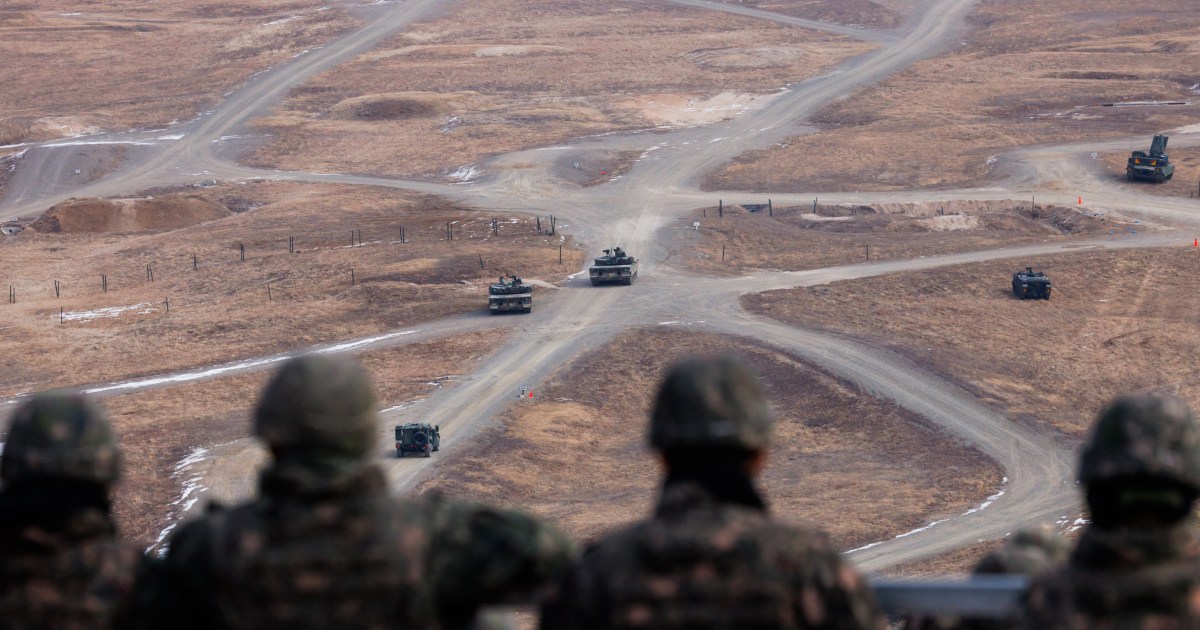
South Korea said Wednesday that major joint military exercises with the United States are being shortened and reduced after President Donald Trump ordered cuts to the drills, citing his relationship with North Korean leader Kim Jong Un and objections to what he called a hostile signal to Pyongyang.
The annual Ulchi Freedom Shield exercises, which began Monday, will now end Aug. 21 instead of Aug. 27, South Korea’s Ministry of Defense said. The ministry said the allies “have agreed, at the request of the U.S. side, to make some adjustments to the duration and scale of the exercise.” Some combined field training exercises also will be conducted on a reduced scale, with details still under discussion.
The announcement followed Trump’s surprise social media post Sunday, hours before the drills began, saying the exercises were costly and sent a “totally inappropriate and hostile” message to North Korea. Trump said North Korea had been “unthreatening and respectful” during his time in office and that he had ordered Defense Secretary Pete Hegseth to “substantially reduce” the exercises.
Trump also expressed anger over South Korea’s level of involvement in the U.S.-Israeli war with Iran. NPR reported that Trump said he asked South Korean President Lee Jae Myung whether Seoul would join the U.S. in the “denuclearization” of Iran, “and they said, ‘No thanks!’” Lee’s office said South Korea and the U.S. are closely discussing practical and military contributions Seoul can make to help restore freedom of navigation in the Strait of Hormuz.
The move has unsettled South Korea, a U.S. ally that hosts about 28,000 American troops, according to NBC News, while NPR put the figure at about 28,500. South Korea relies on the U.S. alliance for its security, including the American “nuclear umbrella” against nuclear-armed North Korea.
At a Cabinet meeting Tuesday, Lee stressed the importance of the alliance. “National security will be further strengthened when the alliance is solid,” he said. “When we build up our strengths, our value and importance as an ally will further grow.”
The South Korean Defense Ministry said the ROK-U.S. Combined Forces Command is conducting the exercise with wartime command posts divided between Command Post Tango, the two militaries’ main wartime command center, and Camp Humphreys, a U.S. military base south of Seoul. “Going forward, the ROK and the United States will discuss and implement various measures to achieve the objectives of the UFS exercise and maintain a robust combined defense posture,” the ministry said, using the abbreviation for South Korea’s formal name, the Republic of Korea.
U.S. Forces Korea has described Ulchi Freedom Shield as an annual exercise intended to strengthen the allies’ combined defense posture and improve their response to “a spectrum of security threats.” The U.S. and South Korea say the drills are defensive. North Korea routinely denounces them as rehearsals for invasion and often test-fires weapons in protest.
North Korea has not publicly responded directly to Trump’s latest remarks. But a commentary published Wednesday by the state-run Korean Central News Agency said Pyongyang’s “exercise of its right to self-defense will continue to completely neutralize the enemies’ military threat.” NPR reported that North Korea’s Foreign Ministry had accused South Korea and the U.S. of plotting more provocative drills this year and vowed to respond with “a new level of a deterrent.”
Trump, who met Kim three times during his first term, said Monday he was not sacrificing allied security to court North Korea. He told reporters he was “actually making it much safer” and said Kim had responded to his outreach, without giving details. “I understand him; he understands me,” Trump said.
Kim has rejected overtures from both Trump and Lee since U.S.-North Korea diplomacy collapsed in 2019. Lee’s office said Monday it hoped a “friendly relationship” between Trump and Kim could lead to “meaningful dialogue,” drawing criticism from conservatives who said the government was putting diplomacy ahead of security concerns.

Be First to Comment