Key takeaways:
- Indonesia’s disaster mitigation agency said the death toll from the magnitude 7.7 Flores earthquake rose to 68 by late Monday, with more than 200 injured.
- Al Jazeera reported about 12,800 people were unable to return home by Monday morning, while the BBC reported about 5,000 displaced.
- The Indonesian air force said it was sending 13 tonnes of emergency aid, including food, clean water and medical equipment, to the quake-hit region.
Thousands of survivors of a powerful earthquake in eastern Indonesia were waiting for food, water and medical help Monday as rescuers struggled to reach isolated communities and doctors treated patients outside damaged hospitals.
The magnitude 7.7 quake struck Flores island in East Nusa Tenggara province shortly before 6 a.m. Saturday local time, at a shallow depth of 15 kilometers. By late Monday, the death toll had risen to 68, Berton SP Panjaitan, an official at Indonesia’s disaster mitigation agency, told Al Jazeera. More than 200 people were injured.
The BBC reported that about 5,000 people had been displaced, while Al Jazeera, citing the AFP news agency and a spokesman for Indonesia’s BNPB national disaster agency, reported that about 12,800 people were unable to return home by Monday morning and were sheltering across several towns on Flores.
The quake damaged more than 1,300 homes, including nearly 250 destroyed on Flores alone, according to Al Jazeera. The BBC, citing early data from Indonesia’s National Disaster Management Agency, reported that more than 1,000 houses were damaged, along with dozens of health facilities, schools and government offices. The province’s governor declared a 14-day state of emergency Sunday.
In Dampek village, one of the hardest-hit areas, the local health center was devastated and only one doctor remained to care for hundreds of victims.
“I am the only doctor here with hundreds of victims. I truly cannot cope,” Dr. Melinda, the sole physician at the Dampek Health Centre, wrote in an urgent appeal Sunday, according to the BBC. “I have not had any rest since yesterday because casualties keep arriving around the clock.”
Medical teams from regional hospitals were beginning to reach some cut-off areas by Monday, navigating roads blocked by landslides and boulders. Dr. Alhamzah, who works at Lalang Health Centre in East Manggarai, told the BBC that severely injured patients were being treated with limited supplies.
“If a patient’s condition is critical, we will refer them to the hospital in Ruteng instead, which is about four hours away,” he said.
But Ruteng’s hospital was also damaged. Its operating room, delivery room, pharmacy and laboratory were rendered unusable after the roof collapsed, the BBC reported. Rista Mari, a public relations officer at Ruteng Regional General Hospital, said promised medical aid had not yet arrived. “We hope that assistance will arrive soon,” she told the BBC.
Al Jazeera reported from Ruteng that staff had assembled a tent hospital after the building was damaged. Doctors had medicine but could not access equipment needed for blood tests and X-rays, leaving them to treat patients in difficult conditions as elderly patients endured intense daytime heat and cold nights.
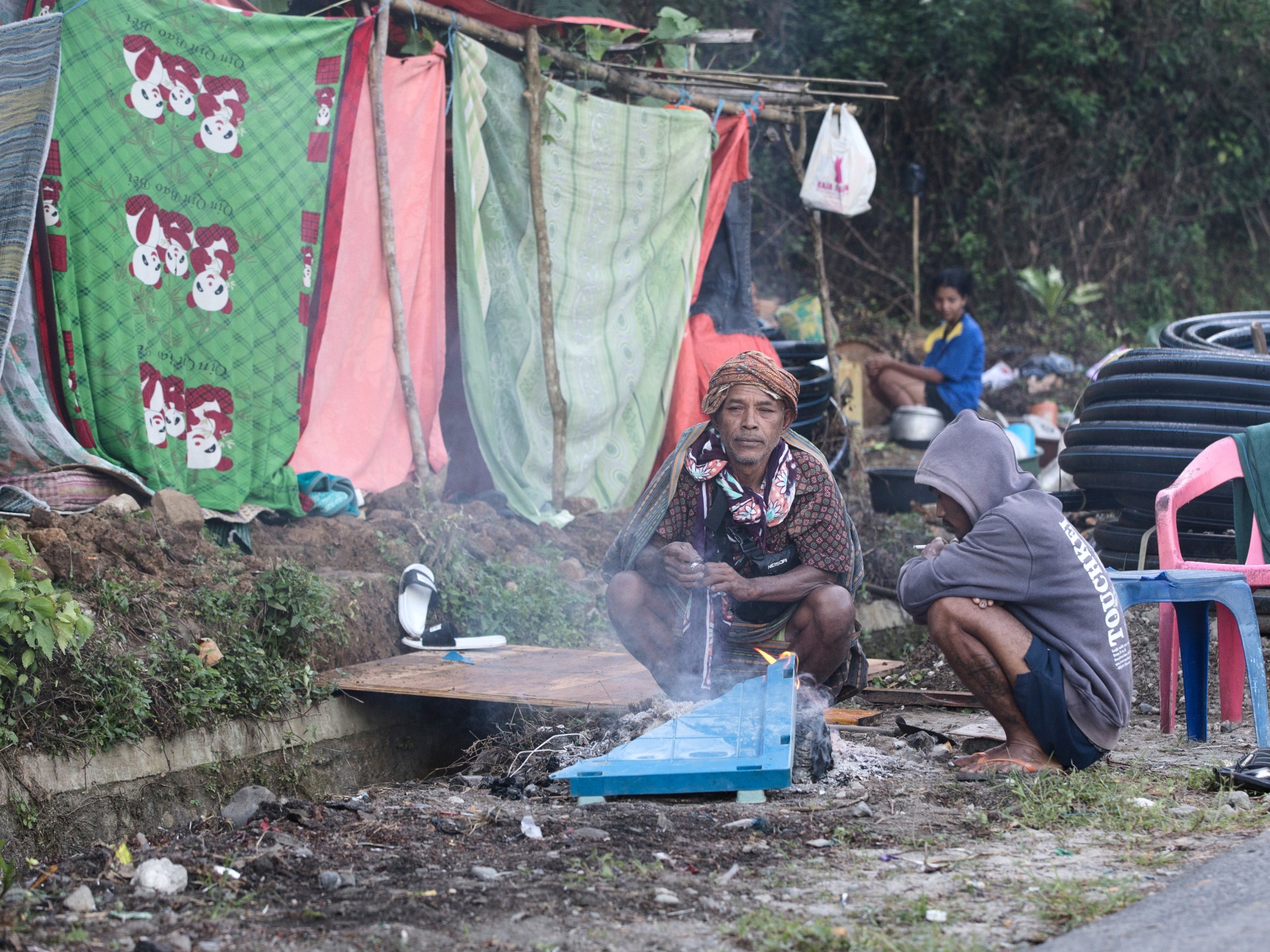
Many survivors have been sleeping outdoors under tarpaulins or in makeshift shelters, afraid aftershocks could bring down cracked buildings. “Our houses are no longer liveable because many have collapsed and are full of cracks, so we can’t go inside any more,” Mbay resident Junaidin, 32, told AFP. He said about 30 people were sleeping in his self-made tent and complained that no tents, medicine, food or drinking water had arrived.
In Labuan Bajo, a gateway to Komodo National Park, farmer Anastasia Imad told the BBC: “The shaking was very scary. My house almost collapsed. We were worried that the aftershocks would collapse the house while we were sleeping.”
The Indonesian air force said it was sending 13 tonnes of emergency aid on two Hercules transport planes and a Boeing, including food, clothes, clean water and emergency medical equipment. Helicopters were also being deployed to deliver supplies to isolated communities, Al Jazeera reported, citing Indonesia’s Antara state news agency.
On Sunday night, rescuers reached Nitung Village on Palue Island after nearly two days of isolation. Sikka Deputy Police Chief Commissioner Marselus Yugo Amboro said the route was threatened by landslides. “It was a life-threatening route,” he told the BBC. He said hundreds of homes there were badly damaged and power and communications had been cut.
Indonesia, which lies along major tectonic plate boundaries and the Pacific Ring of Fire, is frequently hit by earthquakes. The Flores quake is the country’s deadliest since 2022, when hundreds were killed in West Java, the BBC reported.











Be First to Comment