Key takeaways:
- Jason Arday, 41, was found unresponsive at a Battersea property Friday and pronounced dead at the scene.
- Arday resigned from Cambridge on Aug. 5 after allegations of plagiarism and questions about his academic and charity-related claims.
- Police said Arday’s death is being treated as unexpected but is not believed to be suspicious.
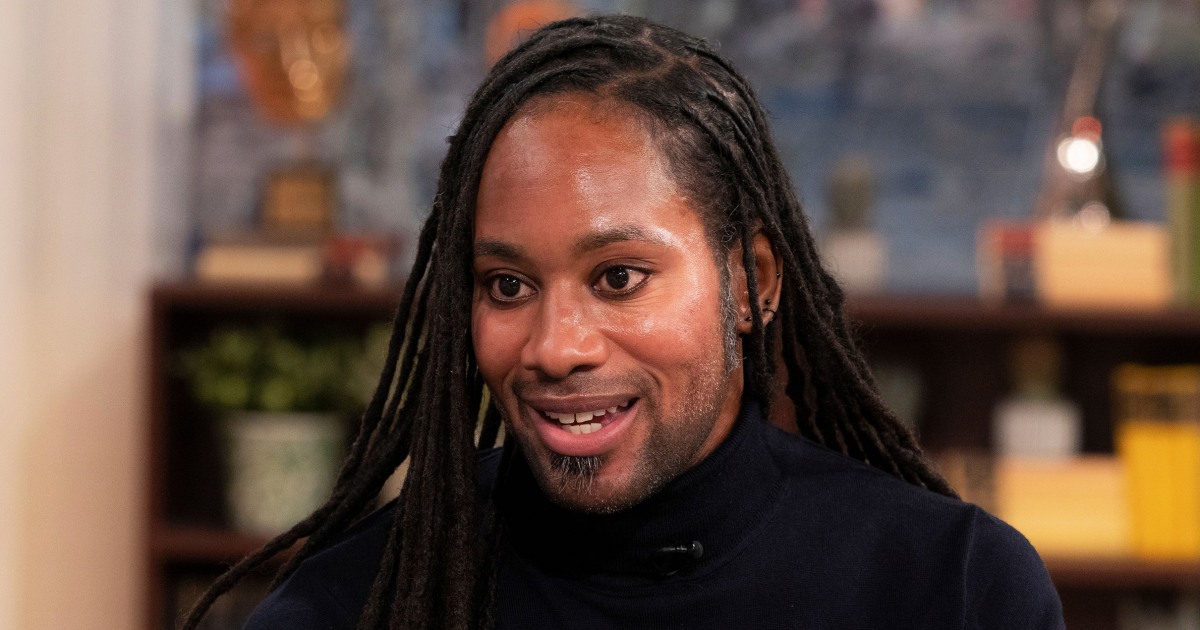
Jason Arday, the former University of Cambridge academic who became its youngest Black professor before resigning last week amid a plagiarism controversy, has been found dead at his London home. He was 41.
London’s Metropolitan Police said officers were called by the London Ambulance Service to a property in Battersea, south London, at 3:12 p.m. Friday after a report of a man found unresponsive. He was pronounced dead at the scene. His next of kin have been informed and are being supported by officers.
“At this time his death is being treated as unexpected, but is not believed to be suspicious,” the Metropolitan Police said. The case remains under investigation.
Arday’s family said they were “in shock to have lost this amazing father, partner, brother, uncle and son.” They added: “The campaign of misinformation was too much for Jason, who was a gentle man and who always wanted to see the best in everyone.”
Cambridge Vice-Chancellor Professor Deborah Prentice said the university was “desperately saddened to hear this tragic news.”
“Our heartfelt sympathies go to Jason Arday’s family and friends at this incredibly difficult time,” she said.
Arday was appointed professor of sociology of education at Cambridge in 2023, a milestone that was hailed at the time as a progressive moment. He resigned on Aug. 5 after allegations of plagiarism and questions about some of his achievements. He had denied plagiarism, though he acknowledged errors in his work.
The controversy intensified after Nathan Cofnas, a former Cambridge philosophy researcher who left the institution after criticizing diversity, equity and inclusion programs, publicly raised questions about Arday’s qualifications, The Associated Press reported. The BBC described Cofnas as a self-defined “race realist” who was sacked from his Cambridge role in 2024.
The Times of London also published an analysis of Arday’s 2015 Ph.D. thesis that identified passages it said were “identical or near-identical” to an earlier paper by another researcher, according to the Associated Press. British media also questioned Arday’s claims that he had raised more than £5 million for charity through athletic feats, including running 30 marathons in 35 days, 300 miles in three days and 600 miles on a treadmill in six days.
Arday said some errors in his early academic work were linked to his autism, saying he relied on mimicry to make sense of information. He told the Times this month: “We’re talking about academia here. I didn’t murder somebody. I think the cruelty that I’ve experienced and the positioning of me as this kind of liar and fantasist is totally unacceptable.”
In his resignation statement, Arday called teaching his students “the privilege of my life,” but said the years since his appointment had been marked by “an unrelenting level of public scrutiny and personal attack.”
“While criticism is an inevitable part of academic life, what I have experienced has gone far beyond scholarly disagreement,” he said. “The relentless accusations, speculation and public commentary have taken a profound toll on me and on those I love.”
He said the “personal cost” had become “too great” and said his resignation should not “be mistaken for an acceptance of the narratives that have surrounded me.”
Cambridge had said claims involving Arday’s thesis and some journal publications were investigated by Liverpool John Moores University, which awarded his Ph.D. in 2015, and by the journals in question. The BBC reported that Liverpool John Moores concluded he had not plagiarized work. Cambridge later announced an independent investigation into his appointment, and the University of Glasgow, where he had been a professor, said it would review his previous academic work.
Arday originally worked as a physical education teacher before earning his doctorate, becoming an associate professor at Durham University and later joining the University of Glasgow. His memoir, “Great and Unfortunate Things,” was released in the United States earlier this week and is due to be published in the United Kingdom on Aug. 27, according to the BBC. The book recounts his childhood, including being diagnosed with autism and developmental delays at age 3, speaking by age 11 and reading and writing by age 18.











Be First to Comment