Key takeaways:
- ICE said Daniel Ogama Adongo was removed from the United States on June 20 after overstaying a visa in 2016 and being ordered removed in March.
- Adongo signed with the Indianapolis Colts in 2013, appeared in two games and was cut in 2015 after domestic violence allegations.
- Supporters and attorneys have cited mental illness and possible traumatic brain injury or CTE, while ICE described him as a threat to the community.
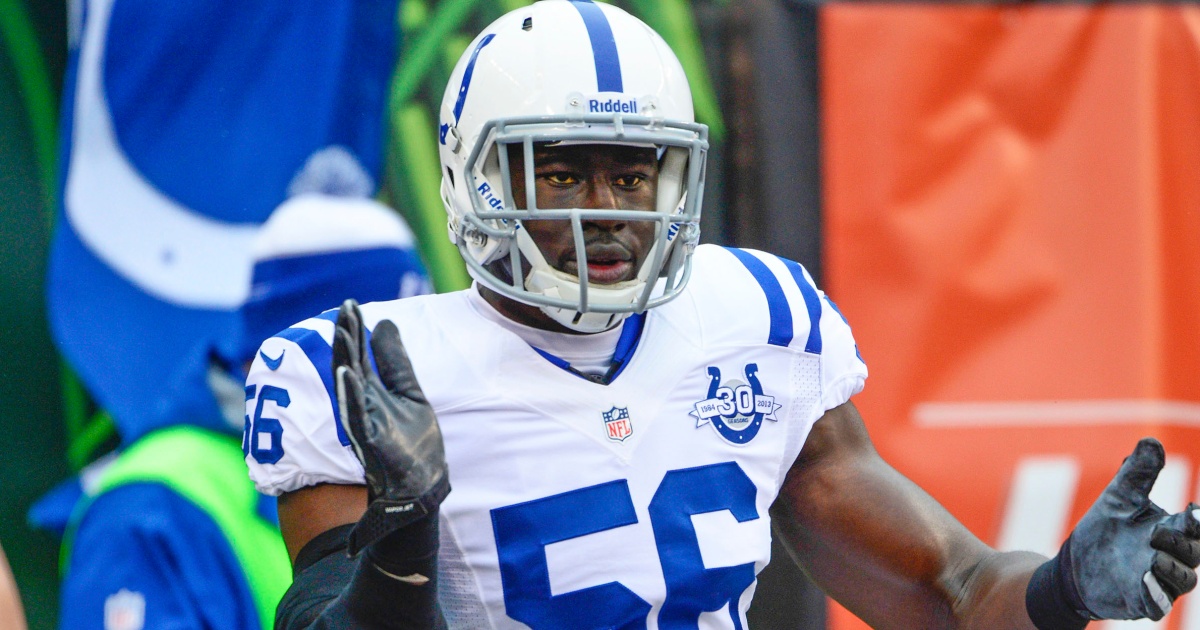
Daniel Ogama Adongo, the former Indianapolis Colts linebacker who became the first Kenyan to play in the NFL, was deported last month after federal immigration authorities cited a visa overstay and a series of arrests in Indiana.
U.S. Immigration and Customs Enforcement said Adongo, 37, was removed from the United States on June 20. The agency said he overstayed a visa in 2016, the year after his NFL career ended, and that an immigration judge ordered his removal in late March.
“This dangerous individual was clearly a threat to the community, which is now safer since he’s been removed,” Douglas Thompson, assistant field office director for ICE Chicago, said in the agency’s statement. “Those who violate immigration law are held equally accountable, including former professional athletes.”
Adongo, a former professional rugby player, signed with the Colts in 2013 after playing rugby union in South Africa. He joined the team as an outside linebacker despite having no football experience, spent two seasons with Indianapolis and appeared in two games. The Colts cut him in 2015 after domestic violence allegations, The Guardian reported, citing a December 2015 Indianapolis Star report that said police had responded twice in three months to domestic violence calls at his home.
ICE said Adongo had been arrested multiple times in Indiana over the previous nine years on allegations including felony intimidation, battery and disorderly conduct. NBC News reported that court records show those charges were dismissed. ICE also cited a 2020 conviction for misdemeanor criminal mischief with damage, saying he was sentenced to 364 days in jail. Court records reviewed by NBC News show that, with credit for time served, he was ultimately ordered to serve six months in county jail.
The agency said Adongo’s most recent charges fell under the Laken Riley Act, which requires ICE to detain undocumented immigrants arrested on suspicion of, charged with or convicted of certain crimes including burglary, theft, larceny or shoplifting. ICE did not specify which charges it was referring to. The Guardian reported that the law requires detention without bond for undocumented immigrants accused of certain crimes.
Supporters and attorneys for Adongo have argued that his legal troubles were tied to mental illness and possible brain trauma from years in contact sports. According to the Indianapolis Star, his defense attorney cited a 2020 medical report in which a doctor who examined Adongo described him as “acutely psychotic with traumatic brain injury.” A mental health social worker who treated him for years wrote that he had an “undisclosed mental illness which is highly speculated to be Chronic Traumatic Encephalopathy, or CTE,” the Star reported.
A petition seeking to stop his deportation said doctors and social workers believed Adongo may be living with CTE, “an untreatable brain disease caused by repeated head impacts, common among athletes who played contact sports.” The petition said ICE never confirmed whether he received mental health treatment while detained and added: “This is not justice. He needed a doctor, not a cell.”
CTE is associated with repeated head injuries and cannot be diagnosed in a living patient, only through an autopsy. NBC News reported that about one-third of former NFL players suspect they have the disease, according to a 2024 survey, and that the NFL first acknowledged a link between CTE and football in 2016.
Attorneys who previously represented Adongo did not immediately respond to NBC News requests for comment. NBC News said it was unable to contact Adongo or determine his current legal representatives. The Department of Homeland Security did not immediately respond to questions about concerns raised by Adongo’s family and attorneys regarding his mental state and possible brain injury.











Be First to Comment