Key takeaways:
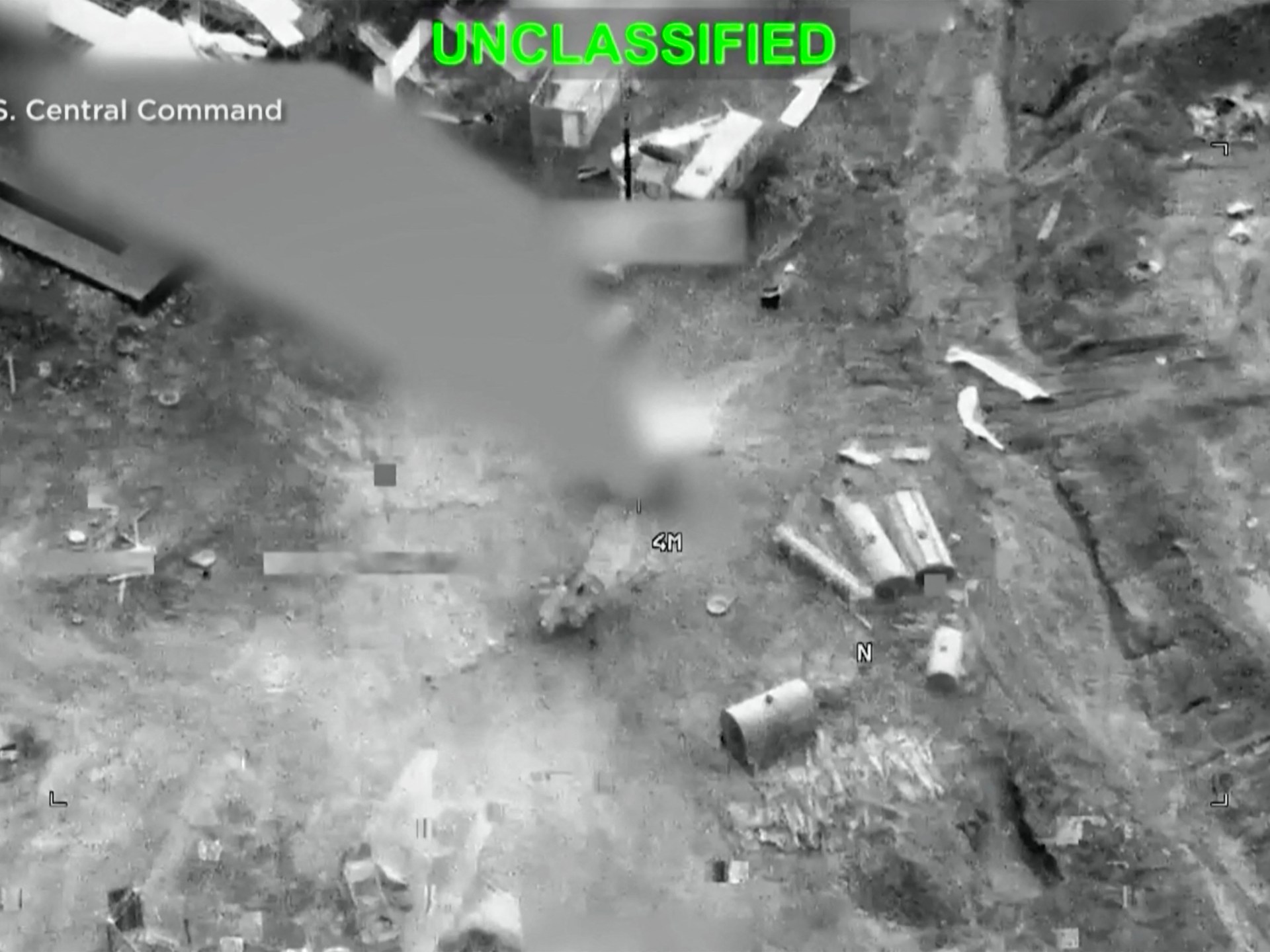
- U.S. Central Command said it struck Iranian command centers, drone storage sites, communications networks, coastal surveillance sites and maritime capabilities for a 13th consecutive night.
- Only one tanker fully crossed the Strait of Hormuz on Thursday, while Brent crude briefly rose above $100 a barrel before easing to about $97 Friday morning.
- Trump threatened to hold Iran responsible for further Houthi attacks on shipping and said Iranian assets held by the U.S. could be used to pay damages.
The United States carried out a 13th consecutive night of strikes on Iran as President Donald Trump threatened a broader attack and disruptions spread across two of the world’s most important shipping routes.
U.S. Central Command said it completed the latest round of strikes at 9 p.m. ET Thursday, or 01:00 GMT Friday, targeting “Iranian military command centers, drone storage facilities, communication networks, coastal surveillance sites, and maritime capabilities.” CENTCOM said the operation was intended to reduce threats to civilian mariners and commercial vessels moving through the Strait of Hormuz.
Explosions and attacks were reported across Iran on Friday morning. Iranian state media and semi-official outlets reported incidents in Khondab, Khorramabad, Konarak, Jask, Andimeshk, Omidiyeh, Qeshm island and Bandar Abbas. Iran’s Tasnim news agency reported that four people were killed and five injured in a U.S. missile attack near Ahvaz. Fars reported two people injured in a drone attack on Khorramabad, while Iranian media said two people were injured in Bandar Abbas. Mehr reported no casualties or injuries from strikes on Andimeshk and Omidiyeh.
Trump told Axios on Thursday that he was considering a “massive attack” on Iran that would be “bigger than ever before.” He said he was “close to making a decision” and added, “We are all set for it.” Later, he said the Iranians did “want to negotiate” but were not ready to make a deal. “They haven’t received enough pain yet,” he told Axios.
Iran has continued retaliatory attacks on U.S. bases and allies in the region. Al Jazeera, citing Iranian media, reported that Iran’s army said it used drones to target fuel storage tanks, equipment warehouses and troop living quarters at Sheikh Isa Air Base in Bahrain. The army also said it struck aircraft hangars, maintenance facilities and accommodation sites at the Muwaffaq Salti/Al-Azraq base in Jordan. NBC News reported new Iranian strikes on U.S. bases in Kuwait, sirens activated in Bahrain and explosions near a military base hosting U.S. forces in northern Iraq.
The conflict has also tightened pressure on shipping. Traffic through the Strait of Hormuz has slowed sharply, with ship-tracking data showing only one tanker fully crossed the strait on Thursday, the lowest level since May 7, according to Al Jazeera. NBC News identified the vessel as the New Giant oil tanker, bound for Rizhao, China.
In the Red Sea, Yemen’s Tehran-backed Houthi rebels have announced a naval blockade on Saudi Arabia and struck two Saudi oil tankers. Trump warned Thursday of “major military punishment” for Iran and the Houthis if attacks continue. “If they do this again, the U.S. will hold Iran responsible, in that the Houthis are a Surrogate and/or Proxy of Iran,” he wrote on Truth Social.
Trump also said Washington would use Iranian assets held by the U.S. to pay for “any damages to Ships, Cargo, or anything related thereto.” Iranian Foreign Minister Abbas Araghchi called the threat an “incendiary precedent” and wrote on X: “Those who celebrate or profit from such funds should remember: once governments normalize confiscation, no one’s assets are safe.”
Shipping data in the Red Sea appeared mixed. NBC News, citing MarineTraffic data, reported that eight tankers traveled north through the Bab el-Mandeb Strait into the Red Sea on Thursday and 14 traveled south into the Gulf of Aden, though some ships may have switched off transmitters. Al Jazeera, citing London Stock Exchange Group shipping data, reported that two Chinese supertankers carrying Saudi crude exited the Bab al-Mandeb on Friday despite the Houthi blockade.
Oil prices rose as the disruptions intensified. Brent crude briefly climbed above $100 a barrel Thursday for the first time since May before falling back to about $97 on Friday morning.
Senior Arab officials told NBC News they were increasingly frustrated by threats, daily escalations and the lack of diplomatic progress. “We have no clue where this is going,” one said. Another said, “It’s only getting crazier.” Iraqi Prime Minister Ali al-Zaidi visited Iran on Thursday, his first official trip there since taking office in May, amid fading hopes for renewed diplomacy.









Be First to Comment