Key takeaways:
- Mojtaba Khamenei, appointed supreme leader in March, has not appeared publicly during his father Ali Khamenei’s funeral ceremonies.
- Iranian authorities say 12 million to 20 million people are expected to attend funeral events across Iran and Iraq over the coming week.
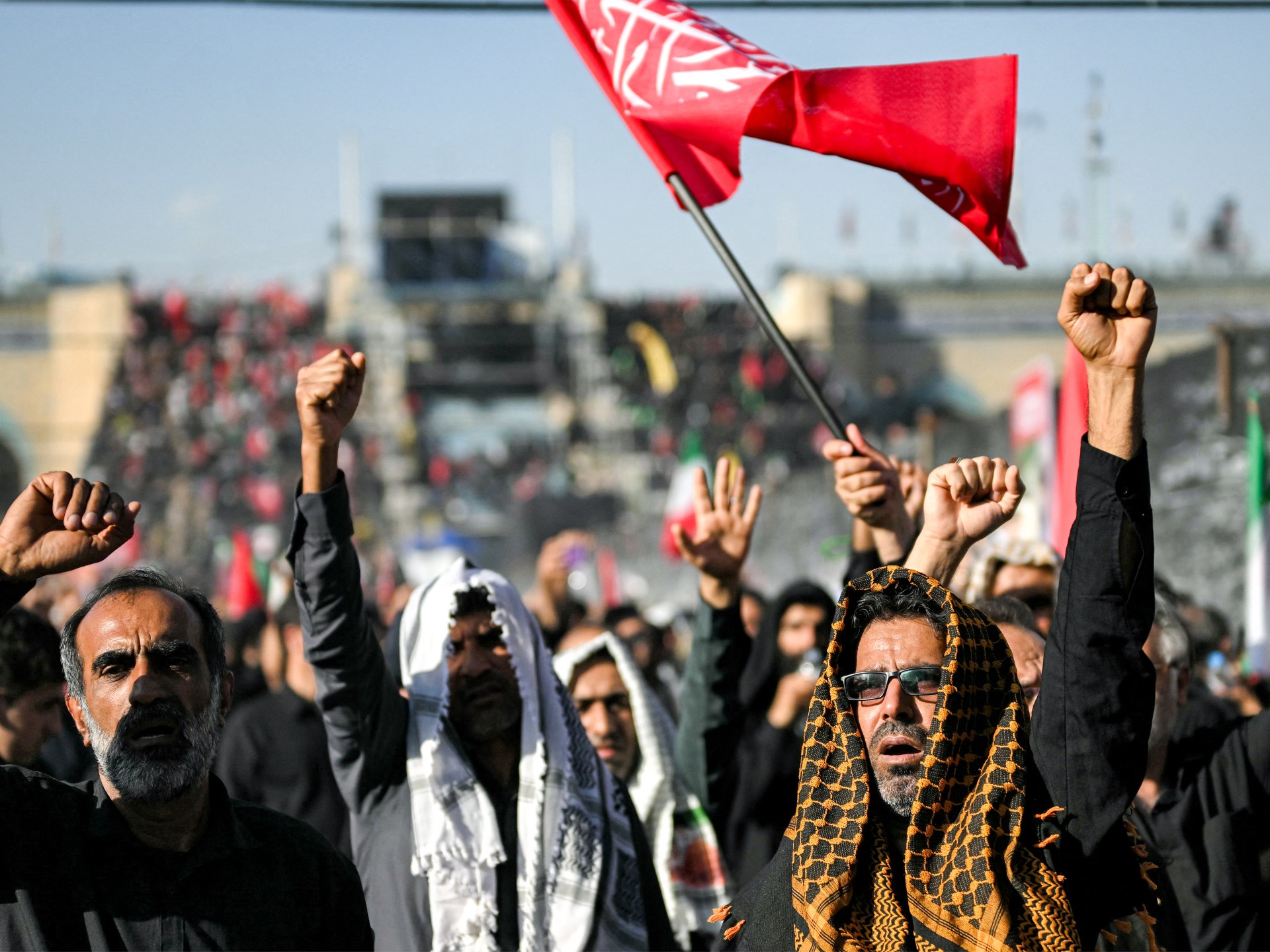
- Mourners in Tehran chanted against the United States and Israel, and some banners called for revenge against Donald Trump and Benjamin Netanyahu.
Massive crowds filled Tehran on Sunday for the funeral of former Supreme Leader Ali Khamenei, while his son and successor, Mojtaba Khamenei, remained out of sight amid speculation about his safety and condition.
Iranian television showed three of Ali Khamenei’s sons — Mostafa, Meysam and Masoud — praying behind coffins laid out in the courtyard of the Imam Khomeini Grand Mosalla, a sprawling religious complex in the capital. Mojtaba Khamenei, appointed supreme leader in March, has not appeared publicly since then. The BBC reported that rumours have circulated that he was wounded in the same US-Israel air strikes that killed his father. Al Jazeera reported that his absence is believed to be linked to the danger of Israeli threats to his life.
Ali Khamenei ruled the Islamic republic from 1989 until his death in February. Among the remains on display were Khamenei and several relatives killed in a February 28 air strike on Tehran, including his daughter, son-in-law, daughter-in-law and granddaughter. The BBC identified the child as one-year-old Zahra Mohammadi Golpayegani, while Al Jazeera reported she was 14 months old.
Senior Iranian officials attended the funeral ceremonies, including President Masoud Pezeshkian, Parliament Speaker Mohammad Bagher Ghalibaf and Quds Force commander Esmail Qaani. The BBC also reported that Revolutionary Guards chief Ahmad Vahidi attended. The funeral service was led by prominent Shia cleric Jafar Sobhani, a 97-year-old scholar who teaches at seminaries in Qom.
The government has declared a week of funeral events across Iran and Iraq. Khamenei’s body is lying in state at the Grand Mosalla before a procession through Tehran on Monday. His coffin is then expected to be moved to Qom on Tuesday, a major Shia site in Iraq on Wednesday, and Mashhad in northeastern Iran for burial on Thursday. Al Jazeera reported that the procession will include Shia holy sites in Iraq such as Karbala and Najaf, as well as Qom and Mashhad in Iran.
Iranian authorities say 12 million to 20 million people are expected to attend ceremonies they are calling the “funeral of the century,” the BBC reported. Tehran events alone are expected to draw more than 10 million mourners, with strict security measures in place. Iran’s metro authority reported about seven million passenger journeys from late Saturday to Sunday morning, according to Al Jazeera. Iran’s official news agency Irna reported that more than 4,000 people had visited medical centres in and around the Grand Mosalla, with no deaths recorded.
The mourning unfolded against a backdrop of anger at the United States and Israel. Al Jazeera’s Tohid Asadi reported from Tehran that mourners carried Iranian flags and red flags symbolising revenge. “People are calling for revenge for the blood of the supreme leader. Chants of ‘Death to America’ and ‘Death to Israel’ are being heard among the public,” he said.
Gholamreza Sabooni, 29, who works in a grocery store, told The Associated Press: “I came here to shout and seek revenge. They killed our imam, we should kill their leader, Trump.” The BBC said The Associated Press and The Guardian reported calls for US President Donald Trump’s death, including poet Mohammad Rasouli saying before the prayer that “Trump’s murder is our responsibility.” Banners in Tehran included slogans such as “kill Trump,” “kill Bibi,” referring to Israeli Prime Minister Benjamin Netanyahu, and “we will avenge.”
A fragile ceasefire between Iran and Israel is holding while talks on a permanent peace deal continue, the BBC reported, though both sides have warned they are ready to resume military action. Axios quoted Trump as saying peace talks had been paused for a week because of the funeral events. It also quoted him as saying that, with many senior Iranian officials gathered, Washington could take them all out with “one shot,” but would not because “then we would have nobody to negotiate with.”
Trump also said he was surprised to see Iranians crying and suggested, “Maybe it’s fake tears.” Zahra Safaei, 50, told Reuters in response: “We did not make a revolution 47 years ago to shed fake tears. We did not sacrifice all these martyrs to shed fake tears.”

Be First to Comment