Key takeaways:
- A 7,000-gallon tank of methyl methacrylate in Garden Grove is nearing a critical temperature that could cause an explosion.
- Governor Gavin Newsom declared a state of emergency in Orange County, mobilizing state resources and supporting evacuations of over 50,000 residents.
- The Orange County District Attorney’s Office has launched an investigation into the cause of the chemical tank failure and is seeking information from employees and the public.
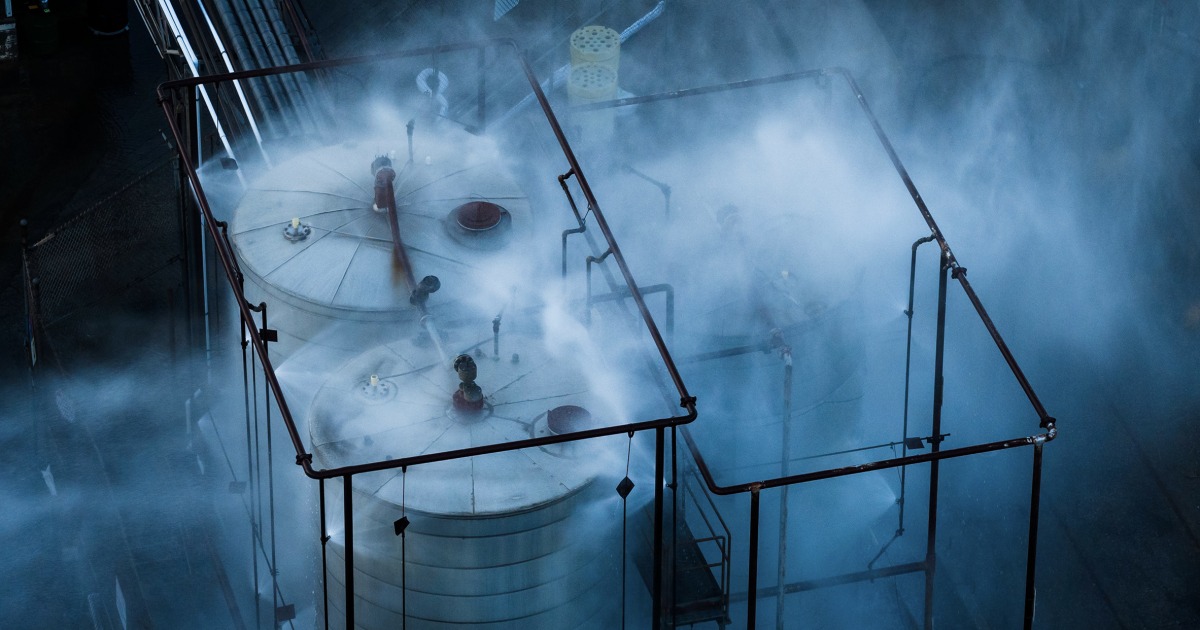
Firefighters in Southern California are racing to cool a chemical tank on the verge of explosion at an aerospace manufacturing facility in Garden Grove, Orange County. The 7,000-gallon tank contains methyl methacrylate, a toxic and volatile chemical used in plastics and resins. Officials warn that the tank’s rising internal temperature, now reaching 90 degrees Fahrenheit and climbing about one degree per hour, could trigger a catastrophic “thermal runaway” explosion. Nearby tanks holding the same chemical could also be at risk.
Orange County Fire Authority Incident Commander Chief Craig Covey described the situation as potentially “one of the worst chemical incidents in California history.” He said firefighters are using sprinklers and hose lines to cool the tanks, hoping to slow the chemical’s warming and prevent a blast. “We are literally on the edge of it,” Covey said Saturday. The incident began Thursday with a vapor release, and initial temperature readings were underestimated due to measurements taken outside the tank’s thick steel walls. Later, crews entered the danger zone to assess internal temperatures, discovering the alarming rise.
Governor Gavin Newsom declared a state of emergency Saturday, mobilizing state resources to support local responders and evacuees. More than 50,000 residents from Garden Grove and neighboring cities including Cypress, Stanton, Anaheim, Buena Park, and Westminster have been ordered to evacuate. Evacuation centers have been set up across the region, with services including free Uber rides for evacuees and discounted hotel rates.
The Orange County District Attorney’s Office launched an investigation into the cause of the tank failure, urging employees and community members to come forward with information. “If you want to tell us what you know, now is the time,” DA Todd Spitzer said, emphasizing the seriousness of the situation.
Health officials say methyl methacrylate is a respiratory irritant that can cause lung, skin, and eye irritation, nausea, and dizziness. The chemical’s vapors are heavier than air and have a strong fruity odor. Orange County Health Officer Dr. Regina Chinsio-Kwong advised that those outside the evacuation zone are unlikely to face health risks but urged residents within the zone to evacuate promptly.
Air quality monitoring continues, with no abnormal levels detected so far. The Environmental Protection Agency has deployed 24 stationary monitors, and drones are used to monitor tank temperatures every 10 minutes. Contingency plans are in place to contain any potential chemical leaks, including efforts to prevent contamination of storm drains and the nearby Pacific Ocean.
Local officials and emergency responders are coordinating closely, with experts from across California and beyond consulting on possible solutions. Covey acknowledged the need for “out of the box” thinking to avoid a disaster. “Letting this thing just fail and blow up is unacceptable to us,” he said.
The incident has prompted school closures, event cancellations, and heightened security patrols in evacuated neighborhoods. Major local attractions like Disneyland and Knott’s Berry Farm remain open but are monitoring the situation closely. Los Angeles officials have confirmed no risk to their communities but are providing hazmat expertise and standby support.
The timeline for resolving the crisis remains uncertain, and officials continue to prioritize public safety as they work to stabilize the tanks and prevent a potential explosion.





Be First to Comment