Key takeaways:
- In March 2026, the Trump administration strengthened ties with the combat sports world, marked by an FBI-UFC partnership and the appointment of former MMA fighter Senator Markwayne Mullin as Secretary of Homeland Security, highlighting combat sports’ growing political influence within the MAGA movement.
- Trump’s longstanding connection to combat sports includes hosting events in the 1980s, a close relationship with UFC CEO Dana White, and prominent fighters openly supporting right-wing politics, with MMA culture increasingly intertwined with conservative and MAGA ideologies.
- The fusion of combat sports and right-wing politics extends to cultural and media spheres, with MMA brands promoting right-wing imagery, fighters endorsing controversial health views, and Joe Rogan’s podcast serving as a major platform for conservative commentary and alternative health advice.
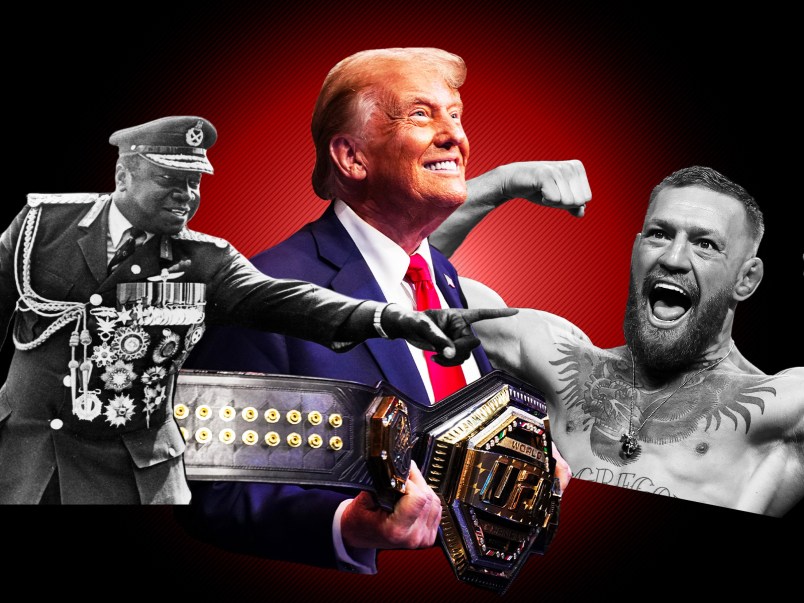
In March 2026, significant developments highlighted the growing ties between the Trump administration and the combat sports world, underscoring the political and cultural intersections shaping contemporary American conservatism. On March 11, FBI Director Kash Patel announced a partnership between the FBI and the Ultimate Fighting Championship (UFC), the world’s largest mixed martial arts (MMA) promotion. Shortly thereafter, on March 24, the U.S. Senate confirmed former MMA fighter and Oklahoma Senator Markwayne Mullin as Secretary of the Department of Homeland Security. These moves have drawn attention to the increasing influence of combat sports within the political sphere, particularly within former President Donald Trump’s MAGA movement.
The relationship between Trump and combat sports is longstanding and multifaceted. Trump’s personal affinity for combat sports dates back decades, including hosting boxing, UFC, and professional wrestling events at his Atlantic City casino in the 1980s. His close relationship with UFC CEO Dana White has been well documented, and the UFC is scheduled to hold a landmark fight card on the White House’s south lawn in June 2026. Prominent fighters have openly aligned with right-wing politics, with figures such as UFC welterweight Jorge Masvidal participating in the “Fighters Against Socialism” bus tour during the 2020 presidential race. Other notable combat sports personalities, including former UFC champion Conor McGregor and grappler Gordon Ryan, have expressed right-wing views or engaged in politically charged actions, further cementing the sport’s association with conservative and MAGA-aligned ideologies.
This intertwining of combat sports and right-wing politics extends beyond individual fighters to broader cultural and business networks. MMA brands frequently feature right-wing imagery, and some fighters promote unconventional health treatments linked to controversial medical philosophies associated with Department of Health and Human Services Secretary Robert F. Kennedy Jr. Joe Rogan, a martial artist and former UFC broadcaster, has played a pivotal role in amplifying right-wing perspectives through his widely popular podcast. Rogan’s platform has become a cornerstone of the right-leaning “manosphere,” blending combat sports, political commentary, and alternative health advice, thereby influencing a substantial audience within conservative media ecosystems.
Meanwhile, geopolitical tensions continue to escalate in the Middle East, with recent intelligence revealing that Russia used satellite imagery to monitor a U.S. air base in Saudi Arabia prior to an Iranian attack that injured American troops. Ukrainian President Volodymyr Zelenskyy asserted with certainty that Russia is sharing intelligence with Iran to target U.S. forces in the region. This development has intensified debates within the U.S. Senate about potential military responses, including the possible deployment of ground troops. Senators such as James Lankford (R-Okla.) have expressed conditional openness to such measures, while others, including Senator Cory Booker (D-N.J.), have criticized the Trump administration’s handling of the conflict, describing it as a significant presidential blunder that risks deeper entanglement without clear objectives or exit strategies. The ongoing conflict has also prompted regional escalations, including missile attacks by Iran-backed Houthis on Israel and expanded military operations by Israeli forces in southern Lebanon, contributing to a protracted crisis with global economic repercussions.



Be First to Comment