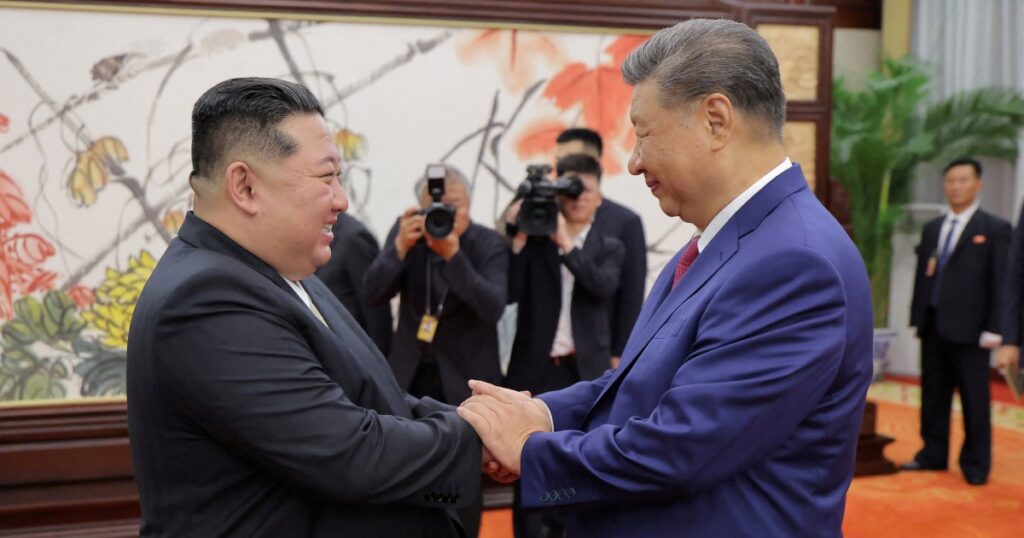
Xi Jinping met Kim Jong Un in Pyongyang and pledged broader cooperation in a visit aimed at strengthening China-North Korea ties. The summit comes as North Korea deepens military cooperation with Russia and continues expanding its nuclear program.
Posts tagged as “North and South Korea”
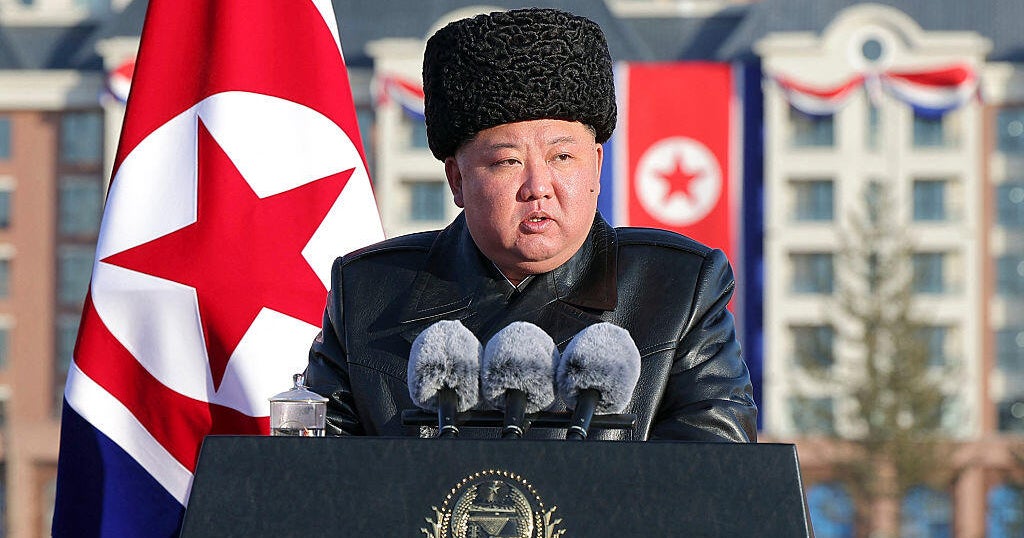
North Korea has disclosed a new facility for producing nuclear bomb fuel as Kim Jong Un called for an “exponential” expansion of the country’s nuclear forces. State media said Kim claimed weapons-grade nuclear material production has more than doubled in five years.
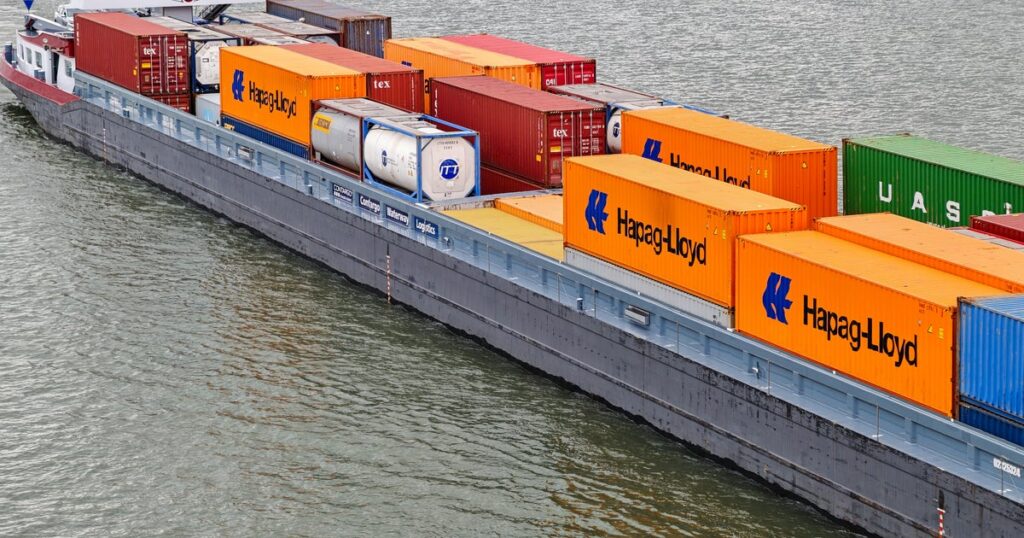
The Trump administration proposed tariffs of 10% to 12.5% on 60 trading partners, accusing them of failing to block imports made with forced labor. The duties would affect countries accounting for nearly all U.S. imports but must clear a comment process before taking effect.

Starbucks Korea’s chairman apologizes again after a marketing campaign referencing the 1980 Gwangju crackdown sparks public outrage and government condemnation. The campaign’s timing and slogans drew widespread criticism, leading to leadership changes and ongoing investigations.

American YouTuber Johnny Somali is sentenced to six months in a South Korean prison for offensive stunts, including disrespecting a statue honoring wartime sexual slavery victims. The court cited multiple charges and ordered his immediate detention.

K-pop supergroup BTS reunited for their first concert in nearly four years at Seoul's historic Gwanghwamun Square, drawing tens of thousands of fans and marking a symbolic return after completing their mandatory military service. The performance featured traditional Korean elements, songs from their new album "Arirang," and global hits, and was live-streamed on Netflix to a worldwide audience. This concert launched BTS's extensive global tour, highlighting their enduring cultural impact and resilience.

The conflict between the United States, Israel, and Iran has led to the near closure of the Strait of Hormuz, severely disrupting global oil supplies and causing sharp price increases, particularly impacting energy-dependent Asian countries that have implemented emergency measures to cope with shortages. This disruption has triggered broader economic consequences, including rising costs for fuel and essential products like fertilizers, stock market declines, and a shift toward alternative energy sources. Meanwhile, maritime operations in the strait have become increasingly dangerous due to attacks and military tensions, with shipping largely deterred despite U.S. efforts to secure the vital waterway.
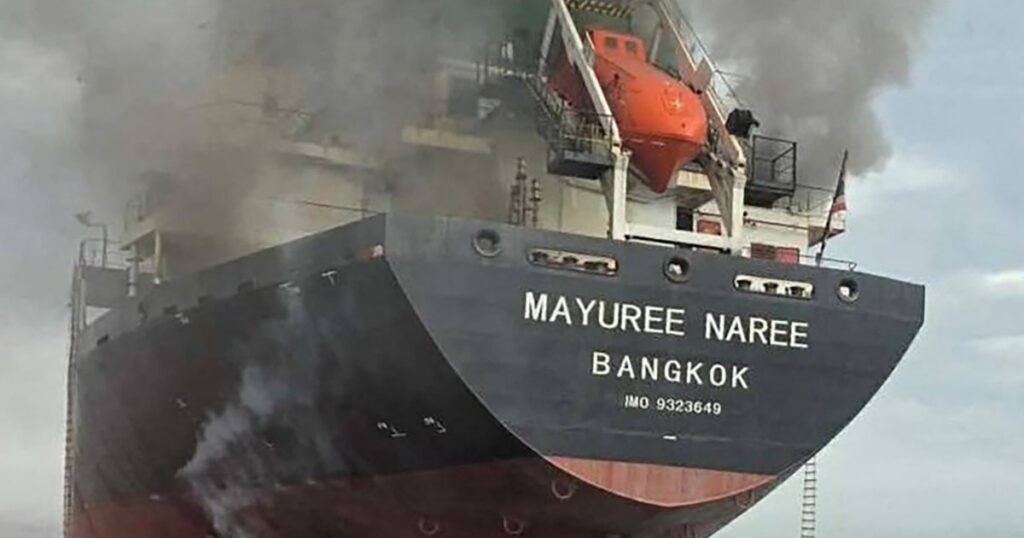
U.S. President Donald Trump has called on allied and rival nations to jointly patrol the Strait of Hormuz to secure the vital oil shipping route amid escalating tensions, but countries like Japan, France, China, the UK, and South Korea have responded cautiously without committing to military involvement. Iran maintains its stance of self-defense, denying closure of the strait and blaming U.S. actions for the insecurity, while allowing some vessels safe passage. Experts warn that even a multinational naval presence may not ensure security due to the strait’s narrowness and asymmetric threats, suggesting that diplomatic solutions may be more effective than military intervention.