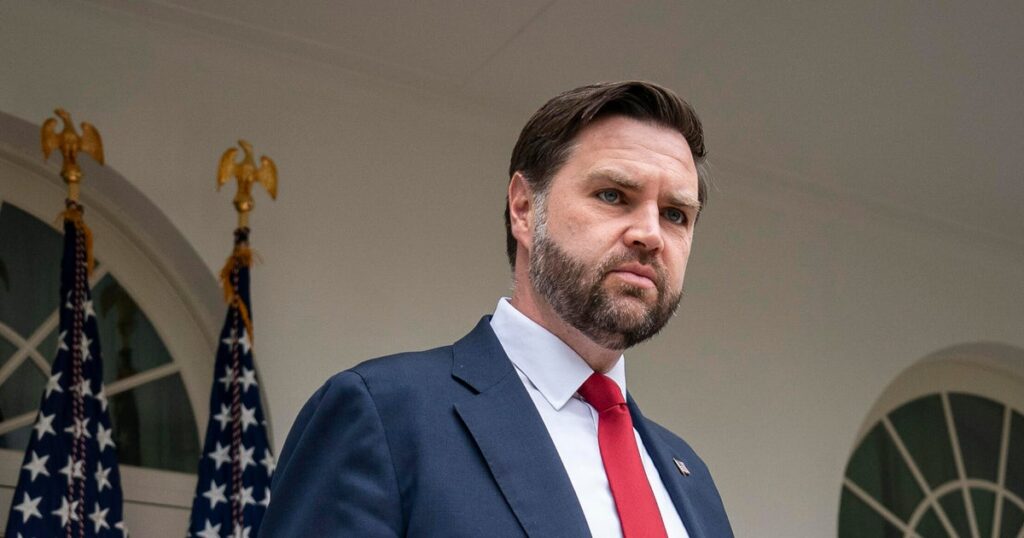
The global economy is facing significant disruptions due to new tariffs imposed by the Trump administration, including a 10% baseline on all imported goods into the U.S., which has particularly affected industries like footwear that rely heavily on international manufacturing. Tensions between the U.S. and China have escalated following controversial remarks by U.S. Vice President JD Vance, leading to criticism from China's foreign ministry and complicating trade relations. Despite a market downturn and criticism from various sectors, President Trump remains committed to his trade policies, introducing additional duties that have further strained international trade and impacted businesses like SIA Collective, a luxury sneaker company reliant on Chinese manufacturing.
Posts tagged as “Debate Clause of the United States Constitution”
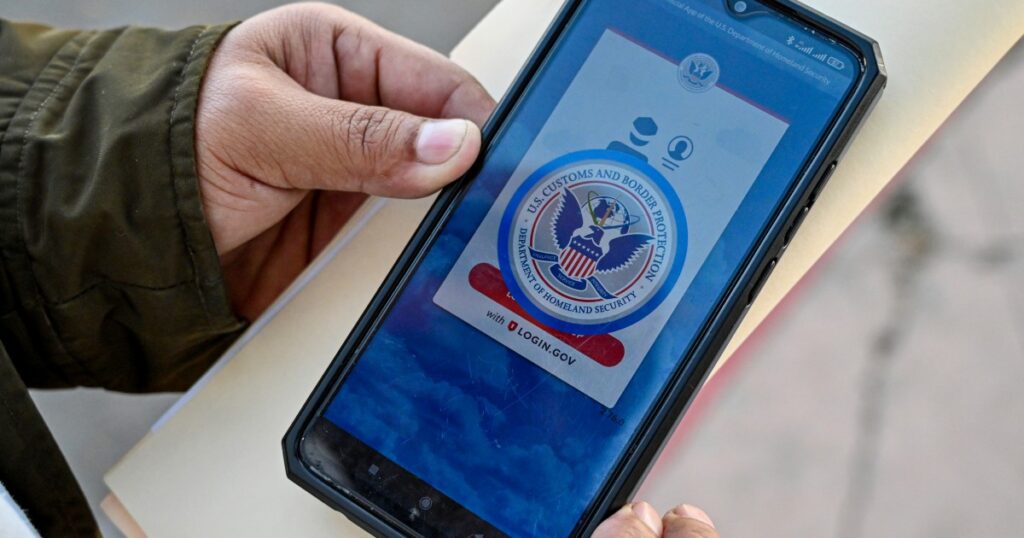
The Trump administration has begun revoking the legal status of migrants who entered the U.S. under a Biden-era policy that used the CBP One app to facilitate their temporary stay. This policy allowed over 900,000 migrants to enter the country with a two-year immigration parole, enabling them to work legally while awaiting asylum hearings. The decision to cancel these paroles reflects a significant shift in immigration policy, emphasizing border security and sparking discussions on its broader implications for affected individuals.

Ukrainian President Volodymyr Zelenskyy announced the capture of two Chinese nationals allegedly fighting with Russian forces in the Donetsk region, highlighting potential third-party involvement in the ongoing Ukraine-Russia conflict. This development raises questions about international involvement and could complicate global diplomatic relations, prompting Zelenskyy to seek clarification from Beijing regarding China's stance and the role of its citizens. The situation is being closely monitored by the United States and other international actors, as it may influence diplomatic efforts and military support strategies amid the evolving geopolitical landscape.
In pre-market trading on Tuesday, U.S. stock indices showed gains of 1% to 2%, reflecting similar positive movements in European and Asian markets despite ongoing U.S.-China trade tensions. The market's cautious optimism follows a volatile Monday session marked by sharp fluctuations due to uncertainty over potential tariffs and trade policies. Economists warn of the risk of a U.S. recession, advising caution as the trade disputes continue to unsettle global markets.
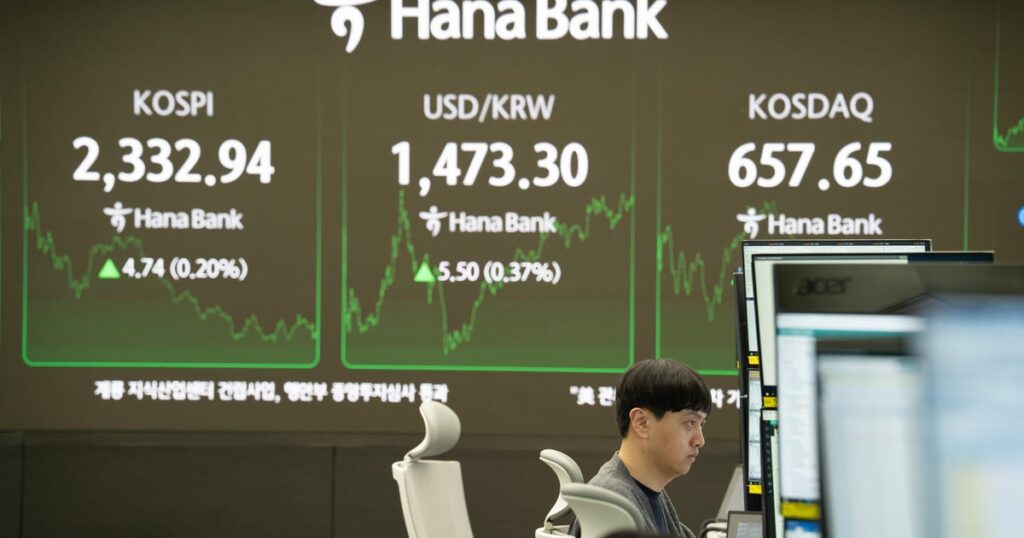
In pre-market trading on Tuesday, major U.S. stock indexes, including the S&P 500, Nasdaq, and Dow Jones Industrial Average, showed gains of between 1% and 2%, reflecting cautious optimism despite recent volatility. The ongoing trade conflict between the U.S. and China, exacerbated by President Trump's announcement of potential additional tariffs, continues to create uncertainty in global markets. Despite these tensions, global stocks, including the Nikkei 225 index in Tokyo, managed to recover some losses, indicating a modest rebound and signs of stabilization in financial markets.
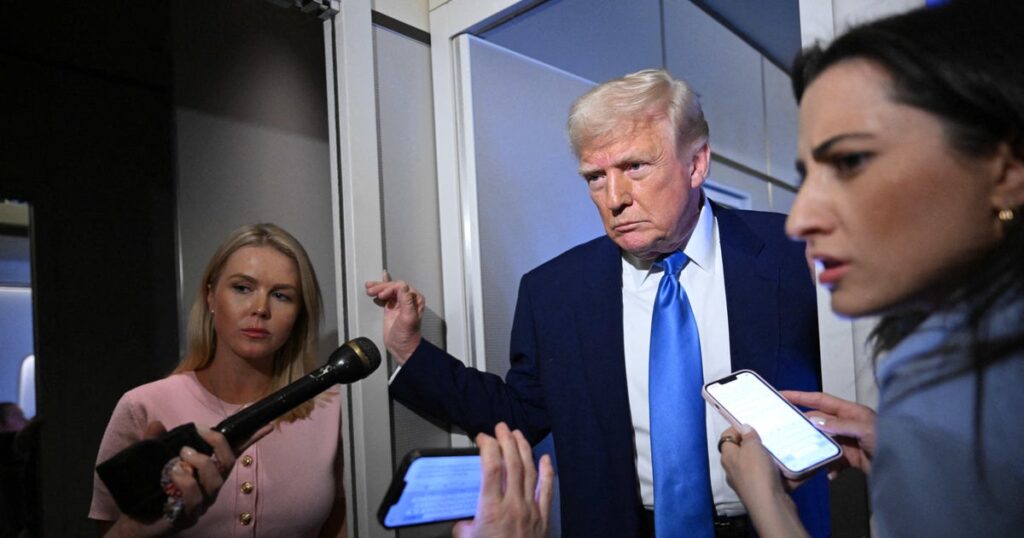
President Trump's announcement of new tariffs, including a 10% tax on all U.S. imports and additional tariffs on imports from 90 countries, has raised concerns about a potential global trade war and caused stock market volatility. The administration is defending the tariffs while seeking to mitigate their economic impact through negotiations with trading partners and engaging with concerned business groups. Despite fears of increased consumer costs and a potential recession, the administration remains committed to the tariff plan and is working to reassure the business community with pro-growth policies.

President Donald Trump announced that the United States will engage in direct negotiations with Iran regarding its nuclear program, warning of "great danger" if Iran does not abandon its nuclear ambitions. Concurrently, the Israel Defense Forces reported an incident where soldiers opened fire on individuals allegedly threatening civilian safety, resulting in one fatality. In the Israeli-occupied West Bank, the funeral of 14-year-old Palestinian-American Amir Mohammed Rabee, who was shot and killed, underscores the ongoing regional tensions as the U.S. prepares for talks with Iran.
Former President Donald Trump announced on his Truth Social platform that the U.S. will impose new tariffs on countries retaliating against existing U.S. tariffs, specifically warning China of a 50% tariff on imports if it does not retract its planned tariff increase by April 8, 2025. This announcement has caused concern in financial markets, notably impacting Apple, whose stock dropped significantly due to its reliance on China for production and sales, leading to a substantial loss in market capitalization. The situation highlights the broader implications for multinational companies involved in international trade, as the deadline for China's response approaches and potential repercussions for global trade dynamics loom.