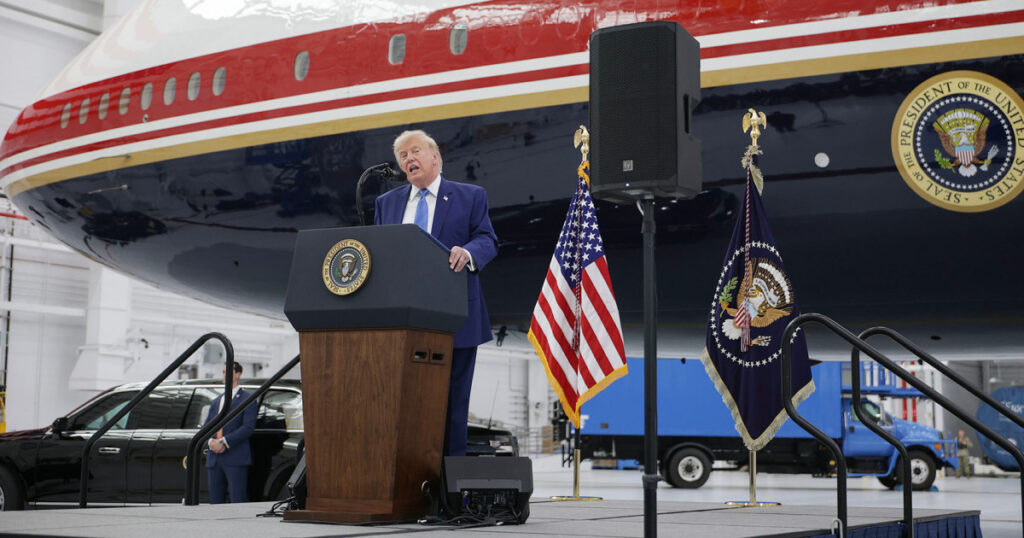
On April 2, President Donald Trump announced new tariffs, including a 10% universal tariff on imports and reciprocal tariffs targeting 60 trade partner countries, aiming to address trade imbalances. The announcement led to significant reactions in global markets, with declines in U.S. stock indexes and concerns about economic impacts, as companies reliant on global supply chains saw their stock values drop. The tariffs are expected to increase costs for U.S. importers like Walmart and Amazon, potentially leading to higher consumer prices and exacerbating financial strain amid existing inflationary pressures.
Posts published in “US”
The Trump administration's increased scrutiny of foreign students participating in pro-Palestinian activities has led to the detention and visa revocation of several students at U.S. universities, raising concerns about First Amendment rights. This has sparked a debate over the balance between national security and individual rights, particularly following recent incidents at institutions like Tufts University and Columbia University. As universities express support for their international students, the situation underscores the tension between immigration policies and the rights to political expression, with broader implications for academic freedom and free speech in the U.S.
In Wisconsin's state Supreme Court race, liberal candidate Susan Crawford achieved a decisive victory over conservative Brad Schimel, despite Schimel receiving over $20 million in support from Elon Musk and endorsements from Donald Trump. The election, which saw a turnout of over 2.3 million voters, highlights the state's political dynamics and voter engagement in off-year elections. Crawford's win is seen as a boost for Democrats, reflecting strong voter mobilization efforts, while contrasting outcomes in Florida's special elections underscore the varied political landscape across the United States.
Arizona Senator Ruben Gallego has decided to block the confirmation of key leaders at the Department of Veterans Affairs, intensifying Democratic efforts to prevent the Trump administration from reducing the agency's workforce. This move, along with Representative Adam Schiff's hold on a separate Trump nominee, underscores the heightened partisan tensions over federal agency staffing. These actions reflect broader Democratic concerns about the potential negative impact of the administration's plans on the effectiveness of federal agencies in serving the public.
The Supreme Court is set to hear a case concerning whether Medicaid recipients can sue to choose their healthcare providers, with Planned Parenthood at the center of the dispute. Originating from efforts by anti-abortion officials in South Carolina to block Medicaid funds to Planned Parenthood, the case unfolds amid significant changes in abortion laws following the reversal of Roe v. Wade. The outcome could impact Medicaid recipients' access to healthcare providers and influence the national debate on reproductive rights and public health funding.
The Trump administration is rapidly advancing its agenda, often bypassing judicial checks and raising concerns about the erosion of legislative powers and due process. President Trump is set to announce a major expansion of trade barriers, introducing the largest set of new tariffs in decades, which will escalate the trade war and target sectors like imported cars and auto parts. Despite legal challenges, such as the U.S. District Judge dismissing a motion by the U.S. Institute of Peace, the administration continues to push forward, while other political and legal developments, including immigration policy disputes and campaign financing issues, highlight the complex landscape of U.S. politics.
A federal judge has permanently dismissed corruption charges against New York City Mayor Eric Adams, concluding a significant legal chapter with a "with prejudice" ruling that prevents retrial on the same charges. Judge Dale Ho's decision aligns with arguments from Paul Clement, who emphasized the need to avoid any perception of ongoing political pressure on the mayor. This resolution allows Mayor Adams to continue his duties without the threat of legal proceedings, as neither the Department of Justice nor the mayor's office has commented on the outcome.
In Wisconsin, Judge Susan Crawford's victory in the Supreme Court election preserved the liberal influence within the state's highest judicial body, despite significant financial support for her opponent from Elon Musk. In Florida, the Republican Party succeeded in two special House elections, expanding their majority in the U.S. House of Representatives, with Jimmy Patronis and Randy Fine winning in the 1st and 6th Districts, respectively. These election outcomes underscore the shifting political dynamics and the impact of endorsements and financial contributions, prompting both parties to reconsider their strategies for future elections.