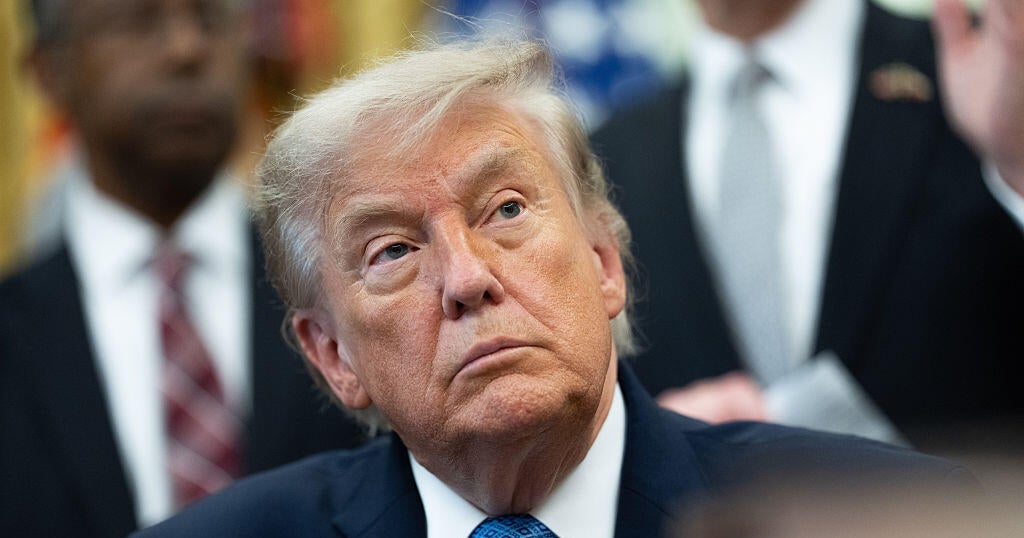
The Trump administration is intensifying efforts to encourage immigrants to voluntarily leave the United States, aligning with its broader strategy of mass deportations, but is facing complications due to a federal judge's ruling. The judge has temporarily blocked the administration from revoking deportation protections and work permits for migrants from Cuba, Haiti, Nicaragua, and Venezuela who entered legally under a Biden-era program. This legal barrier, along with stagnating deportation numbers, challenges the administration's immigration enforcement goals and necessitates a reassessment of its approach.
Posts published in “US”
The case of Kilmer Abrego Garcia, a Maryland resident mistakenly deported to El Salvador, has gained significant attention following a Supreme Court ruling that mandates the U.S. government to facilitate his release from a Salvadoran prison. U.S. District Judge Paula Xinis has requested updates on his current status and the efforts made by the Justice Department to rectify the deportation error, including diplomatic communications with Salvadoran authorities. Senator Chris Van Hollen has been actively involved, expressing concern for Abrego Garcia's well-being and seeking to engage with Salvadoran President Nayib Bukele to expedite his return to the United States.
A diplomatic dispute has arisen between the United States and El Salvador over Kilmar Abrego Garcia, with El Salvador's President Nayib Bukele refusing to extradite him back to the U.S., drawing attention from U.S. lawmakers. Senator Chris Van Hollen has actively engaged with El Salvador's ambassador and expressed his willingness to travel to El Salvador if the situation is not resolved, gaining support from other Democratic lawmakers. The case has also exposed tensions within the U.S. government, with criticism directed at the Trump administration for its handling of the matter, and a federal court hearing in Maryland is anticipated to address the legal and diplomatic ramifications.
Education groups have filed a lawsuit against the Department of Energy to prevent the implementation of a new policy that would cap "indirect costs" on federal research grants at 15%, arguing that such cuts could harm scientific research at American universities. The plaintiffs express concerns that the funding reductions could negatively impact the United States' leadership in global innovation, particularly in critical areas like nuclear deterrence and energy development. This legal challenge underscores ongoing tensions over research funding allocation and its implications for universities' educational missions and tax-exempt status.
The Trump administration has frozen over $2 billion in federal grants to Harvard University after the institution refused to comply with a list of ten government demands, escalating tensions between the administration and the Ivy League school. This decision is part of a broader pattern of the administration challenging judicial rulings it finds unfavorable, raising concerns about the erosion of judicial authority and the rule of law. The announcement, made alongside El Salvador's President Nayib Bukele, has sparked discussions about the implications for federal funding of higher education and the administration's approach to governance and international relations.
Mohsen Mahdawi, a Palestinian student at Columbia University, was detained by federal agents during a citizenship interview, with his legal team arguing that this violates his First Amendment rights due to his involvement in protests against the Israel-Gaza conflict. The Trump administration is reportedly using an obscure law to justify his deportation, claiming he poses "adverse foreign policy consequences for the United States," a provision also cited in another activist's case. This situation reflects broader concerns about the administration's crackdown on foreign students and the potential implications for their immigration status, highlighting tensions between immigration policies and the rights of activists.
During a celebratory event at the White House honoring Ohio State University's NCAA football championship team, Vice President JD Vance experienced a brief mishap with the championship trophy. While attempting to lift the trophy, it separated from its base, but Ohio State running back TreVeyon Henderson quickly intervened to prevent any damage. Despite the awkward moment, the celebration continued smoothly, with Vance humorously commenting on social media and the team presenting custom memorabilia to President Trump and Vice President Vance.
Following the announcement that certain electronics would be exempt from tariffs on Chinese imports, technology stocks experienced a notable rally, benefiting companies like Apple and Nvidia. This exemption alleviated concerns about potential price increases for products manufactured in China, highlighting the sensitivity of tech stocks to trade policy developments. Despite the positive market response, a survey revealed that 62% of U.S. CEOs anticipate an economic downturn within six months, reflecting growing concerns about economic stability amid fluctuating trade policies.