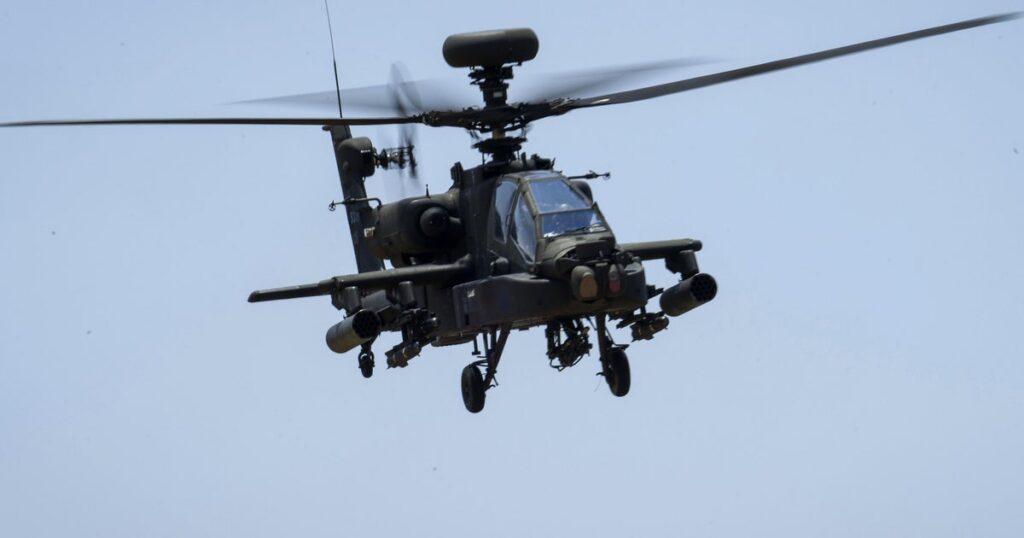
Four U.S. military personnel died when a KC-135 aerial refueling aircraft crashed near the Iraqi-Jordanian border during operations related to conflicts involving Iran, with two crew members still missing as rescue efforts continue. CENTCOM confirmed the crash was not due to hostile or friendly fire and noted a second KC-135 involved in the same operation was damaged but landed safely in Tel Aviv. This incident is the fourth U.S. aircraft crash linked to Operation Epic Fury, which has resulted in 11 U.S. service member deaths since February 28, and recovery operations are ongoing amid an active investigation.
Posts published in “US”

Authorities are investigating a deliberate vehicle-ramming attack at Temple Israel, a large Reform synagogue in West Bloomfield Township, Michigan, which caused significant damage and injured several law enforcement officers. The suspect was found dead inside the vehicle, which contained explosives that ignited a fire, but no children or school staff were harmed during the incident. Community and political leaders condemned the attack as an act of antisemitism, expressing solidarity with the Jewish community and emphasizing resilience against hate.
A shooting at Old Dominion University’s Constant Hall on Thursday morning left two people critically injured and the gunman dead, prompting an immediate lockdown and suspension of classes. Law enforcement, including the Norfolk Police and ATF agents, responded swiftly to neutralize the threat, while the university and state officials emphasized their commitment to campus safety and ongoing support. Students described chaotic evacuations, and authorities continue to investigate the incident as they provide updates to the community.
The U.S. Senate remains deadlocked over funding the Department of Homeland Security due to sharp disagreements between Democrats and Republicans on immigration enforcement reforms, resulting in a partial government shutdown lasting nearly a month. Democrats demand reforms such as body cameras and identification for immigration agents following fatal shootings, while Republicans resist these changes and accuse Democrats of stalling negotiations. The impasse has caused operational disruptions, including TSA workers missing paychecks and increased absenteeism, with no clear resolution in sight as both parties continue behind-the-scenes talks amid mounting pressure.
Inflation in the United States remained steady in February, with the Consumer Price Index rising 2.4% annually, slightly below expectations, before the recent surge in oil prices caused by the Iran conflict. The war has sharply increased gasoline prices and disrupted global oil supply via the Strait of Hormuz, raising concerns that energy cost spikes could reverse progress in controlling inflation. As the Federal Reserve prepares for its March interest rate decision, economic uncertainties—including weakening job growth and inflation risks—have led analysts to anticipate a cautious approach amid heightened uncertainty.
An internal U.S. military investigation preliminarily found that outdated intelligence led to a missile strike on an elementary school in Iran, killing over 170 civilians, mostly children, during a coordinated U.S.-Israeli operation. The strike mistakenly targeted the school, which had been inaccurately identified as a military site based on old intelligence, with evidence pointing to an American Tomahawk missile. Meanwhile, Iran retaliated with attacks killing six U.S. Army Reserve soldiers in Kuwait, escalating the ongoing conflict that the U.S. administration expects to continue for several weeks.
The U.S. government, through the International Development Finance Corporation (DFC), has launched a new initiative to provide political risk insurance for ships navigating the Persian Gulf amid escalating attacks and rising insurance premiums. This program, in partnership with insurer Chubb, aims to ensure the continued flow of energy supplies through the Strait of Hormuz by covering losses up to $20 billion, addressing the withdrawal of private war risk coverage. The move responds to recent vessel attacks that have drastically reduced maritime traffic and driven up global oil prices, though it raises concerns about potential financial risks for American taxpayers and the scope of coverage for non-U.S. ships.