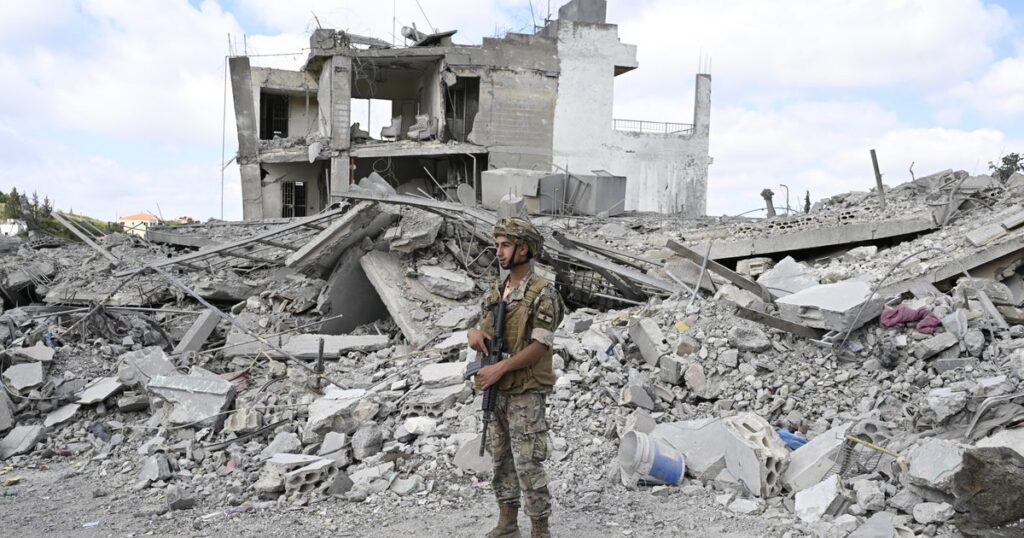
Tensions between Israel and Hamas have resurfaced following an Israeli air strike in northern Gaza, which targeted Hamas operatives and strained the fragile ceasefire that began in mid-January. As new negotiations are set to take place in Doha, both sides are holding firm on their demands, with Israel seeking the release of half of the remaining hostages as a condition for a long-term truce, while Hamas aims to discuss the more challenging second phase of the ceasefire. The international community is closely monitoring the situation, as the outcome of the Doha talks will be crucial in determining whether the ceasefire can be extended and if a lasting peace can be achieved.
Posts published in “Politics”
The recent surge in violence in Syria has resulted in over 1,000 deaths, marking one of the deadliest periods since the conflict began 14 years ago, with the Syrian Observatory for Human Rights reporting significant civilian casualties. The United States has condemned the violence, particularly the role of radical Islamist factions, while the situation remains complex with various militias involved, making it difficult to identify those responsible for the civilian deaths. Interim Syrian President Ahmed al-Sharaa has called for peace amid the dire humanitarian situation, as the international community closely monitors the developments and considers responses to the evolving conflict.
Senator Elissa Slotkin, a Democrat from Michigan, plans to withhold her vote on government funding unless the Trump administration assures that allocated funds will be spent according to congressional intent, highlighting concerns over executive overreach. As the deadline for a potential government shutdown approaches, the Senate faces a significant challenge, requiring bipartisan support to pass a continuing resolution, which emphasizes Congress's constitutional role in controlling government spending. This situation underscores the tension between the legislative and executive branches and the importance of congressional oversight, with the outcome impacting government operations and setting a precedent for future negotiations.
Panama has released dozens of migrants, primarily from Asian countries, who were detained after being deported from the United States, following legal challenges and human rights criticism. These migrants, part of an agreement between the Trump administration and the governments of Panama and Costa Rica to expedite deportations, now face uncertainty with 30 days to leave Panama and limited resources to support themselves. The situation underscores the challenges of international migration and the human impact of immigration policies, as individuals like Hayatullah Omagh, who fled Afghanistan, struggle to find accommodation and plan their next steps.
The Trump administration's attempt to replace the board of the U.S. African Development Foundation (USADF) with the help of Elon Musk's DOGE team has been deemed unlawful by legal experts and is part of a broader strategy to centralize authority over independent agencies. This move has faced significant opposition from judges and international leaders, who argue that it disrupts established global norms and bypasses traditional checks and balances. The situation highlights ongoing tensions between the administration and independent agencies, with legal experts warning that such actions could undermine the Senate's constitutional role in appointments.
House Speaker Mike Johnson introduced a short-term funding bill to prevent a government shutdown by extending operations through September, with increased defense spending and decreased non-defense discretionary spending. The bill, scheduled for a House vote on Tuesday, is crucial as current funding expires late Friday night, aiming to maintain government operations and avert a shutdown. Notably, the bill includes an additional $6 billion for veterans' health services, reflecting a priority on veterans' health amidst reduced non-defense spending, and President Trump has expressed his willingness to sign it.