Key takeaways:
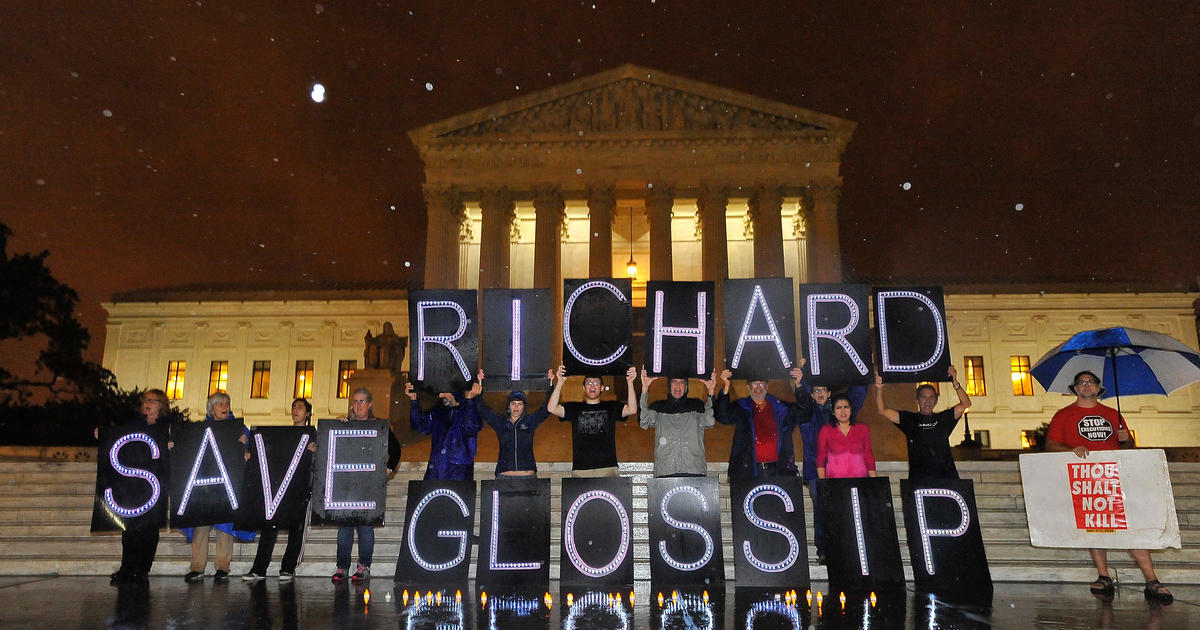
- The Supreme Court blocked Oklahoma from executing Richard Glossip after the state’s attorney general agreed his life should be spared.
- New evidence indicated that the main witness against Glossip was not entirely truthful in his testimony, creating reasonable doubt as to his guilt.
- The Supreme Court’s decision to block Glossip’s execution comes after months of legal battles and public outcry from Glossip’s supporters.
The Supreme Court on Friday blocked Oklahoma from executing death row inmate Richard Glossip after the state’s attorney general agreed Glossip’s life should be spared. Glossip was convicted of the 1997 murder-for-hire killing of his boss, motel owner Barry Van Treese, at two separate trials based on the testimony of a single witness.
In an April 24 letter to the Pardon and Parole Board obtained by CBS News, Oklahoma Attorney General Gentner Drummond wrote that new evidence released by his office indicated that the main witness against Glossip was not entirely truthful in his testimony, resulting in the creation “of reasonable doubt as to Mr. Glossip’s guilt for first-degree murder.”
Despite Drummond’s statements, Glossip had been scheduled to be put to death on May 18. An Oklahoma appeals court subsequently upheld Glossip’s conviction and the state’s pardon and parole board deadlocked in a vote to grant him clemency.
The Supreme Court’s decision to block Glossip’s execution comes after months of legal battles and public outcry from Glossip’s supporters. Glossip’s case has been taken up by celebrities, including Susan Sarandon, Richard Branson, and Kim Kardashian West, who have all called for clemency.
It is unclear at this time what will happen next in Glossip’s case. The Supreme Court’s decision to block his execution is a temporary reprieve, and it is possible that the state of Oklahoma could still seek to execute him in the future.





Be First to Comment