Key takeaways:
- Iran’s foreign ministry called the U.S. naval blockade an act of military aggression and invoked its right to self-defense under the U.N. Charter.
- Iran says the Strait of Hormuz could reopen within two days if Washington meets its conditions, including lifting the blockade.
- Trump said Iran launched more drones and missiles in the past week than at any time in over a year, but claimed they caused no damage.
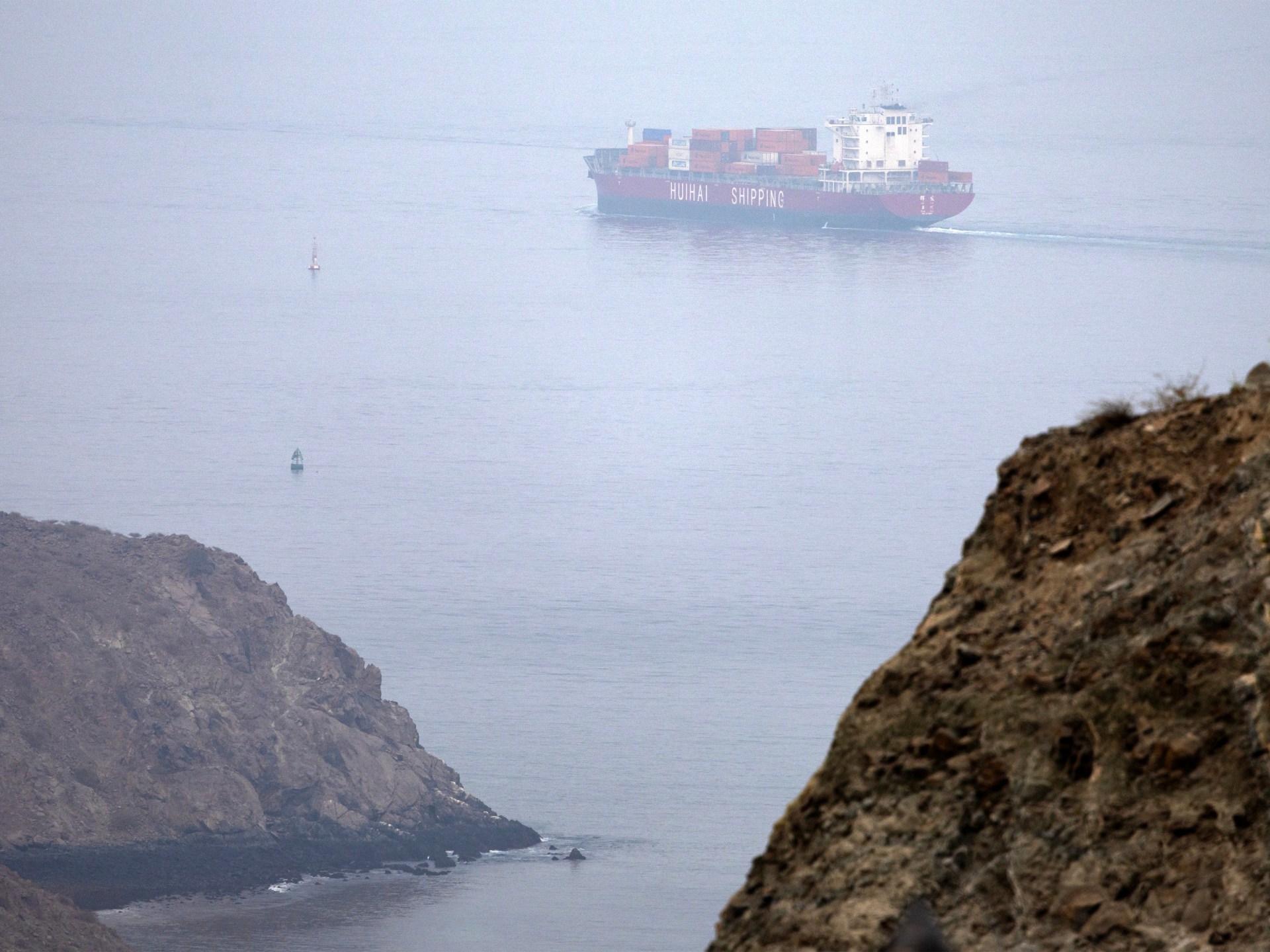
Iran said Monday it would use “all available means” to counter a U.S. naval blockade of its ports, raising the stakes in a war that has made the Strait of Hormuz a flashpoint for global energy shipments.
“We will certainly not tolerate these actions and will use all available means to counter U.S. aggression,” Foreign Ministry spokesman Esmaeil Baghaei said at a news briefing. He called the blockade, along with U.S. economic sanctions, “an act of military aggression” and said Iran was entitled under Article 51 of the U.N. Charter to defend itself.
The United States imposed the blockade in response to Iran’s efforts to block the Strait of Hormuz, a route for oil and natural gas shipments. Washington has also announced further sanctions and launched a task force to disrupt land routes into Iran.
Al Jazeera reported that the U.S. blockade began on April 13, was lifted in June after Washington and Tehran reached a draft understanding, and was restored on July 14 when that agreement collapsed. The outlet said visible Iranian crude exports have fallen to near zero in recent months. Baghaei dismissed reports of Iranian ships loading oil as “speculation.”
Iran has said the strait could reopen within two days if Washington meets its conditions. According to Al Jazeera, those include ending hostilities, lifting the blockade and waiving sanctions. “If the American side fulfils its commitments, security can be restored to the Strait of Hormuz and the region in the shortest possible time,” Baghaei said.
President Donald Trump, meanwhile, acknowledged an increase in Iranian attacks but played down their impact. Iran “has launched more drones and missiles in the last week than at any time for over a year,” he wrote Sunday on Truth Social. “Don’t worry, they’ve all been knocked down, and done no damage.” CBS News reported that Trump also linked the escalation to Democrats’ victories in the Nov. 3 midterm elections. His assertion that Iran had killed 81,000 protesters was not independently substantiated in the source accounts.
The wider conflict continues to affect Yemen. CBS News reported that a Houthi-linked television channel said a Saudi attack Monday on a telecommunications building in the port city of Hodeida killed four people and wounded 18. Saudi Arabia did not immediately comment. A Houthi health official also said a strike Sunday on a fuel station in the capital, Sanaa, wounded six workers. The Houthis blamed Saudi Arabia for that strike.
According to CBS News, the collapse of a truce between the Houthis and Yemen’s Saudi-backed government in July drew the country into the U.S.-Iran conflict. The renewed fighting has killed more than 1,600 people and displaced more than 300,000, according to U.N. data cited by CBS News.
In Lebanon, Prime Minister Nawaf Salam condemned an Israeli military spokesperson’s visit to a school in Israeli-occupied southern Lebanon. CBS News reported that Ella Waweya posted video of herself at the school in Debl, including footage showing her before a classroom of children. Salam accused Israel of “dragging students into a military and propaganda display” and said an occupying power had no right to exploit children to improve its image.




Be First to Comment