Key takeaways:
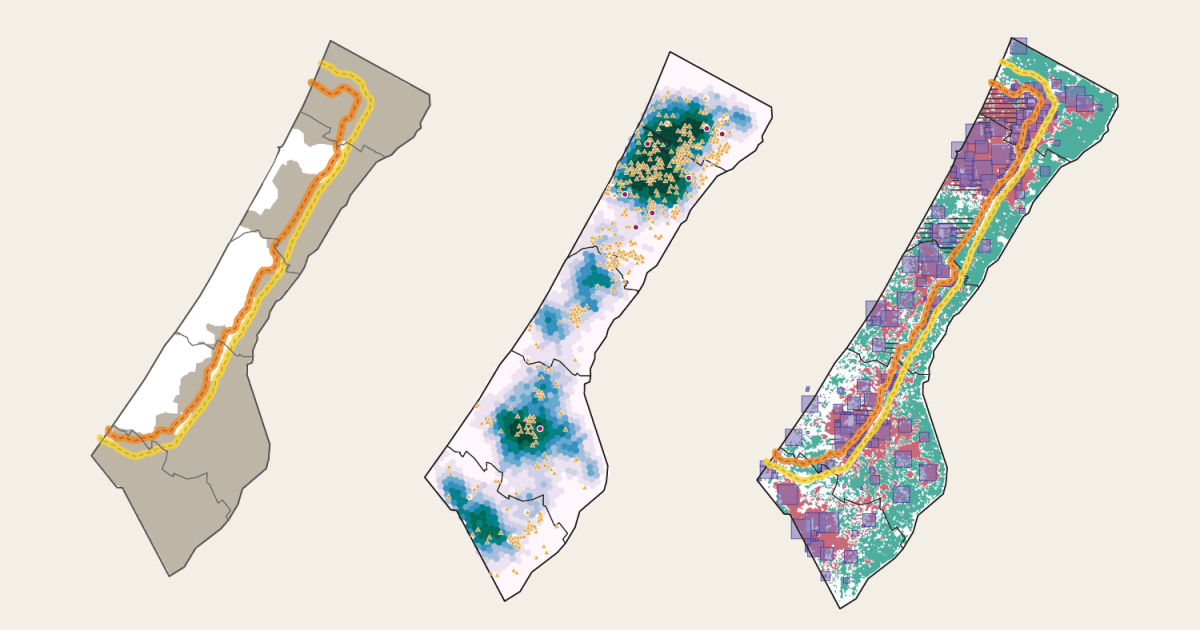
- Oxfam and the Conflict and Environment Observatory identified at least one potential contamination source across more than 99% of Gaza.
- The UN Environment Programme estimated that the war generated more than 61 million tonnes of debris in Gaza.
- All six of Gaza’s wastewater treatment plants are out of operation, and Oxfam is calling for an independent environmental assessment before cleanup.
More than 99% of Gaza shows signs of potential environmental contamination from the war, according to a report by Oxfam and the Conflict and Environment Observatory that warns pollutants in air, soil and water could threaten Palestinians for decades.
The groups used satellite imagery, remote sensing, spatial analysis and other open-source data to map potential hazards. Their findings do not establish contamination levels throughout the territory: Oxfam says testing is often impossible because laboratories have been destroyed and Israeli restrictions limit the entry of specialist equipment and scientists.
The report describes Gaza as a “toxic wasteland”. It identifies risks from explosive residues, heavy metals, asbestos in demolished buildings, fires, damaged vehicles, waste and untreated sewage. Pollutants can spread through dust and enter water and food supplies, it says.
“Palestinians living in Gaza are being exposed to toxins in multiple ways through air, food, water and via direct contact with contaminated soils and debris,” Oxfam International executive director Amitabh Behar said. He accused Israel of “environmental war crimes” as part of an “ongoing genocide in Gaza” and said the damage had degraded conditions necessary for human safety and survival.
Israel has rejected genocide accusations in a case before the International Court of Justice as baseless and distorted. It says its campaign is an act of self-defence following Hamas’s deadly Oct. 7, 2023, attack on Israel and that it takes steps to reduce civilian harm. The BBC said it had asked the Israeli government and military for responses to the report.
The UN Environment Programme estimated that the destruction of homes and infrastructure had produced more than 61 million tonnes of debris across Gaza, about 15% of which could carry a high risk of hazardous-material contamination, the BBC reported. Oxfam estimates that Israeli ground operations had directly affected 78% of Gaza’s land area by Oct. 11, 2025, according to Al Jazeera.
All six wastewater treatment plants are out of operation, allowing untreated sewage to reach groundwater and the Mediterranean Sea. Heavy winter storms have also sent rainwater mixed with wastewater through streets and sites housing displaced people. Al Jazeera reported that a Palestinian Water Authority assessment cited by Oxfam put Gaza’s daily water supply in April 2026 at 61% below its prewar level.
Doctors have reported more acute respiratory infections linked to dust and pollution, as well as gastrointestinal illness associated with unsafe water and poor sanitation. Palestinian dermatologist Alaa Abu Hajar told the BBC he had seen a fivefold increase in chronic skin diseases since the war began. “Unfortunately, the age group most affected is children,” he said.
Oxfam report author Lama Abdul Samad told the BBC persistent contaminants could cause long-term health problems, including respiratory disease, cancer and organ damage. Farmers and fishers also say pollution threatens their ability to produce safe food. “When we lower our nets, we catch rubble and garbage,” fisherman Abu al-Abed Sultan told the BBC.
Oxfam called for a full, independent environmental assessment before cleanup begins, with particular protection for workers handling contaminated material.






Be First to Comment