Key takeaways:
- Kuwait reported no casualties or damage after its air defences engaged drones; Iran said it targeted a base hosting US forces.
- Bahrain said it intercepted Iranian aerial attacks and has reported four attacks in six days.
- One crew member is missing after an attack on an Abu Dhabi National Oil Company vessel in the Strait of Hormuz.
Kuwait and Bahrain said they repelled Iranian air attacks overnight after US warplanes struck a missile launch site on an Iranian island, the latest exchange of fire in a war that has also put shipping through the Strait of Hormuz at risk.
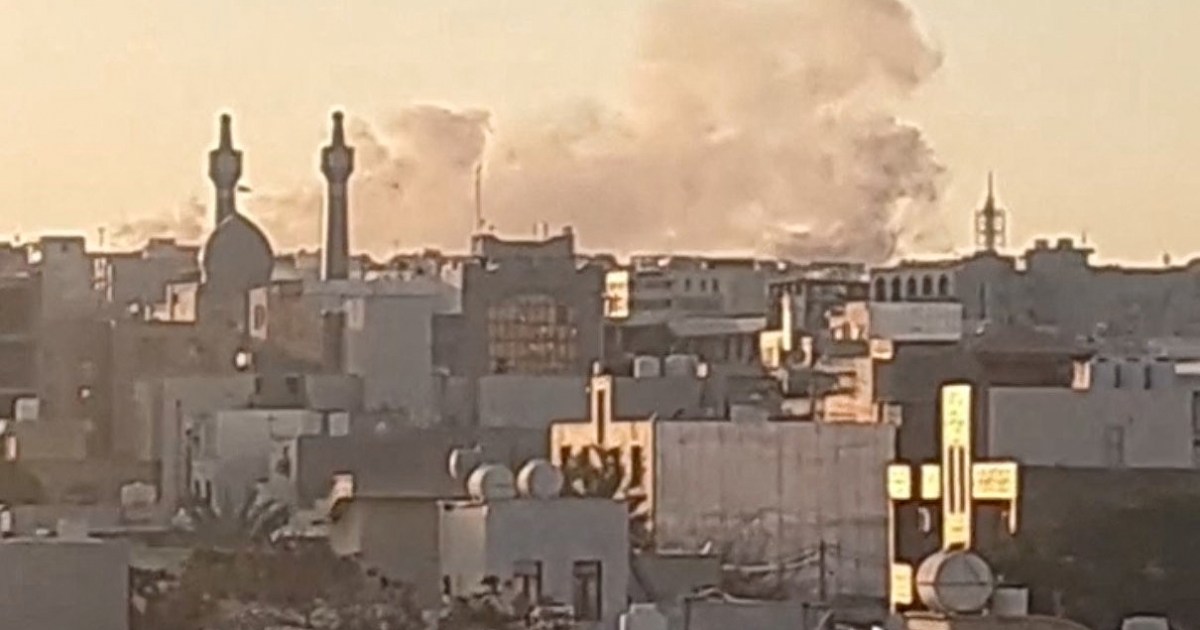
Kuwait’s military said Tuesday night that its air defences engaged drone threats but reported no casualties or damage. Iran’s army said its drones targeted US Patriot air defence systems and drone and missile launch platforms at Ali Al Salem Air Base, which hosts US forces. The BBC reported that it was Kuwait’s first drone attack in more than two months; Al Jazeera described it as the first since early September.
Bahrain’s military said Wednesday that it had “intercepted and destroyed several Iranian aerial attacks.” The country, which hosts the US Navy’s 5th Fleet, has reported four attacks in six days after a lull of several weeks, according to Al Jazeera, or two months, according to the BBC.
US military officials said fighter jets struck the missile launch site on Qeshm Island, in the Strait of Hormuz, with precision munitions Tuesday night in response to Iranian aggression against US personnel and assets. Al Jazeera reported that the US cited an Iranian attack on a US radar installation in Bahrain earlier that day. Iranian media reported explosions on Qeshm but quoted a local official as saying infrastructure was not damaged, according to the BBC.
Iran said its recent attacks responded to US drone surveillance operations and an attack on Iranian communications towers, Al Jazeera reported. Iran’s army commander-in-chief, Major General Amir Hatami, warned that further attacks on Iran would bring a stronger response. “If the enemy repeats its mistake… we have the readiness and the plans to confront it and its supporters in a stronger, more crushing way and without geographic limitations,” he said, according to the BBC.
The attacks drew regional condemnation. Kuwait’s Foreign Ministry said the drone attack “flagrantly violated Kuwait’s sovereignty, directly threatened its security and stability, and constituted a grave breach of international law.” Qatar, which has mediated stalled indirect talks between Washington and Tehran, called the attacks on its neighbours a “dangerous escalation” that threatens efforts to contain tensions. Al Jazeera reported that Saudi Arabia, the Arab League and the Gulf Cooperation Council also condemned the attacks.
The violence has extended to commercial shipping. The Abu Dhabi National Oil Company said one crew member was missing after an attack Tuesday on one of its vessels in the Strait of Hormuz. The rest of the crew were evacuated, and 11 were receiving medical care. The UK Maritime Trade Operations centre said a tanker was hit by an unknown projectile about 13 nautical miles (24km) north of Khasab, Oman, starting a fire that was extinguished. Iran said two oil tankers and a ship carrying liquefied natural gas caught fire after hitting naval mines on an “authorised route.”
The war began with US-Israeli strikes on Iran in late February. The BBC reported that at least 25 seafarers have been killed across the Middle East since then. A preliminary US-Iran agreement reached in June to end the conflict and reopen the strait collapsed within weeks, the BBC reported, and negotiations remain stalled.



Be First to Comment