Key takeaways:
- Bahrain and the U.S. military said Tuesday’s Iranian drone attack was intercepted without damage to U.S. equipment or injuries to American personnel.
- A U.S. fighter jet struck a Revolutionary Guard missile launch site on Iran’s Qeshm Island hours after the Bahrain attack.
- Kuwait reported intercepting hostile drones Tuesday but did not identify their origin or report casualties or damage.
Iran launched drones at a U.S. radar installation in Bahrain on Tuesday, its third attack on American military targets in the island kingdom in five days. The United States struck a missile launch site on Iran’s Qeshm Island hours later, while Kuwait said its air defenses were intercepting hostile drones.
Bahrain said it intercepted the Iranian attack. U.S. Central Command said the drones caused no damage to American equipment or injuries to personnel. Iran’s Islamic Revolutionary Guard Corps said it targeted the U.S.-operated radar at Sheikh Isa air base in response to what it called repeated violations of Iranian airspace by U.S. military drones.
A U.S. official told NPR that an American fighter jet used “precision munitions” against a Revolutionary Guard missile launch site on Qeshm Island, in the Strait of Hormuz. The official described the strike as a response to “aggression” toward U.S. personnel. Al Jazeera reported that Iran’s official IRNA news agency recorded five to six explosions on the island. Ahmad Nafisi, an Iranian provincial official, said residential and commercial areas and infrastructure were not damaged.
Kuwait’s military said Tuesday night that its air defenses were responding to “hostile drone attacks” and urged residents to follow safety instructions, according to Al Jazeera. It did not identify the drones’ origin or report casualties or damage.
Bahrain hosts the U.S. Navy’s Fifth Fleet. Iran also targeted U.S. radar facilities there on Friday and Sunday; those attacks appeared to cause little or no damage, NPR reported. Egypt, Qatar, Saudi Arabia and the United Arab Emirates condemned Tuesday’s attack on Bahrain. Qatar said Iran’s “continued attacks” undermine diplomatic efforts, while Foreign Ministry spokesman Majed Al Ansari warned that further escalation posed an “extremely grave danger” to prospects for an agreement.
The exchanges come as negotiations to end the war remain stalled. Fighting began Feb. 28, when the United States and Israel attacked Iran. The United States has since enforced a naval blockade that restricts Iranian oil exports, while Iran has sought to limit traffic through the Strait of Hormuz. U.S.-escorted tankers have helped bring Gulf oil shipments back to roughly prewar levels, according to NPR.
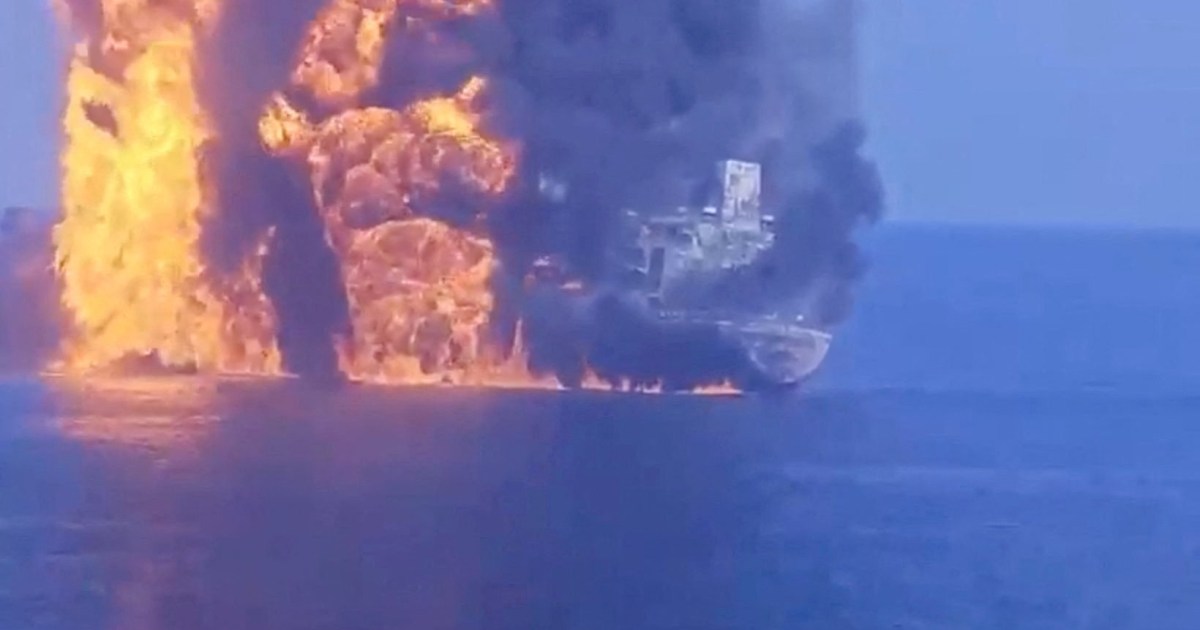
Al Jazeera reported that Iran’s armed forces said three oil tankers struck naval mines while attempting to cross the strait Tuesday. The U.S. military said it had cleared mines from the main routes. Al Jazeera also reported that two Panamanian-flagged tankers were hit off Oman on Monday. After the Tara Gas was struck a second time, its crew abandoned ship and one Indian sailor was missing, India’s ports minister said.
The USS Theodore Roosevelt has arrived in the region, joining two other U.S. aircraft carriers. Iran’s foreign minister, Abbas Araghchi, and his Omani counterpart, Badr Albusaidi, discussed shipping security and diplomatic options in Muscat, Al Jazeera reported.







Be First to Comment