Key takeaways:
- Witkoff is due to meet Putin in St. Petersburg on Wednesday to discuss proposals following talks in Oslo.
- Zelenskyy says early warnings about incoming Russian ballistic missiles have resumed; Rubio denies any deliberate US policy change.
- Ukrainian officials reported deaths in several regions as diplomatic efforts continued.
US envoy Steve Witkoff is due to meet Russian President Vladimir Putin in St. Petersburg on Wednesday with proposals to end the war in Ukraine, following talks in Oslo involving Ukrainian, European and US officials. The diplomatic push comes as President Volodymyr Zelenskyy says Ukraine is again receiving early warnings of Russian missile attacks.
Zelenskyy said Tuesday that warnings about incoming ballistic missiles had resumed after discussions with US officials, including Secretary of State Marco Rubio. For at least a week, he had said Ukraine was not receiving enough notice of missiles aimed at Kyiv. Such warnings give civilians time to seek safety and military units a chance to intercept the missiles.
“We are thankful that intelligence works now,” Zelenskyy said in Norway. Early warning is vital for “children, adults, civilians, because we can hear when ballistic is coming,” he said.
Washington has rejected the suggestion that it deliberately withheld intelligence. Speaking in India, Rubio acknowledged frustration over intelligence sharing and weapons supplies but said the administration had not changed its policies. “Nothing has changed,” he told reporters. “There has not been some deliberate political directive to go out and harm Ukraine.”
Tuesday’s Oslo talks involved Zelenskyy, Norwegian Prime Minister Jonas Gahr Støre, Finnish President Alexander Stubb and US envoy Witkoff. Another US envoy, Jared Kushner, joined by video link. A US official called the discussions “very productive and constructive” and said there was “strong alignment at the working level” among the US, Ukraine and Europe on next steps. Kushner is also expected to join Wednesday’s meeting virtually.
Stubb said the talks made “genuine progress” but gave no details and cautioned that patience was needed. Støre said Witkoff would take ideas from Oslo and proposals from American and European colleagues to Russia. Zelenskyy said Ukraine was ready for negotiations and that the discussions also covered security guarantees and proposals for an energy ceasefire. Støre said Europe must be part of talks on ending the war.
Russian Foreign Minister Sergei Lavrov said Moscow would listen to the proposals, though he ruled out “any political concessions,” according to the BBC. Putin has not publicly commented on the latest talks.
Trump also pressed Zelenskyy to reach an agreement. “We want Zelenskyy to make a deal,” he told reporters at the White House, according to NPR. Relations between the two leaders have worsened, and Zelenskyy told US lawmakers Monday that he believed a political decision had been made to slow support for Ukraine, NPR reported.
Zelenskyy has said Ukraine is nearly out of US-made Patriot interceptors needed to defend against ballistic missiles and that restrictions on its use of SpaceX satellite internet services are hampering operations, NPR reported. Rubio said Patriot ammunition is scarce and needed elsewhere, but denied that Washington was intentionally withholding assistance.
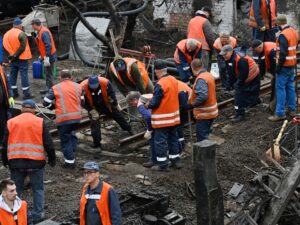
Russian attacks continued during the diplomatic push. The BBC reported that Ukrainian officials said at least 10 people were killed Tuesday, including four in Kyiv and its surrounding region, four in Donetsk and two in Dnipro. It reported two more deaths near Kharkiv overnight Wednesday. NPR reported separate accounts from Ukrainian authorities of deaths in the Kyiv region, on the Kyiv-Odesa highway and near Dnipro, and said attacks caused power outages in 12 regions. The Russian Defense Ministry said it had struck logistics and port facilities and ships in the Odesa region.




Be First to Comment