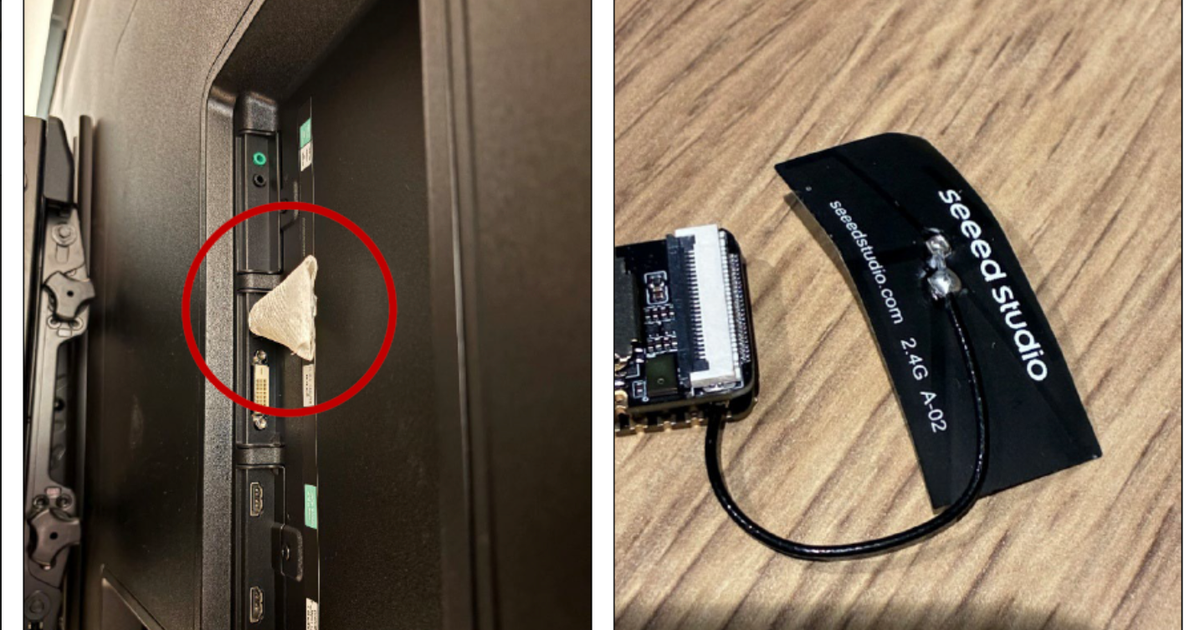
Key takeaways:
- Employees found a recording device behind a conference-room television on Sept. 30; prosecutors say it had been installed about two days earlier.
- Abdulrahman Alfozan, an OpenAI engineer since July 2025, faces a federal charge of attempting to intercept oral communications.
- OpenAI says it alerted the FBI, fired the accused employee and has no indication that model weights, source code or customer data were improperly accessed or taken.
An OpenAI engineer has been arrested and charged with trying to intercept conversations after employees found a hidden recording device in an executive conference room at the company’s San Francisco office, federal prosecutors said Tuesday.
Abdulrahman Alfozan, 35, a Saudi national who had worked at OpenAI since July 2025, was arrested Friday and appeared Tuesday in U.S. District Court for the Northern District of California. He is charged with using or endeavoring to use an electronic, mechanical or other device to intercept oral communications.
Employees discovered the device on Sept. 30, inserted into a USB port behind a television. It had been concealed in toilet paper and installed about two days earlier, prosecutors said. The Justice Department said the room was often used for discussions of confidential research, product plans and business development. According to the BBC, prosecutors described the device as encrypted.
OpenAI said it alerted the FBI after finding what it called a “sophisticated recording device” and has fired the employee accused of planting it. The company said it used its AI models to investigate the device and identify an employee who had planted it days earlier.
“The FBI’s investigation is ongoing and we will continue to support their work,” OpenAI said in a statement. “At this time, we have no indications of this individual inappropriately accessing or exfiltrating model weights, source code, or customer data.”
FBI Director Kash Patel said in a statement reported by the BBC that Alfozan allegedly concealed the device to capture sensitive communications about the company’s AI product. The allegation has not been proven in court.
A criminal complaint made public Tuesday alleges that Alfozan used a productivity tool to search for OpenAI building addresses, meeting rooms and their capacities, calendars, and the locations of leadership and external-partner meetings. CBS News reported that investigators also found prompts submitted between Sept. 24 and Sept. 30 through a chatbot account associated with Alfozan’s spouse. The prompts concerned building, customizing, installing, testing, concealing and remotely accessing a continuous audio recording device. According to the BBC, they included questions about Wi-Fi connectivity, live listening and encrypting an SD card.
Prosecutors say Alfozan entered the conference room on Oct. 5 and looked behind the television; the BBC reported that CCTV footage linked him to the room. That day, OpenAI security staff opened a bag he had left unattended elsewhere in the building and found his identification, wallet and another recording device similar to the one in the conference room, according to the complaint.
Alfozan is scheduled for a detention hearing on Oct. 19. If convicted, he faces up to five years in prison and a $250,000 fine, the BBC reported. CBS News said it had sought comment from his lawyer.












Be First to Comment