Key takeaways:
- Cornell banned fraternity parties and social events for the rest of the academic year, with violations subject to immediate suspension.
- A former student alleges that members of the Chi Phi fraternity drugged and sexually assaulted her at an October 2024 party.
- Cornell plans to involve New York State Police investigators in campus sexual assault cases and expand support for survivors.
Cornell University has banned fraternity parties and social events for the rest of the academic year and will bring in New York State Police investigators for campus sexual assault cases, responding to outrage over its handling of a former student’s allegation that she was drugged and raped at a fraternity house in 2024.
President Michael I. Kotlikoff announced the measures Tuesday in a letter to the campus community. “I am deeply sorry for the harm Jane Doe suffered in 2024, and appalled that this act of sexual violence occurred within our Cornell community,” he wrote. “It is clear that women on our campus continue to question whether they are safe.”
The former student, identified in a civil lawsuit as Jane Doe, alleges that members of the Chi Phi fraternity drugged her with ketamine and sexually assaulted her at a party in October 2024. According to Al Jazeera, the suit names the fraternity and seven members and identifies the night of October 19. The lawsuit also describes a Snapchat group chat in which fraternity members discussed Doe and the party in crude terms, NPR reported.
Cornell closed the Chi Phi chapter in 2024. The district attorney did not prosecute the case that year, according to NPR. Cornell’s Title IX office investigated in 2025, and a faculty and staff panel moved in March of that year to expel or suspend some of the men while requiring others to write essays and face additional sanctions, NPR reported. Al Jazeera reported that two accused students were later expelled.
Under the new policy, fraternity chapters that violate the ban face immediate suspension, Al Jazeera reported. Kotlikoff said the pause would allow Cornell to review “whether and how” fraternity life can safely continue. About one-third of Cornell students participate in fraternities and sororities, according to NPR.
The university also plans to expand its civil rights office, add support to guide survivors through reporting, strengthen bystander training and involve faculty experts in a review of its sexual assault task force. Kotlikoff said independent, trauma-informed New York State Police investigators would take over sexual assault investigations from university police, according to Al Jazeera. NPR reported that the state investigators would handle cases in which survivors pursue criminal charges.
Kotlikoff said the changes must address a broader campus culture involving excessive drinking and drug use, as well as sexual violence beyond fraternities. “We will take all necessary steps to address the conditions that led to Jane Doe’s experiences, and those of other survivors,” he wrote.
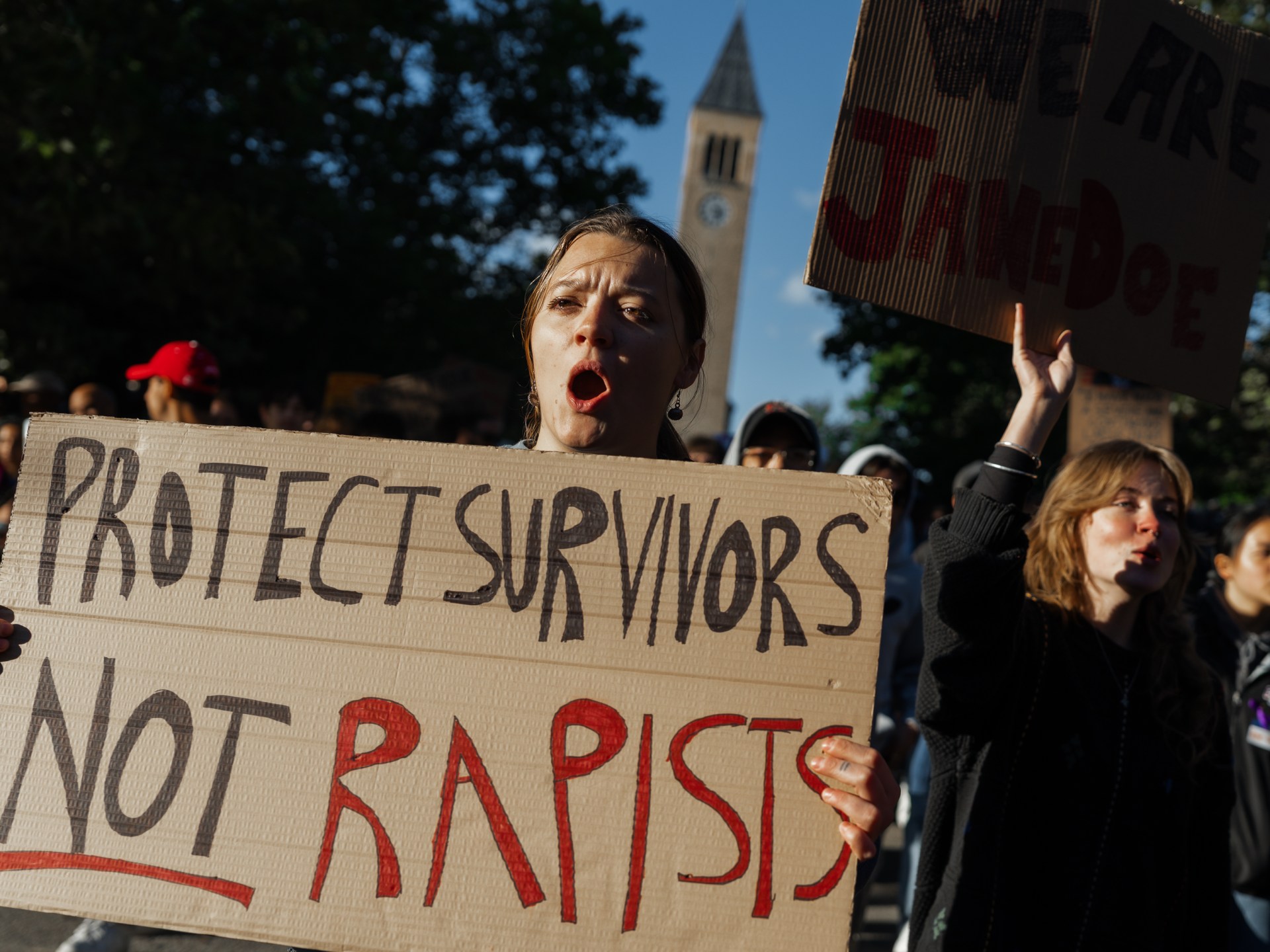
The announcement followed student protests. John Hartnett, a sophomore who helped organize them, called the changes a “half measure,” telling NPR that a ban on fraternity events was not a long-term solution. Associate professor Julia Chang said campus trust remained eroded and questioned why the changes came two years after the allegations. Cornell’s faculty senate was considering a vote of no confidence in the administration at a meeting scheduled for Wednesday, NPR reported.
Doe’s lawyer, Thomas Giuffra, has told news outlets that she received death threats after filing the lawsuit, according to NPR.







Be First to Comment