Key takeaways:
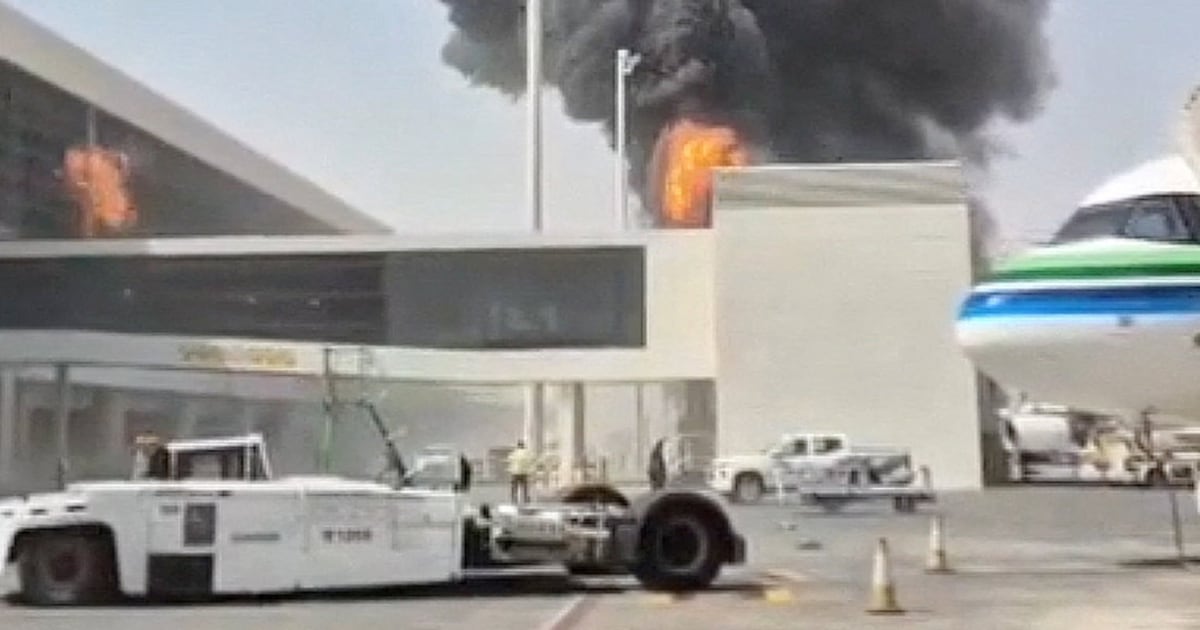
- Saturday’s strike on Riyadh’s main airport killed 13 people and injured more than 300.
- Saudi authorities said a Pakistani resident was killed in a separate attack on the airport Sunday.
- President Donald Trump said he was considering whether the United States would join Saudi military operations against the Houthis.
Saudi Arabia’s energy minister vowed a “serious” response Monday after a series of Houthi attacks on the kingdom’s airports, including a strike on Riyadh’s main airport that killed 13 people and wounded more than 300.
“The events of recent weeks are serious. Our response must be equally serious,” Prince Abdul Aziz bin Salman told the WPC Energy Congress in Riyadh. The congress opened Sunday about 10 kilometers (6 miles) from King Khalid International Airport, which remained closed Monday after Saturday’s strike.
The dead included four Saudis, two Bangladeshis, one American, one Egyptian, one Jordanian, one Syrian, one Palestinian, one Sudanese and one Indian. The Indian Embassy said Sunday that the Indian national had died of injuries sustained in the attack. Video of the strike showed people fleeing a crowded terminal after an explosion as debris fell around them.
The BBC reported that Riyadh’s airport had been attacked four times in the past week. Three Saudis, including a pilot for the national airline Saudia, were killed in two strikes Thursday. On Sunday, a Pakistani resident was killed when a projectile hit another terminal, according to Saudi aviation authorities. They said an attack that evening on an airport in Dammam caused no reported casualties.
Houthi military spokesman Yahya Sarea said Sunday that the group had launched missiles and drones at the airports in Riyadh and Dammam and at two oil and gas facilities in Saudi Arabia’s Eastern Province. He described the attacks as a response to 124 Saudi airstrikes in Yemen over the preceding 24 hours and warned airlines and passengers against using Saudi airports and airspace, except for journeys to and from Mecca and Medina.
The Houthi-run health ministry said a child was killed and six others were injured in a Saudi airstrike on a home in Yemen’s capital, Sanaa, on Sunday. A Saudi-led coalition is providing air support to Yemeni pro-government forces fighting the Houthis along the Red Sea coast and elsewhere.
Prince Abdul Aziz thanked congress attendees for coming despite the attacks, but said “energy security cannot be taken for granted.” The chief executives of Exxon Mobil, TotalEnergies, Shell, Chevron and BP had been expected at the gathering but were absent from an agenda released early Monday, Reuters reported.
The fighting has intensified since a period of relative calm following a 2022 ceasefire began to unravel in July. The Houthis say their renewed attacks answer a Saudi blockade of ports and airports in territory they control and a strike on Sanaa airport that they blame on the kingdom. Yemen’s government says it carried out that airport strike to stop an unauthorized Iranian plane from landing.
President Donald Trump said Saturday that he was weighing whether the United States would join Saudi military operations against the Houthis. “We may. We’re gonna look at it,” he told reporters.
UN Secretary General António Guterres said he was “deeply shocked” by Saturday’s attack and warned that attacks on civilians and civilian infrastructure violate international law. Iran, which denies allegations that it arms and trains the Houthis, called for “dialogue and engagement.”



Be First to Comment