Key takeaways:
- Green Party members approved the Zionism motion by 1,022 votes to 813, making it official party policy.
- Leader Zack Polanski did not vote, and members rejected his proposed changes to the motion.
- Four of the Greens’ five MPs opposed the motion, while Israel and British Jewish groups condemned it.
Members of the UK’s Green Party have voted to define Zionism as a form of racism, adopting a policy that has divided senior party figures and drawn sharp criticism from Israel and British Jewish groups.
The motion passed by 1,022 votes to 813 at the party’s conference in Brighton. Under Green Party rules, motions approved by members become official policy, though they are not necessarily included in a general election manifesto.
The motion defines Zionism as an ideology supporting “an ethnonationalist Jewish state” and backs “a single democratic Palestinian state in all of historic Palestine”. It says the “real, material, manifestation of Zionism” has involved the “dehumanisation, displacement, dispossession, disenfranchisement and destruction of Palestinians”. According to Al Jazeera, members also reaffirmed support for Palestinian liberation, the right of return, Boycott, Divestment and Sanctions, and a full arms embargo against Israel.
Lubna Speitan, the Green member behind the motion, said its supporters wanted to oppose “racist systems of oppression”. “We stand united against all forms of racism and discrimination — no exemptions,” she said.
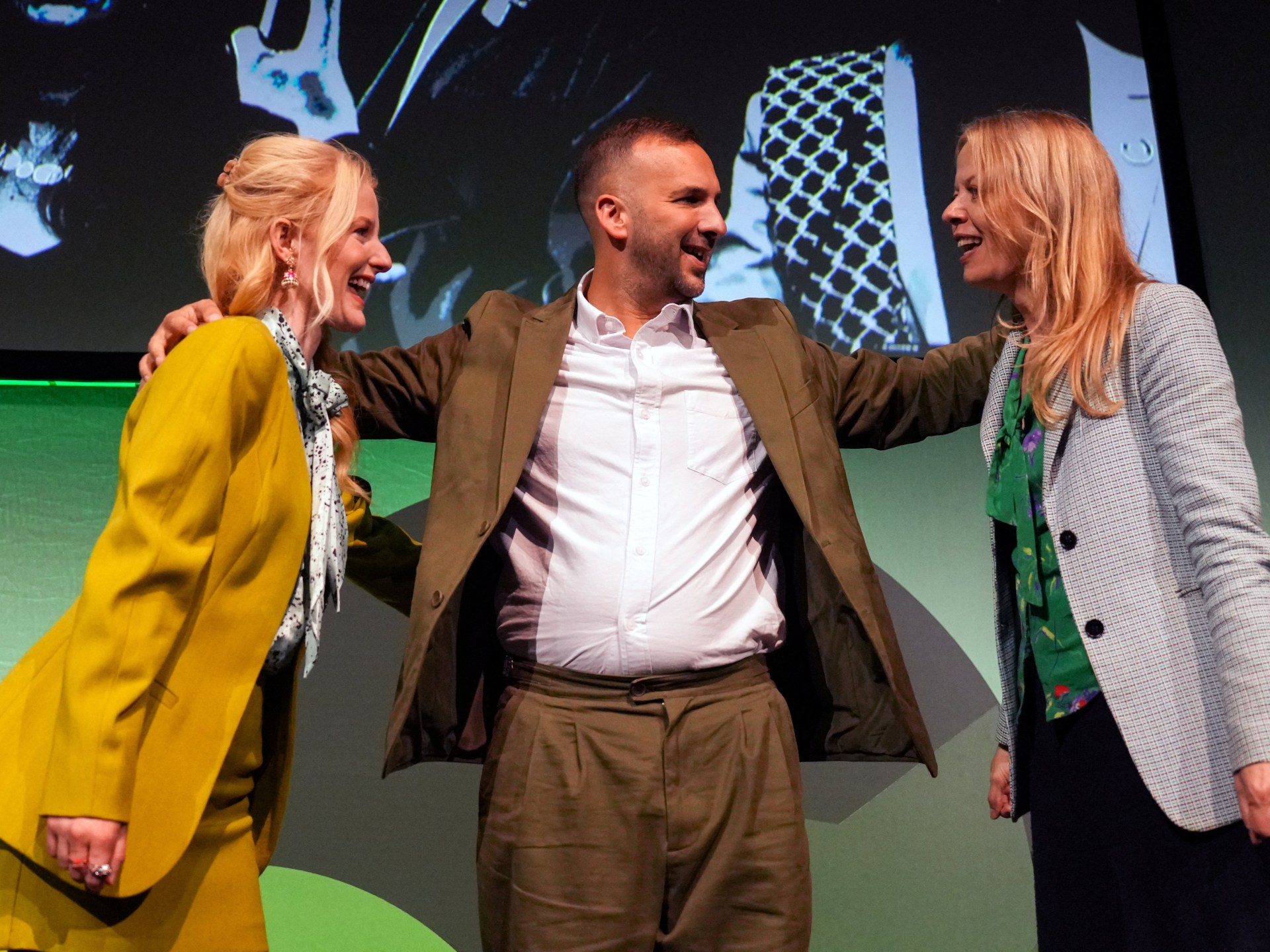
Party leader Zack Polanski did not vote, having left the conference early to campaign for a parliamentary seat. Before the vote, he said: “If your Zionism is the displacement of the Palestinian people then that is clearly racist, and I say that as a Jewish leader of a British political party.” But he wanted members to remove the reference to a single Palestinian state, saying the Greens should not decide what a future settlement would look like. He also sought an assurance that Jewish members would not face discipline for attending synagogues that identify as Zionist. Members rejected both changes.
Four of the party’s five MPs publicly opposed the motion, the BBC reported. Former Green leader Caroline Lucas urged members not to support what she called an “over-simplification” that was leaving many Jewish members feeling “scared and unwelcome”. Co-deputy leader Rachel Millward described the wording as “problematic”. Her fellow deputy, Mothin Ali, supported the motion but said he was “absolutely not” calling all Jews who identify as Zionists racist.
After the vote, Polanski joined the party’s five MPs and deputy leaders in a statement pledging to keep the Greens “an anti-racist party in every way”. It said there was “no conflict between supporting the rights of Palestinians and the rights of Jewish people”. A party spokeswoman said Jewish members would not be penalised for attending synagogues that define themselves as Zionist. Jewish Greens chair Vivien Lichtenstein told the BBC she could consider her future in the party.
The Board of Deputies and the Jewish Leadership Council called the motion an “attack on the Jewish community”. Israel’s Foreign Ministry said it went beyond “the boundaries of legitimate political debate” and later said Foreign Minister Gideon Sa’ar had barred Polanski from entering Israel. Israeli President Isaac Herzog called the claim that “Zionism is racism” an “antisemitic lie” that endangers Jews and Israelis, Al Jazeera reported.
Labour chair Bridget Phillipson said the vote “crosses a line” and urged Polanski to disavow the policy. Liberal Democrat MP Luke Taylor called it divisive, while the Conservatives said it showed the Green Party was “toxic to its core”.






Be First to Comment