Key takeaways:
- Pezeshkian displayed a portrait of Ali Khamenei and photographs of children he said were killed in a U.S. school attack.
- Trump said his representatives met Iranian officials for three hours and described the meeting as productive.
- Iran said its conditions include ending U.S. hostilities and the naval blockade and releasing Iranian funds.
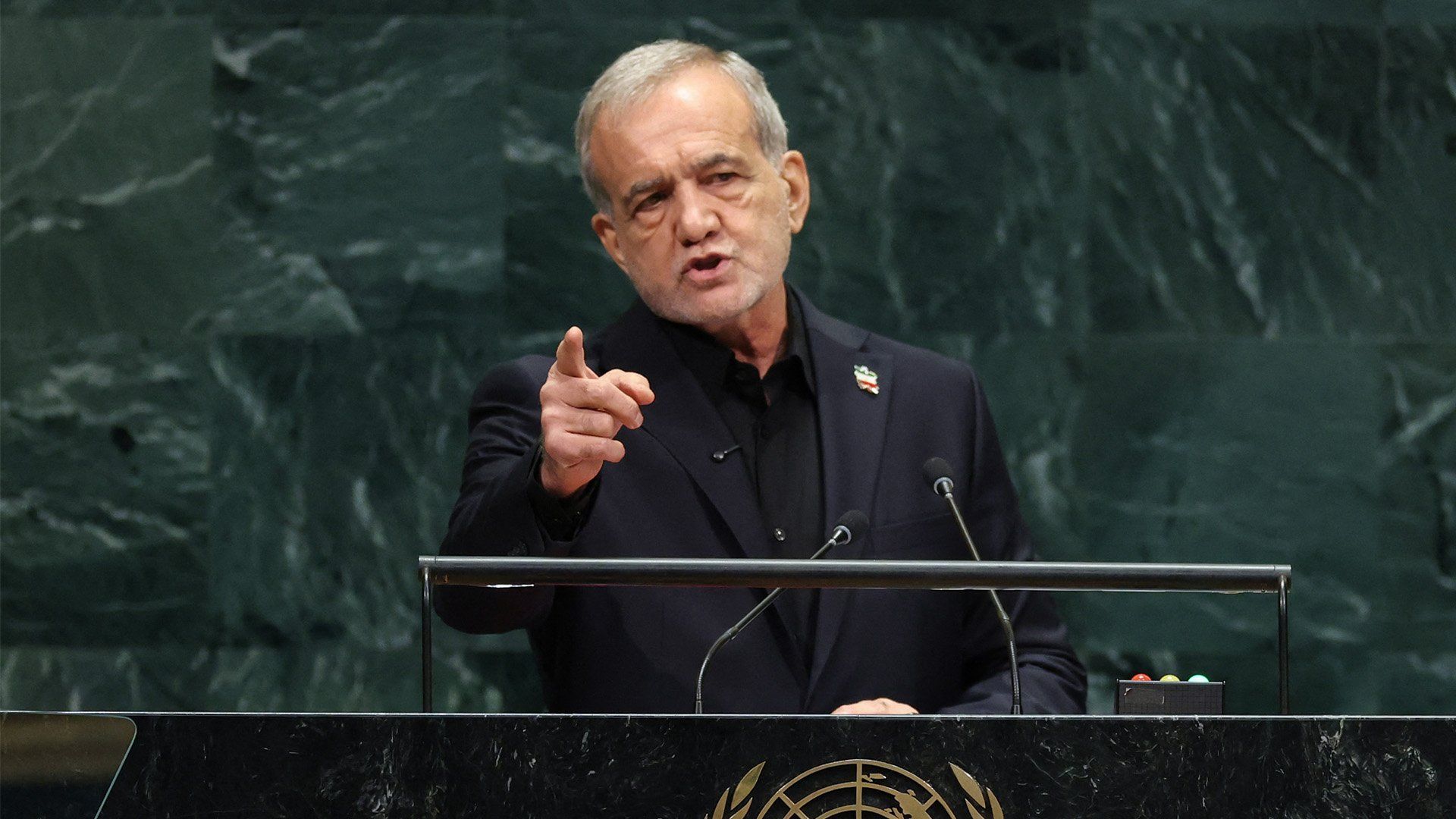
Iranian President Masoud Pezeshkian rebuked President Donald Trump’s threat to “annihilate” the Islamic Republic in a speech to the United Nations General Assembly on Wednesday, but said Iran remained open to negotiations to end the war.
“Yesterday the United States president described us as terrorists. We have been the victims of terrorism,” Pezeshkian said, responding to Trump’s address from the same podium a day earlier.
Pezeshkian held up a portrait of former Supreme Leader Ayatollah Ali Khamenei, who was killed when U.S.-Israeli attacks on Iran began on Feb. 28. He also displayed photographs of children he said had been killed in a U.S. attack on a school. Al Jazeera identified the school as being in the southern city of Minab and reported that the children pictured were schoolgirls.
“They hit us, but we did not bow our heads or bend the knee,” Pezeshkian said. An official from the U.S. delegation walked out as he began speaking, and the Israeli delegation boycotted the address, according to Al Jazeera.
Trump had posed a stark choice in his Tuesday speech: “Will a deal be made with Iran that lets them rebuild and create a far greater country than it ever was before? Or do I annihilate the Islamic Republic and do it quickly, never giving them a chance to kill and destroy people and countries again?” He reiterated that he would not allow Iran to develop a nuclear weapon.
Pezeshkian denied that Iran wanted a nuclear weapon but refused limits on its civilian nuclear program. He said diplomacy was possible without yielding to threats.
“It must be understood by Mr. Trump and those who seek to bully us that we are ready for dialogue and diplomacy and negotiations without accepting the language of force,” he said. In another appeal, he said, “Iran extends its hands towards the world.”
Trump said Tuesday that his son-in-law Jared Kushner and envoy Steve Witkoff had met Iranian officials for three hours. He called it “a very good meeting, a very productive meeting” and said he saw “a lot of momentum” toward an agreement, according to Al Jazeera. U.S. Ambassador to the U.N. Mike Waltz told NPR on Wednesday that the administration was “internalizing what they brought to the table.”
Iranian Foreign Ministry spokesperson Esmail Baghaei said messages had passed between Tehran and Washington through Qatar, NPR reported. He said Iran’s conditions included an end to U.S. hostilities and the naval blockade of Iranian ports, as well as the release of Iranian funds.
Pezeshkian also challenged the blockade and U.S. actions around the Strait of Hormuz, saying Iran could not be denied access to its waterways while the same route was used to impose “aggressions” and “insecurity” on it. He accused the international community of applying double standards to Iran and Israel over Israel’s attacks in Gaza. “They kill and we are sanctioned and we are punished,” he said.
The speech drew differing assessments. Negar Mortazavi of the Center for International Policy told Al Jazeera that Iran had kept the door to diplomacy open. Former U.S. diplomat Joey Hood told the outlet that Pezeshkian had missed a chance to offer a concrete peace proposal.



Be First to Comment