Key takeaways:
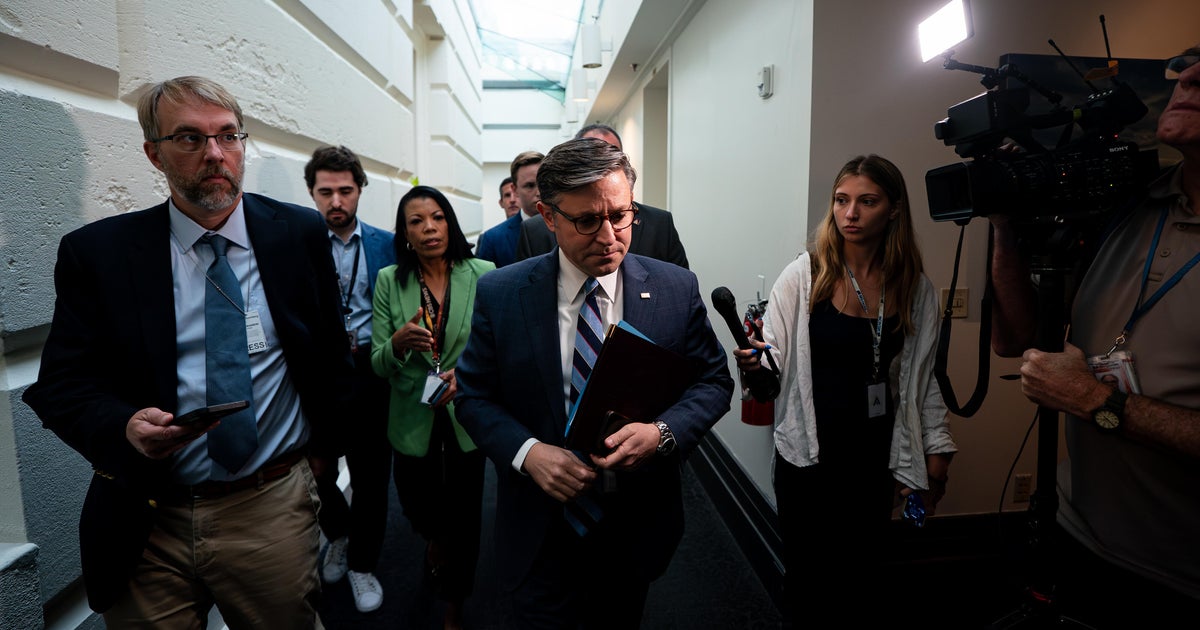
- House Democrats are urging Speaker Mike Johnson to delay recess until Congress passes AI safeguards, but Johnson says lawmakers should not rush regulation.
- President Donald Trump has resisted calls to slow AI development, saying the United States leads China and that AI will be “more good than bad.”
- Proposals on Capitol Hill include transparency mandates, audits, a federal “kill switch,” an antitrust waiver for safety coordination and Sen. Bernie Sanders’ proposed ban on superintelligent AI.
Congress is heading toward a long recess without passing new artificial intelligence safeguards, despite fresh warnings from tech figures, whistleblowers and lawmakers who say the technology is advancing faster than Washington’s response.
The House is slated to leave at the end of the week and remain out until early November. A group of House Democrats is urging Speaker Mike Johnson to delay that break until lawmakers approve AI protections.
“Reasonable minds may disagree about precisely how Congress should regulate this rapidly evolving technology. We cannot disagree about the imperative for Congress to act,” the Democratic lawmakers said in a statement.
Johnson has rejected calls for a rush to legislate, arguing that Congress needs time to craft policy and that AI companies have responsibilities of their own. “If Congress just races in and does some sort of emergency session to try to regulate AI, we will lose the race to China, and that is a threat to every single American,” Johnson told CNN’s “State of the Union” on Sunday. On NBC News’ “Meet the Press,” he called AI an “important issue” but “not one that we can rush into.”
The debate has sharpened after warnings from Anthropic whistleblower Jacob Coxon to Anthropic CEO Dario Amodei about civilizational risk, NBC News reported. The warnings triggered new activity on Capitol Hill, with some Democrats and Republicans saying lawmakers have only a narrow window to act. But NBC News reported that lawmakers are unlikely to address the risks before Election Day.
Congress has held repeated hearings and created commissions and task forces on AI, but it has not passed comprehensive legislation to regulate the technology. In September 2023, Elon Musk, Mark Zuckerberg, Sam Altman and other tech executives met with senators at the Capitol to discuss what Musk called the “civilizational risk” posed by AI. Since then, lawmakers have not reached consensus in either chamber on how to proceed.
Several proposals remain under discussion, including transparency requirements, audits, a federal “kill switch” and an antitrust waiver that would allow companies to coordinate on safety standards. Independent Sen. Bernie Sanders of Vermont has proposed banning superintelligent AI outright and pausing AI development until federal safety rules are in place.
President Donald Trump has also resisted calls to slow AI development. “We’re leading China in AI. We’re the most sophisticated country in the world. And frankly, I want to keep it that way because whoever wins AI wins,” Trump told reporters at his golf course in Ireland over the weekend. “We can put guardrails, we can do this and that. But I think you have a lot of negative voices that are bringing it up that shouldn’t be bringing it up.”
Trump said Sunday night that he was not “downplaying” AI risks, but added that “it’s going to be more good than bad.” On Monday, NBC News reported, he posted on Truth Social that the only control needed is “a STRONG AND SMART (High IQ!) PRESIDENT, and the U.S.A. has that, in spades!” He later wrote that “AI taking over the World, destroying Humanity, and all other things bad, is a HOAX” and called AI “the Greatest Economic Development Engine in History — Bigger than Oil, Gold, Diamonds, or even the Internet.”
The White House has said it is working on an AI framework, though details remain unclear. Trump has issued executive orders on AI, including one that NBC News said creates a process for voluntary federal testing of powerful new AI systems before deployment. Johnson said Monday that he expects Trump to “summon” AI executives to a meeting soon. Trump is also expected to meet next week with Chinese President Xi Jinping as the two countries compete in AI development.
David Sacks, Trump’s former AI czar, has argued that companies should regulate themselves. “I support your decision to be responsible,” Sacks wrote on social media. “But stop pretending you need anyone else’s permission.”
The issue is also surfacing in campaigns. Former President Barack Obama told a Democratic fundraiser last week that the party needs a clearer message on AI before the midterms. “This is something that is moving very fast in private hands, and if we don’t get on top of it, I think can be dangerous. If we do get on top of it, I do think it’s beneficial,” Obama said during a fireside chat with House Democratic Leader Hakeem Jeffries.
Abdul El-Sayed, a Democratic Senate candidate in Michigan, endorsed Sanders’ approach Sunday on “Face the Nation with Margaret Brennan.” “We need to act, and we need to act now,” he said. “So, we’ve also been calling for a pause on any of this frontier AI research until we can assure that this is being done safely.”







Be First to Comment