Key takeaways:
- Robin Morgan died Saturday at 85 in New York after recent health problems, her son told CBS News.
- Morgan helped organize the 1968 Miss America protest and edited the 1970 feminist anthology “Sisterhood Is Powerful.”
- She co-founded the Women’s Media Center with Gloria Steinem and Jane Fonda in 2005 and wrote more than 20 books.
Robin Morgan, the former child star who became a poet, editor and central figure in second-wave feminism, has died at 85, closing a life that moved from midcentury celebrity to radical organizing, influential writing and global advocacy for women’s rights.
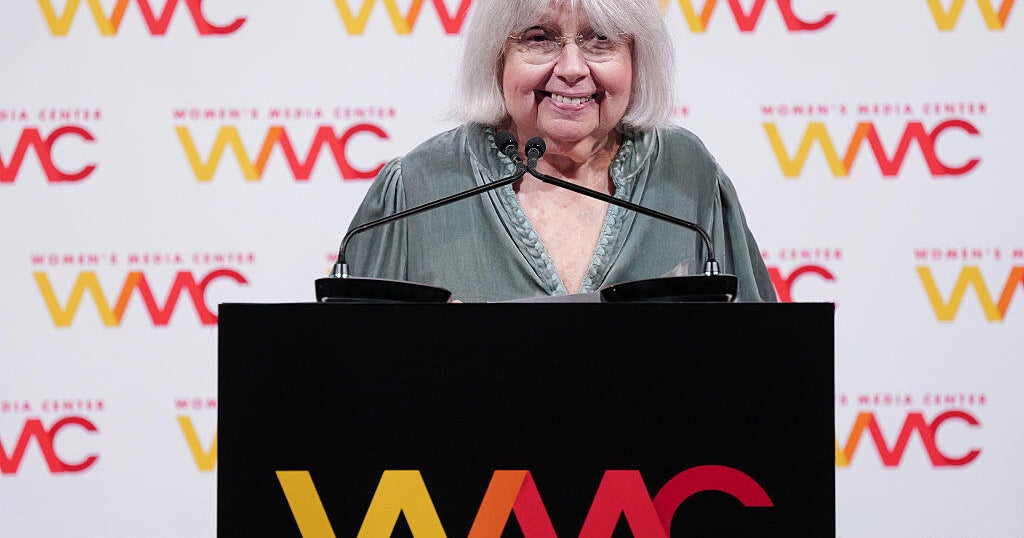
Morgan died Saturday in New York after a series of health problems in recent weeks, her son, Blake Morgan, told CBS News. The Women’s Media Center, which Morgan co-founded with Jane Fonda and Gloria Steinem, also confirmed her death. Steinem, Morgan’s close friend and fellow activist, died Wednesday.
Julie Burton, president of the Women’s Media Center, called Morgan “one of the architects of the contemporary women’s movement,” citing her writing and “global leadership for justice and equality.”
Morgan helped shape some of the defining actions and ideas of the women’s movement in the 1960s and 1970s. In 1968, she helped organize the first protest against the Miss America pageant, where demonstrators tossed bras and other items into a “Freedom Trash Can,” an action later mythologized as bra-burning. Two years later, she edited “Sisterhood Is Powerful,” an anthology widely regarded as a key text of modern feminism.
Her work blended organizing, poetry and political language. Morgan is widely credited with coining “herstory,” a feminist reworking of “history,” and with popularizing the clenched fist combined with the female symbol as an icon of women’s liberation. Her poem “Monster,” including the lines “I want a women’s revolution like a lover/I lust for it,” was quoted at feminist rallies and beyond.
Her son said she saw herself first as a poet and artist, and that art drove her activism. “She was someone who was able to take very big ideas and distill them succinctly, like a poet, into a few words,” Blake Morgan told CBS News, pointing to one of her sayings: “hate generalizes, love specifies.”
Morgan confronted institutions across the political spectrum. A government report once labeled her an “anarchist housewife.” In 1970, she and other protesters were arrested and jailed after occupying the offices of Grove Press during a dispute involving employees’ efforts to unionize. That same year, her essay “Goodbye to All That” criticized prominent men of the counterculture and left, including Hugh Hefner and Abbie Hoffman.
She wrote more than 20 books, among them the memoir “Saturday’s Child,” the essay collection “The Word of a Woman: Feminist Dispatches,” and the poetry collections “Monster” and “Dark Matter.” She followed “Sisterhood Is Powerful” with “Sisterhood Is Global” in 1984 and “Sisterhood Is Forever” in 2002, with contributors including Steinem, Simone de Beauvoir and Eve Ensler. She also served for several years as editor-in-chief of Ms. Magazine.
Morgan helped found New York Radical Women and the Women’s International Terrorist Conspiracy from Hell, known as W.I.T.C.H. In 1984, she helped create the Sisterhood Is Global Institute. In 2005, she, Steinem and Fonda launched the Women’s Media Center, whose mission is to support “the visibility, viability and decision-making power of women and girls in media.”
Born in 1941 in Lake Worth, Florida, and raised in New York, Morgan began modeling at 3, hosted the “Little Robin Morgan” radio show at 5 and appeared on “Juvenile Jury.” From 1949 to 1957, she acted in the television comedy “Mama” and appeared on programs including “Robert Montgomery Presents” and “Kraft Theater.” Magazines portrayed her as “unspoiled,” “courteous” and “the ideal girl-next-door.”
But Morgan later recalled resisting that image early. On “Juvenile Jury,” when prompted to joke about spanking, she instead said all physical punishment was wrong. In “Saturday’s Child,” she wrote that producer Dan Ehrenreich turned her microphone away and put his hand over her mouth. “I realized that I loved and respected that child who fought back in what was the first political act I recall ever daring to make,” she wrote.
Morgan was married for more than 20 years to gay poet Kenneth Pitchford, with whom she had Blake Morgan, a musician, activist and record company executive. She described the marriage as a “two-member commune” and resisted labels about her sexuality.
Despite a Parkinson’s diagnosis, she remained active, hosting a syndicated radio show and delivering a TEDWomen talk in 2015. In “Saturday’s Child,” she wrote of retaining “a threadbare, somewhat surreal sense of humor.”
“Put that in your apple pie and smoke it,” she wrote.









Be First to Comment