Key takeaways:
- Cathy Engelbert will retire as WNBA commissioner at the end of the year after more than seven years in the role.
- Her tenure included a new collective bargaining agreement with the league’s first million-dollar player salaries, charter travel, a long-term media rights deal and major franchise value growth.
- Engelbert said she had been considering retirement for months, faced no pressure to step down and plans to help run the succession process.
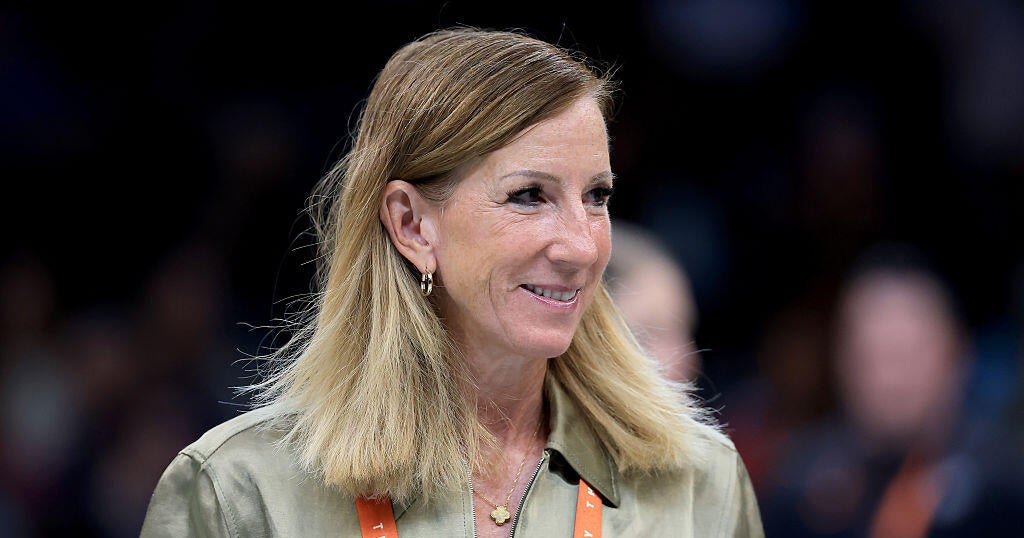
WNBA Commissioner Cathy Engelbert will retire at the end of the year, closing a seven-plus-year run that reshaped the league’s finances, visibility and labor landscape while also bringing new scrutiny and tension as the sport grew.
Engelbert, the second-longest-tenured president or commissioner in WNBA history, helped negotiate a collective bargaining agreement this past spring that produced the league’s first million-dollar player salaries. Her tenure also included a long-term media rights deal, charter travel for players, expansion plans and a sharp rise in franchise values.
“Cathy has presided over the WNBA through the most significant period of growth in the league’s 30-year history,” NBA Commissioner Adam Silver said in announcing her decision. “We are grateful for Cathy’s leadership and unwavering commitment to the advancement of women’s basketball.”
Engelbert, who turns 62 in November, told The Associated Press she had been considering retirement for months and said the decision was her own. She said she did not feel pressure from NBA or WNBA stakeholders to step down.
“When I first came to the league, I intended to do this for 3 1/2 years,” she said in a phone interview. “The 7 1/2 years exceeded that time. This is a really good time given the financial transformation journey we’ve been on. Getting the collective bargaining agreement done, getting a long-term media rights deal done, getting expansion done.”
Engelbert joined the WNBA in 2019 after leaving Deloitte, where she had been chief executive, according to The Guardian. She said she has been working on a succession plan for several years and that both internal and external candidates are on the league’s radar. She did not name potential successors.
“It’s a good time to hand it off to the next leader to take the ‘W’ into a better phase,” Engelbert said. “I’m proud of the team we built and everything we accomplished. A leader knows when it’s time to drop the mic and move on after building a powerhouse team in the league office.”
She said she has mixed emotions about leaving and expects to help manage the transition. “I love women’s basketball and am not going anywhere yet. We’ll run a real succession process in the remaining four months. If we don’t find someone I’ll stay on,” she said. “I had no transition. I walked in the door and I was by myself as no one transitioned me into this role.”
The WNBA said that under Engelbert the league saw growth in viewership, digital engagement, attendance, merchandise sales, corporate partnerships and franchise valuations. The average value of a WNBA franchise was $10 million in 2019 and about $460 million in 2026. The league is also set to expand to 18 teams by the end of the decade, The Guardian reported.
Engelbert said she is proud of securing charter travel for players, keeping the league operating during the coronavirus pandemic, the media rights agreement and the rise in franchise values.
“Over the years, it has been amazing to watch WNBA players thrive and lead the massive cultural surge around women’s sports,” she said.
The growth has come with strain. Players have said they face more vitriol on social media and that some do not believe the league has done enough to protect them. The WNBA also has been drawn into discussions about transgender athletes’ eligibility.
Engelbert has said online attacks on players are unacceptable and has backed league initiatives to protect them. “We have no current eligibility issues in the WNBA,” she told the AP, adding that “if we did, we would have a thoughtful policy discussion with the [players’ association] and the players.”
Relations with players were also strained during collective bargaining. Minnesota Lynx forward Napheesa Collier, a five-time All-Star and vice president of the Women’s National Basketball Players Association executive committee, sharply criticized Engelbert after last season, calling her negligent and saying the league had “the worst leadership in the world.” The Guardian reported that New York Liberty forward Breanna Stewart, also a vice president of the union executive committee, said before the All-Star Game that players had respect for Engelbert but not much of a relationship with her.
Engelbert said she is ready to spend more time with family and acknowledged that online hate directed at her has affected them. “There have been some hard parts of that on my family with the vitriol and hate I get online,” she said.
Her family, she said, has been asking for more of her time. “My mom is turning 90 this year, and she said that ‘it would be good if you were retired to spend more time with me,’” Engelbert said, laughing. “I have two children; I barely see one. I’m one of eight kids (and I) have five brothers. They always say, ‘Can you retire so you can spend more time with us?’”









Be First to Comment