Key takeaways:
- Alaska’s Senate ballot will include Democrat Mary Peltola, incumbent Republican Dan S. Sullivan, Republican Dan J. Sullivan and Republican Gerald Heikes.
- Democrat David Leslie withdrew after finishing fourth in the Senate primary, allowing fifth-place finisher Gerald Heikes to advance to the general election ballot.
- In Alaska’s U.S. House race, convicted felon Eric Hafner advanced after Democrat Matt Schultz suspended his campaign, according to CBS News.
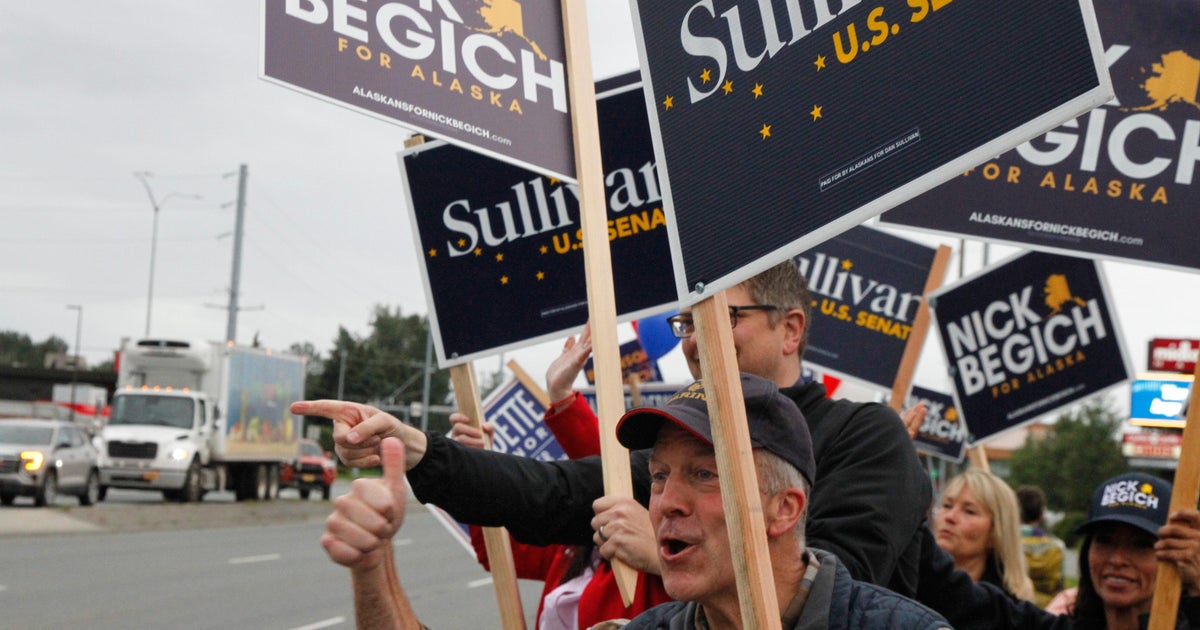
Alaska’s closely watched Senate race will feature two Republicans named Dan Sullivan, Democrat Mary Peltola and Republican Gerald Heikes on the November ballot, adding an unusual twist to a contest that could help determine control of the Senate next year.
The Alaska Division of Elections on Tuesday named the four candidates who advanced from the state’s nonpartisan top-four primary to the general election, which will be decided by ranked-choice voting. Peltola, a former Democratic House member, finished first in the all-party primary. Republican Sen. Dan S. Sullivan, the incumbent, also advanced, along with Dan J. Sullivan, a former schoolteacher seeking to unseat him.
Democrat David Leslie had finished fourth, but NBC News reported that he withdrew from the race Monday. His departure moved Heikes, a Republican who finished fifth, onto the November ballot.
The race is considered one of the most competitive of the 2026 cycle and a potential Democratic pickup as the party seeks control of the Senate. The presence of two candidates with the same first and last name has drawn attention and legal challenges.
Dan J. Sullivan announced in June that he was challenging the sitting senator. An Alaska election official initially determined he was not eligible to appear on the ballot, citing a “determined effort and a deliberate attempt” to confuse voters, CBS News reported. The challenger appealed, and the Alaska Supreme Court allowed him to remain on the ballot.
The incumbent senator and other Republicans have alleged that Dan J. Sullivan entered the race as a potential spoiler and is working with Peltola. He and Peltola have denied any coordination, as have their campaigns. NBC News reported that state and federal authorities are conducting investigations into Dan J. Sullivan’s campaign.
Alaska’s election system, approved by voters in 2020 and first used in 2022, replaced party primaries with a nonpartisan primary in which the top four vote-getters advance to the general election. Voters then use ranked-choice voting to decide the winner.
The system has also shaped the race for Alaska’s sole U.S. House seat. CBS News projected that Republican Rep. Nick Begich advanced to the general election. Independent Bill Hill had the second-most votes, followed by Democrats Matt Schultz and Eric Hafner. Schultz suspended his campaign in July, so he will not appear on the November ballot.
Hafner is a convicted felon serving a 20-year prison sentence in New York after pleading guilty to making threatening communications to state officials, according to CBS News. He has appeared on ballots before, including in Alaska in the 2024 cycle, a 2016 House race in Hawaii and a 2018 House race in Oregon.
The Division of Elections also named the general election candidates for governor. Republicans Dave Bronson and Bernadette Wilson and Democrat Jonathan Kreiss-Tomkins, the top finisher in the primary, will be on the ballot. They are running to replace term-limited Republican Gov. Mike Dunleavy. Democrat Tom Begich, who finished second in the primary, withdrew before Tuesday.








Be First to Comment