Key takeaways:
- A change-of-plea hearing for Tiger Woods is scheduled for Wednesday morning in Martin County, Florida.
- Woods pleaded not guilty in March to misdemeanor charges of driving under the influence and refusal to submit to testing after a rollover crash on Jupiter Island.
- Authorities said Woods passed a Breathalyzer test with zero alcohol but refused a urine test; two pills later identified as hydrocodone were found in his pocket.
Tiger Woods is expected to change his not guilty plea Wednesday in a Florida DUI case stemming from a March rollover crash in which authorities said his vehicle clipped a truck and landed on its side, according to court records.
The change-of-plea hearing is scheduled for Wednesday morning in Martin County, Florida, just north of Palm Beach County. Court documents did not specify what plea Woods, 50, intends to enter. His attorney, Doug Duncan, and prosecutors did not immediately respond to requests for more information from The Associated Press, CBS News reported. The BBC said it also contacted prosecutors and Woods’ attorney.
Woods pleaded not guilty in March to misdemeanor charges of driving under the influence and refusal to submit to testing. The case followed a crash on Jupiter Island, where an arrest report said Woods was traveling at high speeds on a beachside residential road with a 30 mph speed limit when his Land Rover hit a truck, causing $5,000 in damage, and rolled over.
No one was injured. Woods crawled out of the vehicle through the passenger side after the crash.
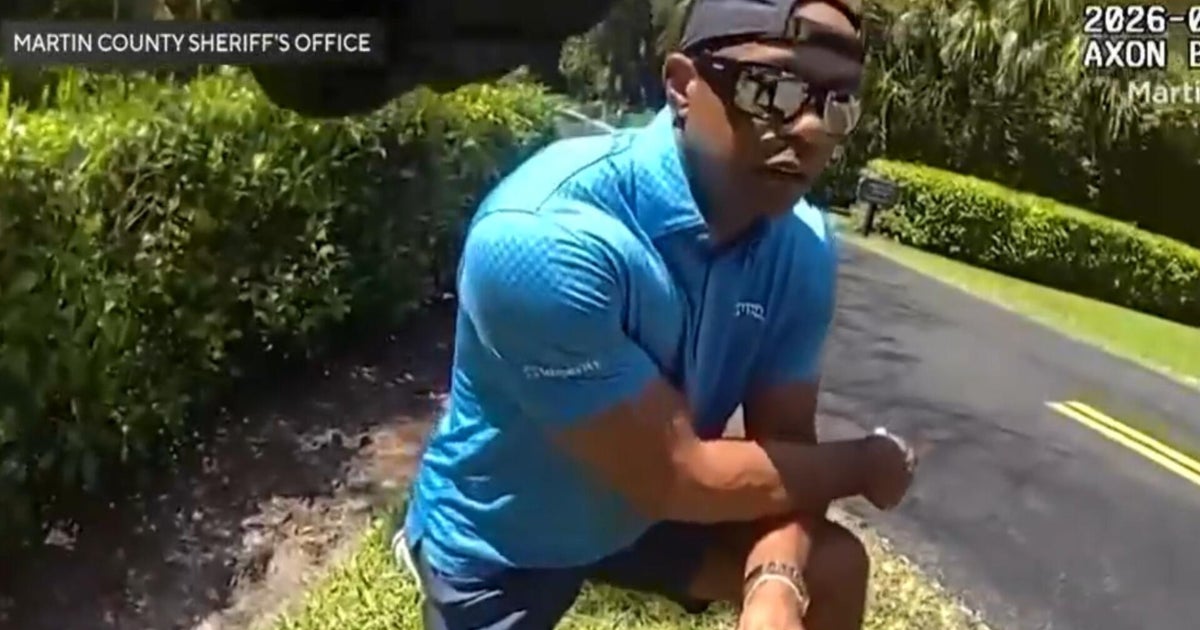
In body camera footage released by police in April, Woods appeared calm and was kneeling on one knee as he described the crash to officers. “I looked down at my phone, and all of a sudden, boom,” he said, according to the BBC. An arrest report cited by CBS News said Woods told a deputy he had been looking down at his phone and changing the radio station when he struck the truck.
Authorities said Woods passed a Breathalyzer test that registered zero alcohol but declined to submit to a urine test for other substances. Martin County Sheriff John Budensiek said at the time that Woods had passed the breath test but refused a urinalysis screening, the BBC reported.
Woods told officers he had not consumed alcohol that day. Asked about prescription medication, he said, “I take a few,” and said he had taken them earlier that morning, according to the BBC. Authorities later reported finding two white pills in his pocket, identified as hydrocodone, an opioid commonly prescribed to treat pain.
Deputies at the scene said Woods appeared impaired while answering questions and performing sobriety tests. The arrest report said he was “sweating profusely,” his eyes were bloodshot and his pupils were “extremely dilated.” Officers told him they suspected his “normal faculties” were impaired by an “unknown substance,” the BBC reported.
After the incident, Woods said on social media: “I know and understand the seriousness of the situation I find myself in today. I am stepping away for a period of time to seek treatment and focus on my health. This is necessary in order for me to prioritise my wellbeing and work toward lasting recovery.” Court records cited by CBS News show Woods has traveled outside the United States for treatment at an inpatient facility.
In July, Judge Darren Steele approved an agreement allowing prosecutors to review medical records related to the crash and arrest. CBS News reported that the judge approved a similar agreement in May giving prosecutors access to Woods’ prescription medication records at a Palm Beach pharmacy from the start of the year through the end of March.
The March arrest was Woods’ second on suspicion of driving under the influence. He was arrested on a DUI charge in 2017 after Florida police found him asleep behind the wheel, and later said he had taken a bad mix of painkillers.
Woods, one of golf’s most prominent figures and the first person of Black heritage to win the Masters, has faced multiple injuries, surgeries, car accidents and pain pill dependence during his career. He has not returned to tournament play since the latest crash. On June 23, he made his first public appearance since returning from treatment when he introduced the PGA Tour’s plans to revamp its schedule for 2028, but he did not take questions.




Be First to Comment