Key takeaways:
- A senior Homeland Security official told NBC News that ICE officers have received no special guidance for Election Day beyond their regular duties.
- Mullin said ICE would be at polling places only for a threat or to serve a warrant on someone officers had been tracking.
- Joint Chiefs Chair Dan Caine wrote that the military has no plans to send federal troops or federalized National Guard members to polling places during the 2026 elections.
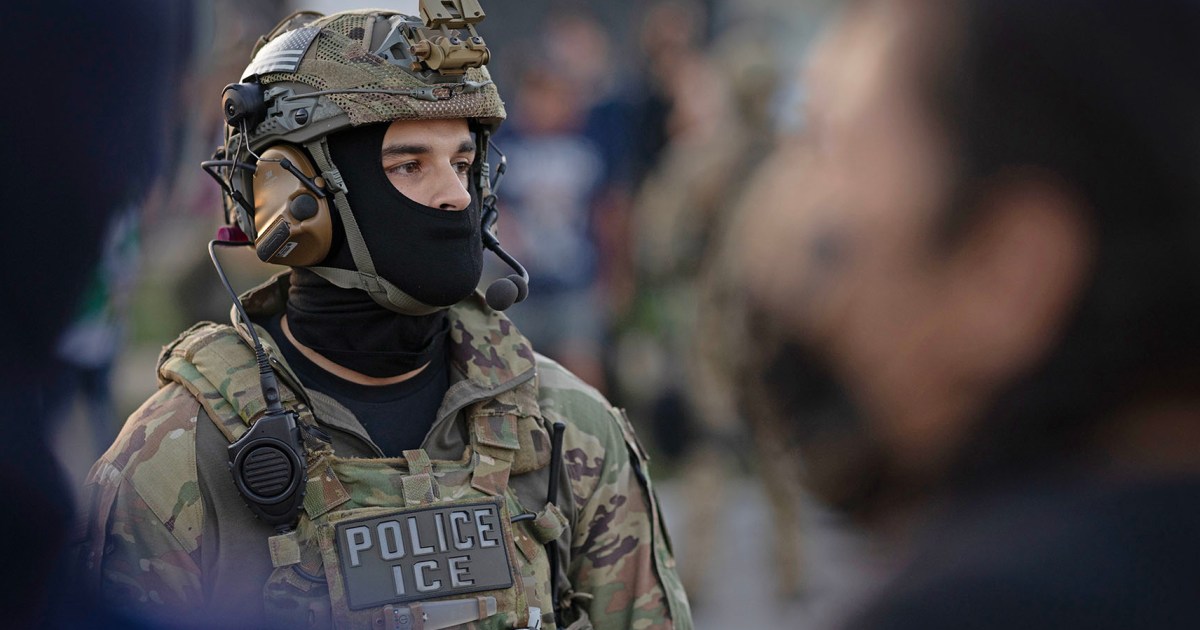
Homeland Security Secretary Markwayne Mullin said Tuesday that federal immigration officers could go to polling places during November’s midterm elections only in limited circumstances, including to respond to a threat or serve a warrant, while a senior Homeland Security official told NBC News that ICE officers have received no special Election Day guidance beyond their regular duties.
“ICE isn’t there to patrol the polling places,” Mullin told reporters at a news conference in New York. “We’re there to enforce specific threats.”
Mullin said officers from Immigration and Customs Enforcement would be at a polling place only if “there is a threat to that polling place” or if they were serving a warrant on someone “that we have been actively tracking down.” Asked whether ICE officers would enter polling places, he said they would if they had warrants.
“If we’re serving a warrant, we will be where we need to be,” Mullin said. “ICE’s job is immigration, customs enforcement. That’s their job.”
The comments come after months of warnings from Democrats and voting rights groups that the Trump administration could seek to deploy federal agents to polling locations, a move they say could intimidate voters and depress turnout. The White House has downplayed those concerns, The Guardian reported, while President Donald Trump has declined to rule out such action and has continued to cast doubt on the integrity of past and future U.S. elections.
In a statement to Politico cited by The Guardian, the Department of Homeland Security said: “ICE is not planning operations targeting polling locations. ICE conducts intelligence-driven targeted enforcement, and if an active public safety threat endangered a polling location, they may be arrested as a result of that targeted enforcement action.”
Federal law prohibits military personnel or other “armed” agents from being “at any place where a general or special election is held,” The Guardian reported.
Trump and Mullin have claimed, without offering evidence, that more than 250,000 noncitizens are on voter rolls across several states. Mullin has also threatened state election officials with possible prison time if they do not comply with the administration’s methods for determining whether noncitizens are on voter rolls, NBC News reported. Several state officials have pushed back against sharing private voter roll data that includes personal information, such as Social Security numbers.
Mullin’s latest remarks follow comments he made in July, when he threatened to withhold federal aid from states that refused to comply with Homeland Security election directives tied to the administration’s crackdown on what it alleges is widespread voter fraud.
“We will scrub all election records, looking for illegal aliens and those who are ineligible to vote, including those that somehow voted, yet they were deceased,” Mullin said earlier this summer, according to The Guardian. “If states want the grant funding, to recap, they must secure the election.”
Experts say the administration has not provided proof of widespread noncitizen voting, The Guardian reported. In one case, DHS officials said there may have been as many as 16,000 noncitizens registered to vote in Nevada, but later admitted they could confirm that only 185 of those people were actually noncitizens, according to records obtained by The Guardian.
Separately, Dan Caine, chair of the Joint Chiefs of Staff, recently wrote to Sen. Elissa Slotkin that the military has no plans to deploy troops to polling sites during the upcoming elections. “The joint force has no plans to send federal military personnel or federalized members of the national guard to polling places during the 2026 elections,” Caine wrote. He added that there were “no plans to use such personnel to seize ballots, voting machines, or other election-related material.”





Be First to Comment