Key takeaways:
- Gen. Dan Caine wrote that the Joint Force has no plans to send federal troops or federalized National Guard members to polling places during the 2026 elections.
- Caine also said the military has no plans to seize ballots, voting machines or other election-related material.
- Defense Secretary Pete Hegseth had not replied to Sen. Elissa Slotkin’s request for a similar assurance, according to Slotkin’s press secretary.
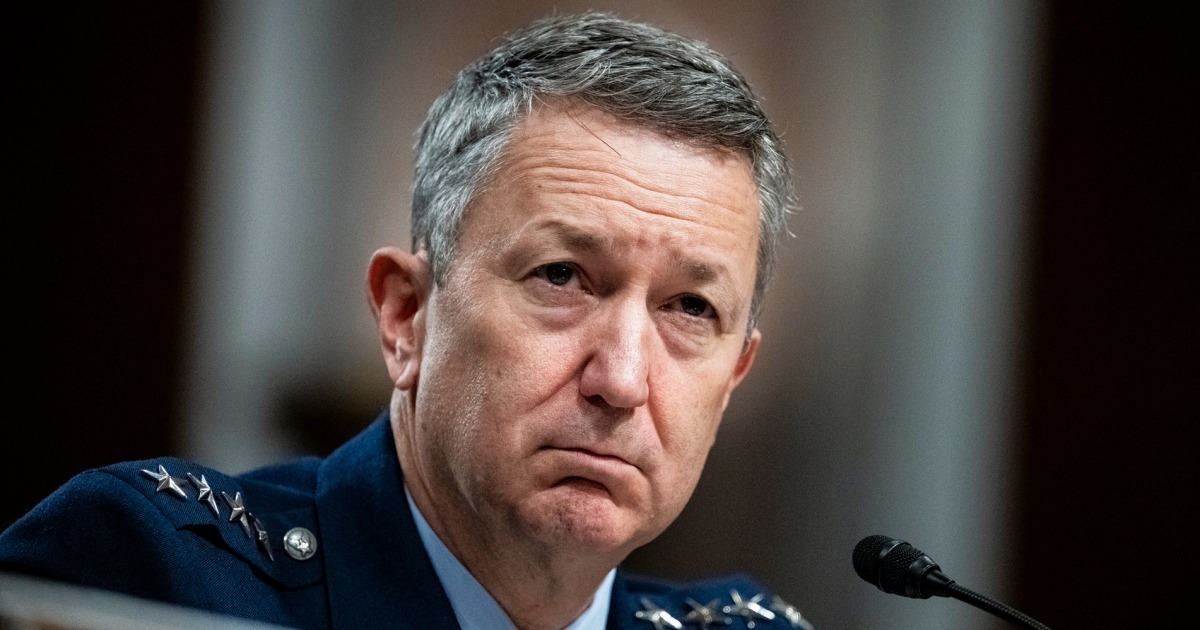
The U.S. military has no plans to send troops to polling places or seize election materials during the 2026 midterm elections, Gen. Dan Caine, chairman of the Joint Chiefs of Staff, told a Democratic senator in a letter responding to concerns about possible military involvement in voting.
“Election administration and security remain the fundamental responsibility of state and local officials,” Caine wrote to Sen. Elissa Slotkin of Michigan. “The Joint Force has no plans to send Federal military personnel or Federalized members of the National Guard to polling places during the 2026 elections. Likewise, the Joint Force has no plans to use such personnel to seize ballots, voting machines, or other election-related material.”
The letter, obtained by NBC News and first reported by The Associated Press, came after Slotkin asked Caine and Defense Secretary Pete Hegseth to confirm the military would not be deployed to polling locations for the November elections. Al Jazeera reported that the letter was obtained by the AP on Monday.
Caine, the country’s highest-ranking military officer and an adviser to Hegseth and President Donald Trump on military matters, also wrote: “I have neither received nor anticipate receiving any unlawful order concerning the role of the Joint Force in the upcoming November 2026 midterm elections.”
Federal law bars the presence of armed federal forces at election sites unless “necessary to repel armed enemies of the United States.” If military forces were involved in election security, Al Jazeera reported, it would likely be the National Guard under state control.
Democratic concerns about the role of the military in elections have grown since Trump told The New York Times in January that he regretted not sending the U.S. military to seize voting machines after his 2020 loss. Trump said he “should have” done so after considering it, and he falsely claimed the election had been stolen.
Slotkin also pointed to Trump’s use of federal power in Democratic-led areas. NBC News reported that Trump last year sent National Guard troops to cities run by Democratic mayors, including Chicago and Washington, D.C., over their objections. Al Jazeera reported that Trump deployed federal agents in Democratic-led states over the objections of local leaders, saying they were needed for immigration enforcement, crime and protests, and that he deployed active-duty Marines to Los Angeles during his immigration crackdown in 2025.
Slotkin is part of a group of Senate Democrats who introduced legislation in June that would ban the president from sending armed military personnel or federal agents to polling sites during elections.
“The nonpartisan tradition of military service and the constitutional guardrails that prevent our military from becoming a domestic police force for one political party are essential to maintaining our democracy,” Slotkin said in a news release this month announcing her letters to military officials. “Thus, our nation’s senior-most defense and security leaders are the final failsafe for our democracy.”
White House chief of staff Susie Wiles denied in a Vanity Fair interview last year that Trump would use the military to suppress voting in the midterms, Al Jazeera reported.
Sonja Thrasher, Slotkin’s press secretary, said Hegseth had not replied to Slotkin’s letter asking him to confirm troops will not be deployed to polls in November. Slotkin had asked for a response by last Thursday.
Slotkin made a similar inquiry in 2020, when she was serving in the House, along with then-Rep. Mikie Sherrill of New Jersey. Gen. Mark Milley, then chairman of the Joint Chiefs of Staff, replied that elections are governed by constitutional and legal procedures handled by civilian institutions.
“We are a nation of laws,” Milley wrote at the time. “We follow the rule of law and have done so with regard to past elections, and will continue to do so in the future.” He added: “In the event of a dispute over some aspect of the elections, by law U.S. courts and the U.S. Congress are required to resolve any disputes, not the U.S. military.”




Be First to Comment