Key takeaways:
- U.S. District Judge Indira Talwani lifted a nationwide injunction Wednesday in a case brought by groups including the League of Women Voters.
- The Supreme Court on Monday halted a similar injunction in a challenge brought by California, 22 other states and Washington, D.C., but did not rule on the legality of Trump’s order.
- The Postal Service’s final rule includes new ballot-envelope design requirements and a plan tied to state-provided absentee-voter lists, according to NPR.
A federal judge in Boston on Wednesday temporarily cleared the way for the Trump administration to move ahead with parts of President Donald Trump’s effort to tighten federal oversight of mail-in voting before the midterm elections, lifting the last nationwide injunction blocking U.S. Postal Service work on the order.
U.S. District Judge Indira Talwani canceled an injunction she had issued in a case brought by voting rights groups, including the League of Women Voters. Her ruling followed a Supreme Court decision Monday that halted a similar nationwide block in a separate challenge brought by California and 22 other states, plus Washington, D.C.
The legal fight is not over. Talwani made clear that the challengers could quickly return to court with a revised complaint targeting a final Postal Service rule issued last Friday. Other lawsuits over the executive order are also moving forward, and the Supreme Court has not decided whether the order or the Postal Service regulation is lawful.
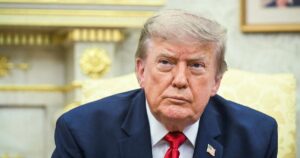
Trump signed the executive order in March. According to NPR, the Postal Service’s final rule for federal ballot mail includes new design requirements for mail-in ballot envelopes and a plan to deliver mail-in ballots only to people on absentee-voter lists that states would have to provide to the agency. NBC News reported that the order directs the Postal Service to track mail-in ballots and potentially reject ballots submitted by people not on a federal list of eligible voters.
The proposal has drawn multiple legal challenges because it conflicts with states’ traditional role in administering elections. Trump has repeatedly criticized mail-in ballots, though they are widely used by both Republicans and Democrats across the country.
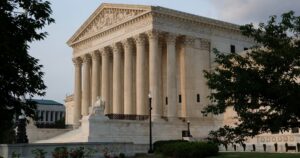
The Supreme Court’s Monday order was a 6-3 procedural ruling. The justices in the majority concluded that Talwani had acted too quickly in blocking the executive order, but they did not rule on the merits of the policy. In the case brought by the states, the court said the challenge had come before agencies had completed final rules based on the order.
The Trump administration then asked Talwani to lift the remaining injunction in the League of Women Voters case, arguing that the Supreme Court’s reasoning applied there as well. Talwani agreed, but said the challengers still had serious arguments.
“While Plaintiff Organizations have substantial arguments that might persuade the Supreme Court to reach a different result if Plaintiff Organizations have an opportunity to present them, this court is compelled by the Supreme Court’s ruling to grant Defendants’ Motion to Reconsider and vacate the preliminary injunction obtained by the Plaintiff Organizations,” Talwani wrote. “This order is without prejudice to Plaintiff Organizations filing a new motion for a preliminary injunction after filing their anticipated Amended Complaint.”
The ruling means the Postal Service can continue work on the administration’s directives for now. But it remains unclear whether the order will affect mail voting in the midterms, which NPR reported is set to begin in a matter of weeks.
Talwani, an appointee of President Barack Obama, separately found Tuesday that the Trump administration violated her original injunction by moving forward with the Postal Service regulation despite her instruction not to do so. She did not impose sanctions, saying she was only “identifying the violation.”




Be First to Comment