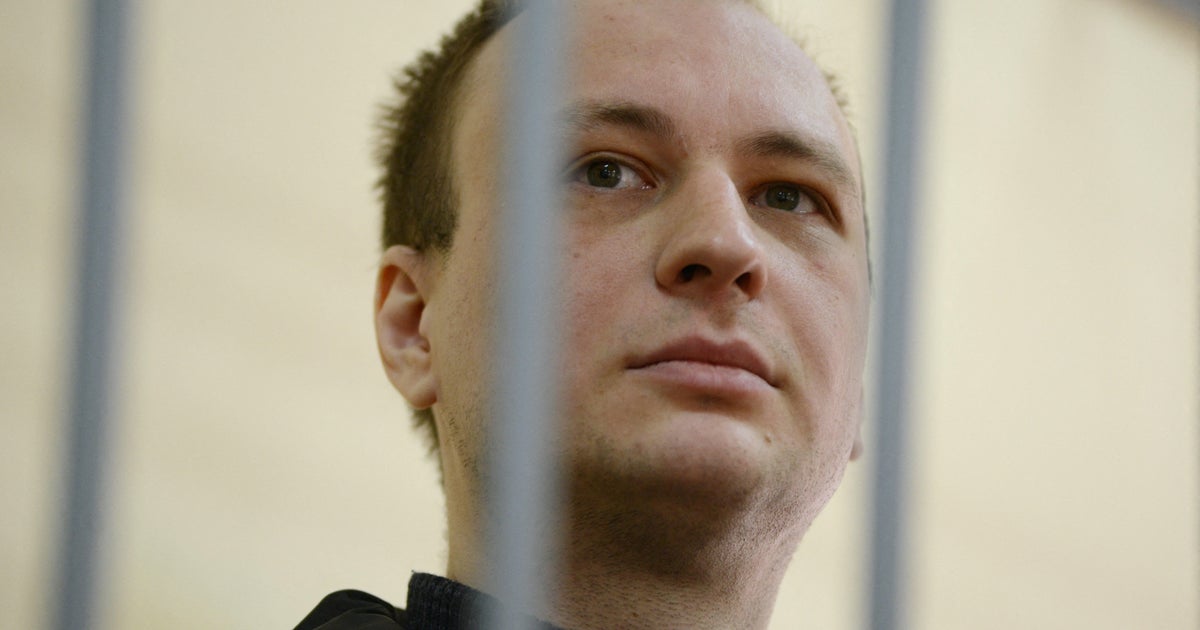
Key takeaways:
- Robert Gilman, a former U.S. Marine from Massachusetts detained in Russia since 2022, has been released on humanitarian grounds.
- Sen. Edward Markey said Gilman had been “essentially catatonic” and suffering from a “severe case of pneumonia” before his release.
- Gilman’s sentence had been extended to 10 years after multiple convictions in Russia, including assaulting prison guards.
Russia has released Robert Gilman, a former U.S. Marine from Massachusetts whose deteriorating health in custody had prompted calls for humanitarian action, advocates and officials said Tuesday.
Gilman, a military veteran and teacher who had been detained in Russia since 2022, was freed “from detention for humanitarian reasons,” Kirill Dmitriev, a special envoy for Russian President Vladimir Putin, said, according to the BBC. Dmitriev said Gilman was flying on a U.S. plane to Washington, D.C.
CBS News reported that Gilman was on his way to a U.S. military hospital in Texas, where he would undergo medical and psychological assessment and treatment, citing Eric Lebson, chief strategy officer of Global Reach, a group that has worked to secure the release of Americans detained abroad. Gilman’s family has traveled to Texas to be with him, including his mother, who had been in Russia trying to see him at the hospital, the group said.
“I am so grateful to President Trump for saving my brother’s life,” Gilman’s sister, Lexie Hudson, said in a statement. “There is no other reason that Robert is alive today other than that President Trump heard about the case and took action.”
Sen. Edward Markey of Massachusetts, who had urged Russia and the United States to work together to secure Gilman’s release, said on social media that Gilman had been “essentially catatonic” and suffering from a “severe case of pneumonia” before his release.
“Approximately 50 days ago, Robert was diagnosed with a dissociative stupor — a condition where he is non-responsive and unable to interact or eat,” Markey said, adding that details of Gilman’s current condition were unknown.
Lebson said Gilman had been in “a dissociative stupor” for 47 days because of abuse he suffered in prison. Before leaving Russia, Gilman had been moved from a prison to a civilian hospital, where he was connected to a feeding tube and handcuffed to a bed, Lebson said.
Reuters reported, according to the BBC, that multiple doctors were caring for Gilman during his return to the United States and that a U.S. official said “he seems to be in good shape.” Lebson said Tuesday that it was “too early to know Robert’s long-term medical prognosis” and that his family “has asked for space while they reunite with Robert and work to support his recovery.”
Gilman was first sentenced in 2022 to 3 1/2 years in prison after being convicted of beating a police officer. The BBC reported that he was 28 when he was arrested for kicking a police officer while drunk aboard a train to Moscow. CBS News reported that he had been removed from a train for causing a disturbance before the alleged assault.
His prison term later grew after additional convictions. He was convicted of attacking a prison inspector during a cell check, beating an investigator and assaulting a guard, and in October 2024 was sentenced to eight years and one month. His sentence was extended last year to 10 years after he was found guilty of assaulting prison guards.
Lebson told CBS News last week that Russian authorities had mistreated Gilman, alleging harassment, forced exercise sessions lasting up to 16 hours and the administration of psychotropic drugs. Lebson also alleged Gilman was pressured to fight in Ukraine.
A State Department spokesperson told CBS News last week that, given Gilman’s health concerns, the Trump administration had raised his case repeatedly with the Russian government and requested his release on humanitarian grounds. The spokesperson said the United States was “deeply concerned about Robert Gilman’s health and continued detention in Russia.”














Be First to Comment