Key takeaways:
- Two Greek firefighters died while battling a wildfire in the Rethymno region of Crete, where about 125 firefighters and eight aircraft were deployed.
- More than 2,200 firefighters and over 20 aircraft remained mobilized against the Gironde fire in southwestern France.
- At the height of the crisis, about 330,000 people were driven from homes and vacation sites across France and Spain.
Two firefighters died battling a wildfire on the Greek island of Crete on Wednesday, as crews across southern Europe fought fires driven by heat, drought and powerful winds and authorities in France tried to hold a massive blaze that has burned across an area about four times the size of Paris.
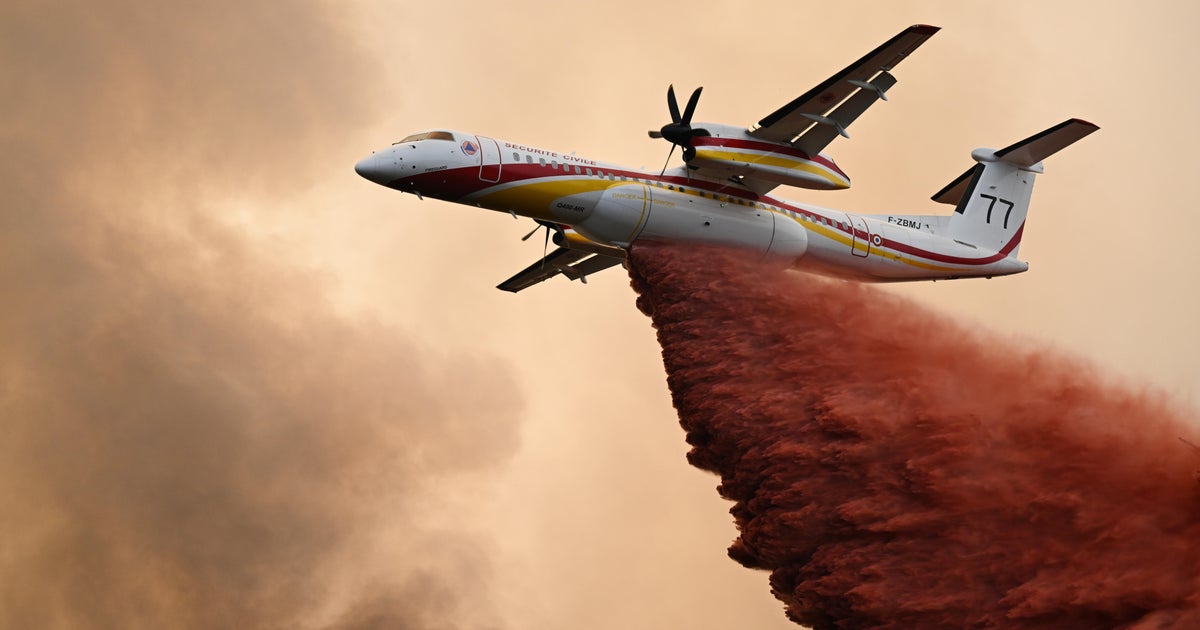
The Greek fire department said the firefighters died in the Rethymno region while working to protect “the lives and property of citizens and the natural environment.” The BBC reported that the two became trapped while tackling flames near the western city of Rethymno. Greek authorities said about 125 firefighters were confronting the fire, with four helicopters and four water-dropping planes deployed. Gale-force winds prompted evacuations of several villages, and witnesses told the BBC that several fires broke out and spread quickly, with the worst fire front stretching up to 15 kilometers, or 9.3 miles.
Wildfires also broke out on the Greek islands of Paros and Lesbos and near Trifylia on the mainland, the BBC reported. In southern Turkey, a fire in Muğla province forced the closure of the main Fethiye-to-Antalya highway and the partial evacuation of a hospital.
In southwestern France, the Gironde region remained the country’s largest wildfire battle, even after authorities said the blaze did not spread during a calm night. Forecasters warned that temperatures could reach 40 degrees Celsius, or 104 Fahrenheit, with strengthening afternoon winds. The BBC reported that officials warned of temperatures as high as 41 Celsius, or 106 Fahrenheit.
More than 2,200 firefighters and over 20 aircraft remained deployed in Gironde, backed by crews from across France and other European countries. Fire commander Matthieu Jomain said crews were moving fast to stop flare-ups: “We strike quickly and strike hard at any new smoke emissions.”
Investigators believe brush-clearing work near a high-voltage line may have sparked the Gironde fire, even though the work appeared to comply with regulations. Bordeaux prosecutor Renaud Gaudeul said contractors working near a line for power-grid operator Enedis may have ignited the blaze while using a brush-cutting machine.
Authorities have described the Gironde evacuations as among France’s largest since World War II. More than 250,000 people were ordered out over the weekend, and officials ordered 4,000 more people to leave tourist sites along the Atlantic coast on Tuesday. Gironde prefect Sophie Brocas allowed 60,000 evacuees to return to three Bordeaux suburbs untouched by fire, but warned, “The situation remains complicated. That’s clear. We’re not out of the woods.”
In Spain, tens of thousands of people began returning home after firefighters made progress around Madrid and Ávila. CBS News reported that evacuation orders were lifted for about 20,000 people in the Madrid region, while stay-at-home restrictions ended for another 14,000. The BBC reported that 24,000 people in the Madrid region were told they could return and lockdowns on another 20,000 were lifted.
Spanish Prime Minister Pedro Sánchez said the next 12 hours would be “decisive” in fighting a wildfire near Madrid. “Things are progressing favourably, with maximum caution,” he told reporters, citing higher temperatures, lower humidity and the risk of gusts of wind.
The BBC reported that more than 43,000 hectares, or 108,000 acres, had burned at Burgohondo in Ávila province, making it the largest recorded wildfire in Spanish history. More than 207,000 hectares have burned in Spain this year, while France’s Interior Ministry said more than 1,160 square kilometers, or 448 square miles, have burned across France.
At the height of the crisis, about 330,000 people were driven from homes and vacation sites across France and Spain. Copernicus, the European Union’s climate service, says Europe is warming more than twice as fast as the global average, with extreme heat and widespread dryness contributing to the spread and intensification of fires.








Be First to Comment