Key takeaways:
- The Senate confirmed Jay Clayton as director of national intelligence in a 51-47 party-line vote, with Republicans in favor and Democrats opposed.
- Acting intelligence chief Bill Pulte announced what he called a fifth round of ODNI cuts, describing it as an approximately 30% staff reduction from weeks earlier.
- Clayton declined during his July 15 confirmation hearing to say directly that Joe Biden won the 2020 election, prompting objections from Democratic senators.
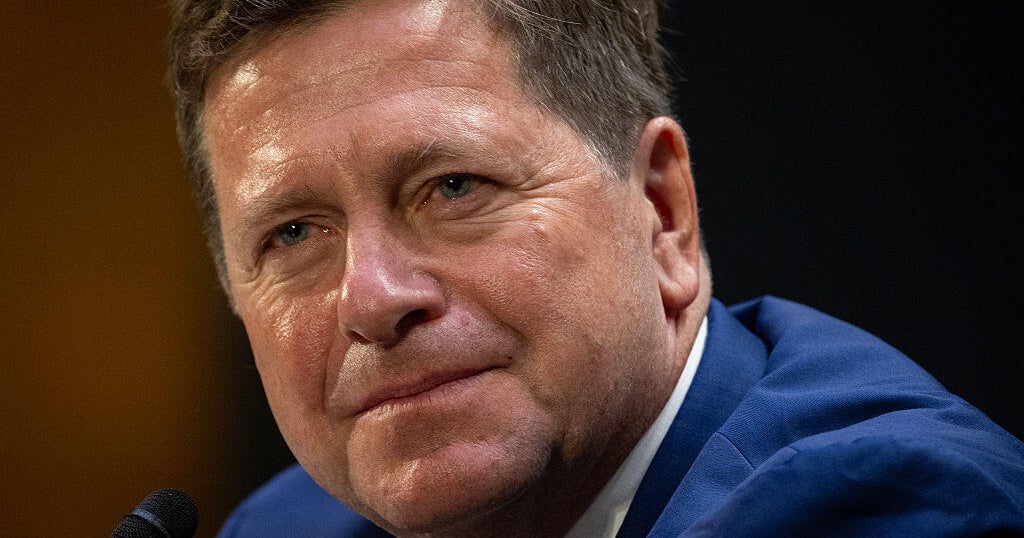
The Senate confirmed Jay Clayton on Tuesday to lead the nation’s intelligence agencies, installing President Donald Trump’s nominee after a party-line vote and months of turmoil at the Office of the Director of National Intelligence.
The vote was 51-47, with Republicans supporting Clayton and Democrats opposing him. Clayton, the top federal prosecutor in Manhattan and a former chairman of the Securities and Exchange Commission during Trump’s first term, will replace acting intelligence chief Bill Pulte, who had served temporarily since June.
Clayton takes over an office that has been sharply reduced in size. Hours before the vote, Pulte announced on social media what he called a fifth round of job cuts at the ODNI since he took office, describing the move as “an approximately 30% Staff Reduction from Weeks Ago.” He did not say how many jobs were eliminated or whether employees were fired or reassigned to other intelligence agencies.
NBC News reported that the office had roughly 2,000 employees at the start of Trump’s second term in 2025 and that former officials said Pulte’s figure could put the current workforce at about 1,000. Trump’s first director of national intelligence in the term, Tulsi Gabbard, had proposed cutting about 40% of the workforce, NBC reported. The ODNI and the White House declined to comment to NBC.
Congress created the director of national intelligence position after the Sept. 11, 2001, terrorist attacks to improve information sharing across U.S. spy agencies. Trump and some Republican lawmakers have called for scaling back the office, saying it has become a bloated bureaucracy.
Sen. Tom Cotton of Arkansas, the Republican chairman of the Senate Intelligence Committee, praised Clayton after the vote. “Jay Clayton is a highly qualified nominee with a deep experience combatting a wide range of national security threats,” Cotton said. “As U.S. attorney, Mr. Clayton has worked hand in glove with our intelligence agencies and counterterrorism personnel to lock up criminals who threaten our national security.”
Democrats had initially viewed Clayton as preferable to Pulte, a Trump loyalist and housing official who came to the temporary intelligence post without national security experience. But Clayton lost Democratic support after his July 15 confirmation hearing, where he declined to say directly that Joe Biden won the 2020 election. CBS News reported that Clayton repeatedly said Biden was “certified” as president.
Sen. Mark Warner of Virginia, the top Democrat on the Intelligence Committee, said he had serious reservations after the hearing. “Having known and worked with Jay for years, I was encouraged when he was first nominated for the position of DNI,” Warner said. “Unfortunately, I came away from his confirmation process with serious reservations about whether he would be willing to stand up to political pressure when it matters most.”
Warner added that Clayton “now has an opportunity — and the responsibility — to demonstrate that intelligence will never be shaped to fit a political narrative.”
Rachel Cohen, Warner’s communications director, said Pulte had not given lawmakers enough information about the ODNI reductions. “The Acting DNI has been quick to announce firings and make public claims about them, but has so far declined to provide the Senate Intelligence Committee with the information necessary to assess the accuracy of those statements or the basis for those decisions,” she said.
Clayton’s confirmation could affect debate over Section 702 of the Foreign Intelligence Surveillance Act, a warrantless surveillance authority that lapsed more than six weeks ago. CBS reported that Democrats walked away from a bipartisan reauthorization deal after Trump temporarily appointed Pulte. Senate Majority Leader John Thune, R-S.D., said Monday, “I hope this will encourage my colleagues to stop blocking reauthorization of the Foreign Intelligence Surveillance Act.”
Even so, CBS reported that an extension is likely to remain stalled for now, with the House already on a five-week recess and the Senate scheduled to leave Washington next week.









Be First to Comment