Key takeaways:
- A Department of Energy court filing said 284 grants were included in an October termination tranche based solely on the political identity of the recipient state.
- The canceled grants were tied, with one exception, to states that voted for Kamala Harris in 2024 and had two Democratic-caucusing senators.
- The Energy Department said reports of political decision-making misrepresent the filing and said none of the termination decisions were based on political considerations.
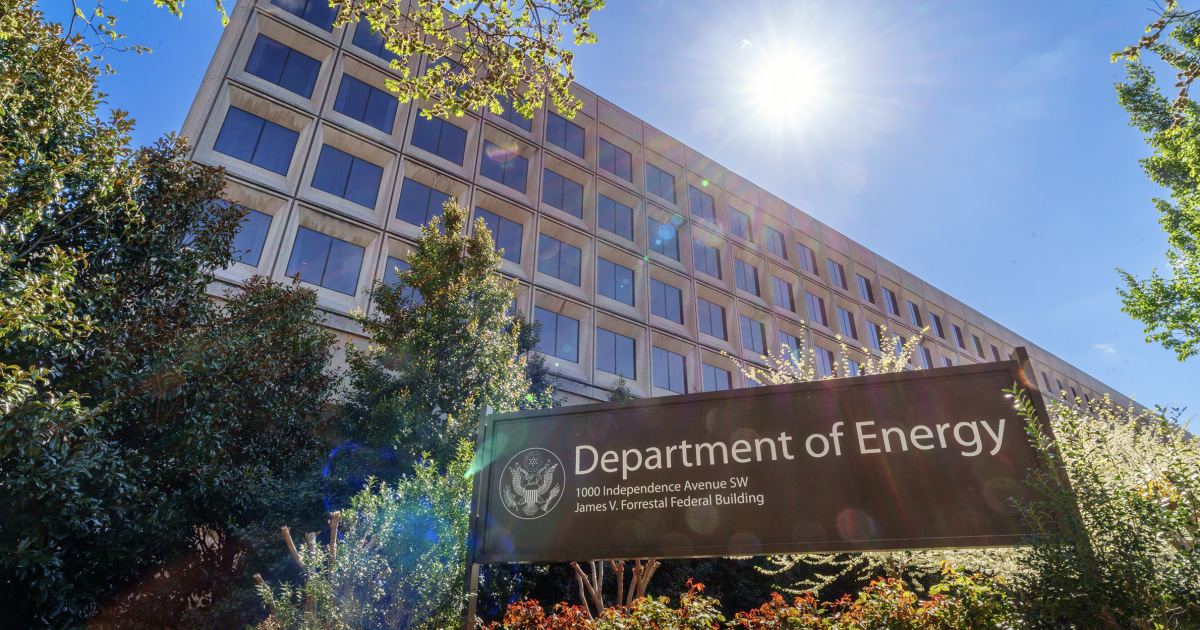
The Trump administration acknowledged in court filings that nearly 300 Department of Energy grants were selected for termination based solely on whether the projects were tied to states that voted against President Donald Trump in 2024 and had two Democratic senators, while the Energy Department continued to deny that politics drove the cancellations.
The admission came in filings this month in a lawsuit brought by University of California researchers challenging the cancellation of federal research funding. The New York Times first reported the filing.
According to the filing, the Department of Energy reviewed more than 2,300 financial assistance awards and identified 624 grants marked for “termination” or “cancel.” Jeff Novak, the department’s principal deputy general counsel, wrote that in October 2025 the Office of Management and Budget identified 284 of those grants for termination.
With one exception, Novak wrote, “the 284 terminated grants had a recipient location and/or at least one place of performance in a state that awarded its electoral votes to Kamala Harris in the 2024 election and has two Democratic-caucusing Senators.”
The remaining 340 grants that had been proposed for termination were not canceled, Novak wrote. “All such grants had a recipient location and/or at least one place of performance in a state that awarded its electoral votes to President Trump in the 2024 election or has at least one Republican-caucusing Senator,” he wrote.
Novak also stated that the decision to cancel the 284 grants was not “based on any programmatic, statutory, cost-reduction, or performance-based factor.”
“DOE accepts that the inclusion of grants in the October notice tranche was based solely on the political identity of the grant recipient’s state, i.e., whether the recipient’s location and/or place of performance was in a Blue State or a non-Blue State,” Novak wrote. He added that the department “will not contend that it looked beyond the prime grantee(s) to consider the political identity or geographic distribution of downstream beneficiaries of the grant funds.”
The Guardian reported that the canceled grants totaled more than $7.5 billion and were for clean energy projects. In October, OMB Director Russ Vought wrote on X: “Nearly $8 billion in Green New Scam funding to fuel the Left’s climate agenda is being cancelled.” He listed projects in California, Colorado, Connecticut, Delaware, Hawaii, Illinois, Maryland, Massachusetts, Minnesota, New Hampshire, New Jersey, New Mexico, New York, Oregon, Vermont and Washington.
The Energy Department disputed reports that the filing showed political decision-making. “That is a misrepresentation of the court filing and of Mr. Novak’s words,” Ben Dietderich, the department’s press secretary, said in a statement to NBC News. “None of the termination decisions were based on political considerations. Secretary Wright has explained this numerous times in briefings on Capitol Hill.”
The Guardian reported that an Energy Department spokesperson said the acknowledgment of political considerations referred to “the timing of the announcement, not of the decisions themselves.”
Energy Secretary Chris Wright denied partisan motives during a June appearance before the House Science, Space and Technology Committee. “No decisions were made on politics. I keep hearing that charge. It’s bulls—t. We’re going to say it a million times,” Wright said.
The lawsuit was filed last June by six University of California faculty members and other researchers challenging federal agencies that halted Biden-era funding. The plaintiffs said at the time that abrupt cancellations of already awarded grants were part of a “political ‘cost-cutting’ agenda and ideological purity campaign.”
The filing comes as the Office of Management and Budget has proposed a rule that would give political appointees broader authority over federal grants, which total about $1 trillion a year. The proposal says discretionary awards must, where applicable, advance the president’s policy priorities and would allow appointees to screen grants for issues including “anti-American values,” the denial of “the sex binary in humans” and the use of “racial preferences” in selection criteria.





Be First to Comment