Key takeaways:
- Jens Spahn resigned Saturday as parliamentary leader of Germany’s governing CDU/CSU bloc after he and his husband had a child through a surrogate in the United States.
- Surrogacy is banned in Germany, though raising a child born to a surrogate abroad is legal; the CDU/CSU reaffirmed support for the ban in February.
- Chancellor Friedrich Merz called Spahn’s resignation “right” and “unavoidable” and said credibility is the most valuable asset in politics.
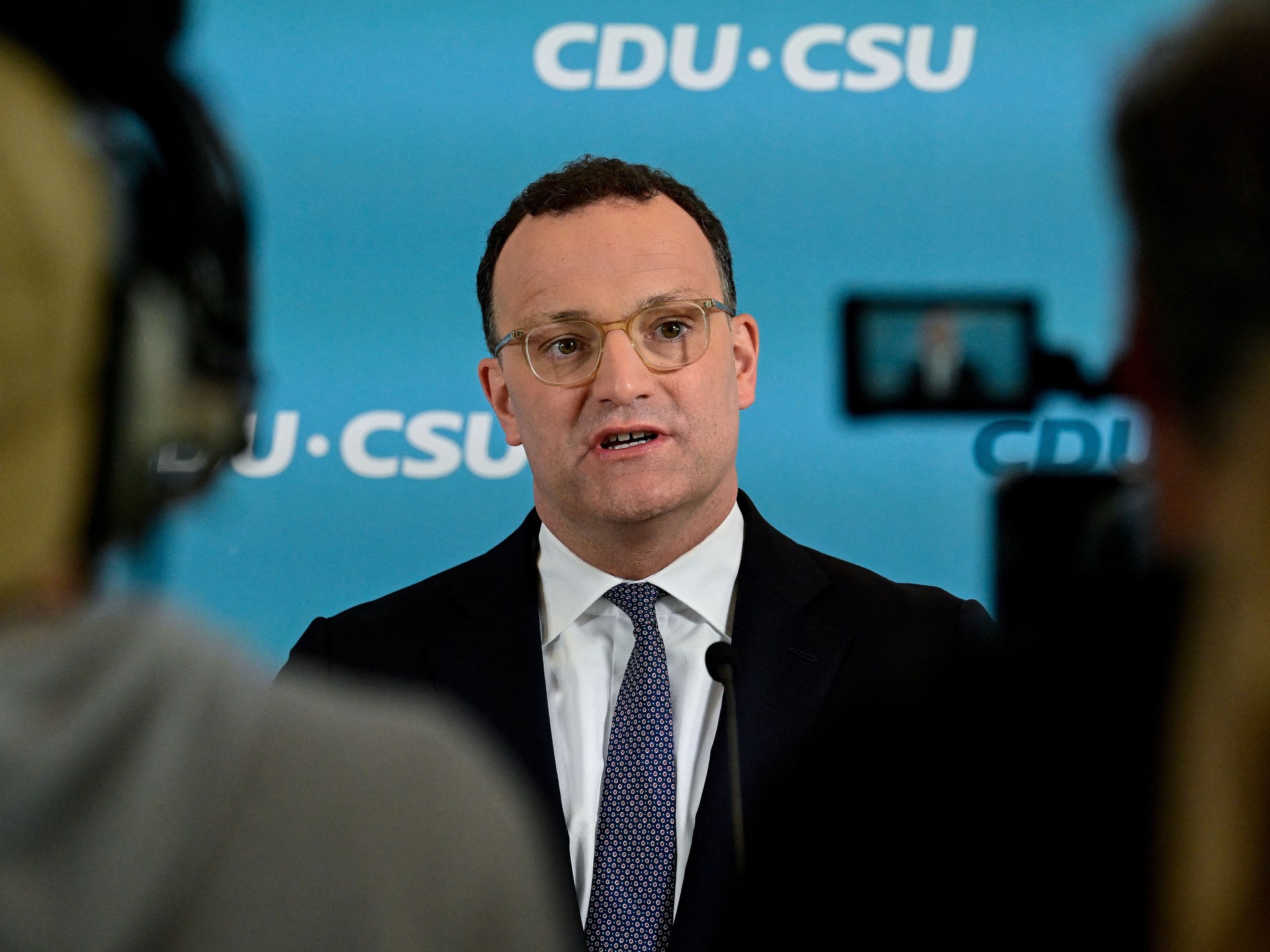
Jens Spahn, one of Germany’s most senior conservative politicians, resigned Saturday as parliamentary leader of the governing CDU/CSU bloc after criticism over his decision to have a child through a surrogate mother in the United States.
The 46-year-old former health minister said becoming a father with his husband, Daniel Funke, had become impossible to reconcile with his political role because his party supports Germany’s ban on surrogacy. The practice is prohibited in Germany, though parents may legally raise a child born to a surrogate abroad.
“I have realised that my personal happiness — founding a family together with my husband and becoming a father — is not compatible with my political office,” Spahn wrote in a statement Saturday.
His resignation followed reports Thursday that he and Funke had become parents through a surrogate in the U.S. The news prompted criticism from opposition politicians and from within his own conservative camp, with critics accusing him of hypocrisy. The Christian Democratic Union and its Bavarian sister party, the Christian Social Union, reaffirmed support for Germany’s surrogacy ban in February.
Spahn had also previously supported the ban. As health minister in 2020, he rejected calls by the liberal Free Democrats to relax it. In 2015, he wrote that “as a gay man and a Christian I find it personally very hard to warm to the idea of a rented womb.”
In his resignation statement, Spahn said the gap between his private decision and public expectations had widened faster than he anticipated. “The balancing act between my private decision to have a child through surrogacy and the understandable expectations placed on me as Chairman of our parliamentary group has become greater than I anticipated,” he wrote.
He also said the “increasing relentlessness in public discourse” had given him “deep pause for thought,” adding: “Despite all clarity and decisiveness regarding the issues, let us always remain human in our tone.”
Chancellor Friedrich Merz, the CDU leader, called the resignation “right” and “unavoidable,” while saying Spahn had helped return the party to power. “Credibility is the most valuable asset in politics,” Merz said. The BBC reported that Merz wrote on social media he would begin the process of appointing Spahn’s replacement.
Merz did not publicly criticise Spahn, according to Al Jazeera, but said he saw “no reason” to change the party’s position on surrogacy and that the CDU would discuss the matter.
Spahn had been parliamentary leader of the CDU/CSU bloc, a role that required him to secure the votes needed to pass Merz’s agenda. Al Jazeera described the post as one of the most powerful in German politics and said his departure removes one of Merz’s closest allies.
German media reported that Alexander Hoffmann, head of the CSU parliamentary group, would take over Spahn’s duties until a successor is chosen. Hoffmann said: “Jens Spahn’s decision deserves the utmost respect.”
Under German law, surrogacy can be punished with up to three years in prison or a fine, making surrogacy abroad an option for some couples. Other European Union countries, including France, Spain and Italy, also ban surrogacy. Italy made it illegal in 2024 for Italians to have a baby abroad through surrogacy, while France’s Court of Cassation ruled this month that babies born to surrogate mothers abroad should be legally recognised as the children of their intended parents.
The BBC reported that the controversy comes at a difficult time for the CDU, with Merz struggling in opinion polls ahead of regional elections this autumn, including in Saxony-Anhalt, where the far-right AfD could win an outright majority.






Be First to Comment