Key takeaways:
- The Morandi bridge collapsed in Genoa on Aug. 14, 2018, killing 43 people after vehicles plunged about 45 metres from the viaduct.
- Dozens of defendants, including former motorway executives, maintenance engineers and transport ministry officials, deny charges tied to the disaster.
- Prosecutors blame delayed or falsified maintenance, while defence lawyers argue an undetectable design or construction flaw caused the collapse.
Families of the 43 people killed when Genoa’s Morandi bridge collapsed are returning to court Thursday for a long-awaited first verdict in one of Italy’s worst infrastructure disasters in decades.
The ruling comes nearly eight years after a central section of the highway viaduct gave way during a summer storm on Aug. 14, 2018, sending cars and lorries plunging about 45 metres onto railway tracks and the ground below. The bridge was a key route linking Genoa with the French border and serving nearby port terminals.
Among those expected in the courtroom is Egle Possetti, whose sister Claudia, 47, died with her new husband, Andrea, 48, and her two children, aged 12 and 16. They had been travelling for a holiday when their car fell with the bridge.
“I feel anxious, worried, very emotional,” Possetti told the BBC. “After so many years, so many hearings, we may be able to see some light. It would be so important for us to know if someone’s been held accountable.”
The case has become one of Italy’s largest criminal trials. The BBC reported that 57 people have stood trial since July 2022, while Al Jazeera reported that 59 people faced charges. The defendants include former executives of Autostrade per l’Italia, the toll road operator, its parent company Atlantia, engineers from maintenance firm Spea and former transport ministry officials. Charges include multiple manslaughter, undermining transport safety, falsifying documents and making false statements. All the defendants deny wrongdoing.
Prosecutors say the collapse followed years of missed, inadequate or falsified maintenance, with warning signs ignored while necessary repairs were delayed and dividends continued to be paid. They allege officials knew the bridge, built in the 1960s and opened in 1967, was at risk.
Defence lawyers argue the disaster stemmed from an original design or construction flaw in the stay cable that failed, which they say was encased in concrete, impossible to detect and could not have been prevented by maintenance. Some lesser charges, including document forgery, have already lapsed under Italy’s statute of limitations.
Investigations found the collapse was triggered by the rupture of load-bearing cables inside the stay of the bridge’s ninth pillar, which had been corroded over the structure’s 51-year lifespan. Al Jazeera reported that experts had warned by the turn of the century that the bridge was deteriorating, and that a 2011 Autostrade report said the bridge was decaying because of heavy traffic.
Prosecutors have sought an 18-and-a-half-year prison sentence for former Atlantia chief executive Giovanni Castellucci, described by Al Jazeera as a key defendant. His lawyer Guido Alleva said last year the requested sentence was “unacceptable,” adding: “It is a frightening sentence, one you would expect to be sought in a murder trial, not in a case where only negligence is alleged.” Castellucci is already serving a six-year sentence over another fatal viaduct incident in southern Italy in 2013 that killed 40 people.
Autostrade and Spea are no longer defendants after reaching a financial settlement. The BBC reported the settlement was about 30 million euros, or 25 million pounds. On the eve of the verdict, Autostrade chief executive Arrigo Giana issued the company’s first apology in an open letter published in two Italian newspapers, calling the failure to apologise earlier a “further, incomprehensible wound.”
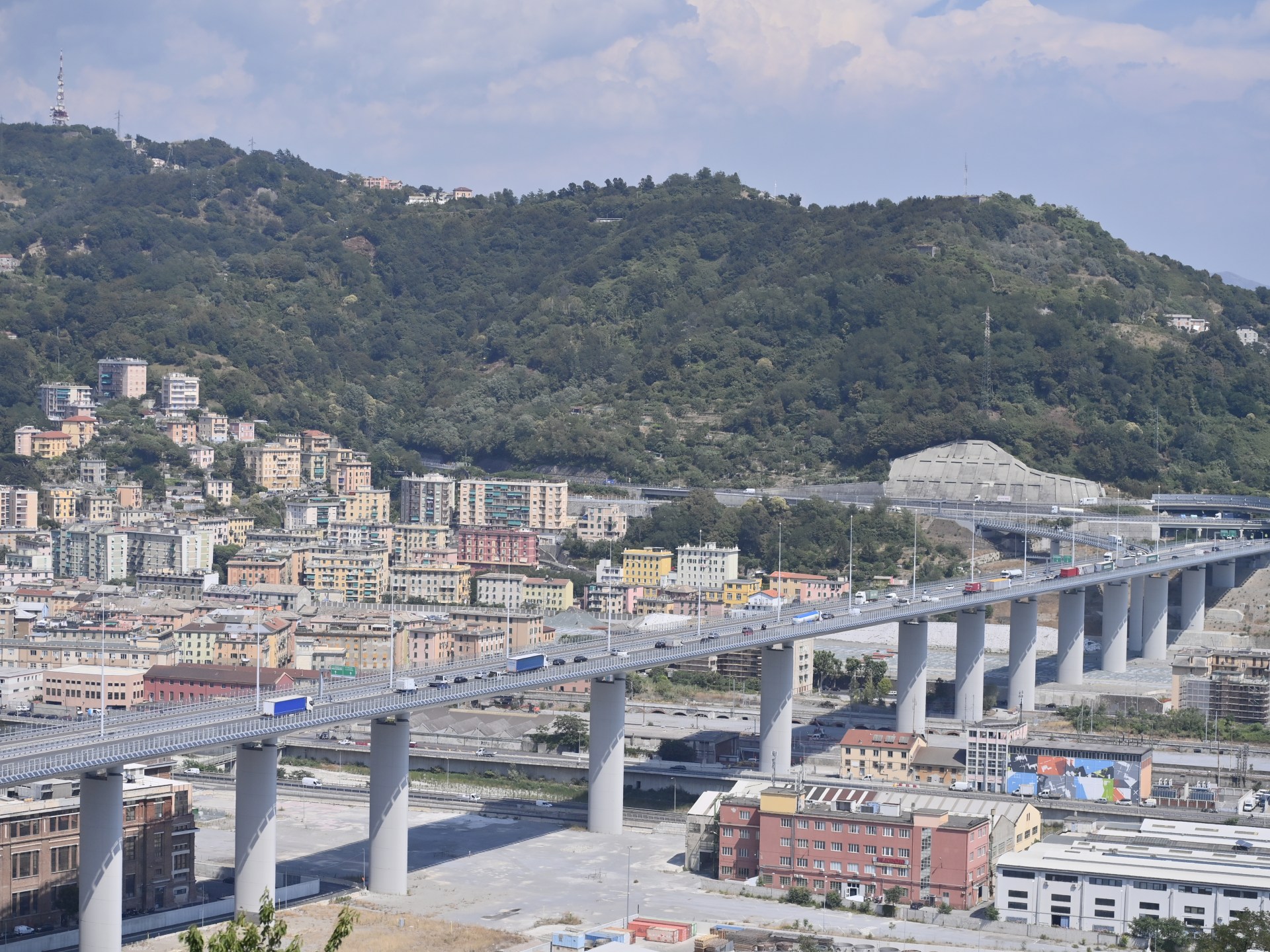
The remains of the old viaduct were demolished in 2019. A replacement designed by Genoa-born architect Renzo Piano opened in August 2020 as the Genoa San Giorgio Bridge, with white, sail-like pillars meant to evoke the city’s maritime history.
Possetti, who represents the victims’ families committee, said the ruling could carry deep symbolic weight. “Finding who is responsible could give us some sort of peace and a sense of justice,” she told the BBC.







Be First to Comment