Key takeaways:
- Blanche said no money has been transferred for the $1.8 billion anti-weaponization fund and told senators, “The weaponization fund is dead.”
- Sen. John Cornyn said he remains undecided on Blanche’s nomination and warned the fund “still could be revived.”
- Blanche took responsibility for mistakes in redacting Epstein-related files, saying documents were removed and fixed when victims’ names were improperly left visible.
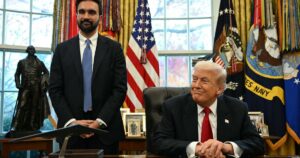
Acting Attorney General Todd Blanche told senators Wednesday that a disputed $1.8 billion “anti-weaponization” fund tied to President Trump’s IRS settlement is “dead,” but his testimony did not end questions from Republicans and Democrats about whether the agreement could still be enforced.
Blanche appeared before the Senate Judiciary Committee for his confirmation hearing to become attorney general, a promotion that remains uncertain. He previously won Senate confirmation as deputy attorney general early in Trump’s second term and became acting attorney general after Pam Bondi’s resignation, according to Al Jazeera. To advance his nomination from the committee, he needs support from all Republicans on the panel.
The hearing centered on issues that have shadowed the Justice Department for months: the IRS settlement, Blanche’s past work as Trump’s personal lawyer, prosecutions involving Trump critics, and the department’s handling of files related to convicted sex offender Jeffrey Epstein.
The IRS settlement drew the sharpest bipartisan criticism. The agreement ended Trump’s lawsuit over leaked tax returns and called for the Justice Department to create a fund for victims of alleged government “weaponization.” It also protected Trump, his family, his company and related businesses from future tax claims, CBS News reported.
“It is a moot issue, meaning there is no weaponization fund. The weaponization fund is dead,” Blanche told senators. He also said, “No money went from the Treasury to any other account.”
But senators pressed him on why the settlement language had not been formally changed in writing. Sen. John Cornyn, R-Texas, read from the agreement and noted that its terms “may be modified only upon the written agreement of the parties.”
“Has there been a written agreement of the parties to modify the settlement fund?” Cornyn asked.
“No, the settlement fund is just not moving forward,” Blanche replied.
Blanche acknowledged the agreement remains an enforceable document. “They could try to enforce the contract. They can’t force the Department of Justice to move forward with the weaponization fund,” he said of Trump’s attorneys. “They could potentially say, I suppose, that we breached by not moving forward.” He added that he was not aware of any plan to do so.
A federal judge criticized the Justice Department over the settlement this week. NPR reported that the judge said the fund appeared to be an effort to use the court to legitimize an attempt to “earmark billions of dollars from American taxpayers to redress grievances not defined in the law.” CBS News reported that the judge rebuked the department and sanctioned a Trump attorney, finding that Trump pursued the lawsuit “for an improper purpose.” Al Jazeera reported that the judge voided the settlement.
Cornyn said after the hearing he remained undecided on Blanche’s nomination. “I’m not there yet,” he told reporters, according to CBS News. He said the fund “still could be revived.” Sen. Thom Tillis, R-N.C., suggested Congress could codify the end of the fund. Blanche said the Justice Department could support that idea, and Tillis later told him, “You’ve done a great job today.”
Democrats questioned whether Blanche could separate his role as the nation’s top law enforcement officer from his past as Trump’s personal attorney. Blanche represented Trump in criminal cases, including the federal classified documents and election obstruction cases, and a New York trial that resulted in Trump’s conviction on 34 counts of falsifying business records, according to Al Jazeera.
Asked by Sen. John Kennedy, R-La., whether he and Trump are friends, Blanche answered, “I’m his lawyer — was his lawyer. And now I’m the deputy attorney general.”
Sen. Cory Booker, D-N.J., said the situation “casts a shadow over any ideas of independence.” Sen. Richard Durbin, D-Ill., accused Blanche of remaining Trump’s personal lawyer, saying his tenure could be summed up by four words Blanche once said to Trump: “I love you, sir.”
Blanche defended the department’s work, saying it had fought violent crime, fraud, drug cartels, child abusers and gang members. “We are restoring American trust,” he said. “None of this is a Republican or Democrat issue.”
The Epstein case also remained a focus. Victims sat behind Blanche as senators criticized delays in releasing records, improper redactions that exposed victims’ private information and photos, and the transfer of Ghislaine Maxwell from a maximum-security prison to a prison camp.
Blanche rejected claims that the department had lacked transparency. “The Biden administration did nothing to be transparent about the Epstein case,” he said. “We have been extraordinarily transparent in not only producing the records but letting unredacted versions be available to anybody in this body.”
Durbin said Congress had to pass a bipartisan law to force the records’ release. Blanche took responsibility for redaction failures, saying, “Whenever we learned that any victim’s name had been improperly not redacted, we immediately took the document down and fixed it as soon as we could.”








Be First to Comment