Key takeaways:
- Mojtaba Khamenei said revenge for Ali Khamenei’s killing was the demand of the Iranian nation and would be carried out regardless of individual officials.
- Trump said the ceasefire with Iran was over after tanker attacks near the Strait of Hormuz and subsequent exchanges of strikes, but said mediated talks could continue.
- The International Maritime Organization condemned Iran’s move to establish an authority controlling Strait of Hormuz traffic, while the US imposed new Iran-related sanctions.
Iran’s new supreme leader has vowed revenge for the killing of his father, escalating a confrontation with the United States as both sides trade threats over attacks near the Strait of Hormuz while still leaving room for diplomacy through mediators.
Ayatollah Mojtaba Khamenei said vengeance for his father, Ali Khamenei, was the “will of the nation” in a written statement read on Iranian state television, the BBC reported. It was his first public message since funeral ceremonies began this week for Ali Khamenei, who was killed in a Feb. 28 airstrike on the first day of the US-Israeli war against Iran.
“We pledge to avenge the blood of the martyred leader and all the martyrs of these two wars from the criminal and disgraced killers,” Khamenei was quoted as saying. “The matter depends neither on my personal existence nor on that of other officials. Whether we are present or not, it will come to pass.”
Al Jazeera reported a slightly different version of the statement, quoting Khamenei as saying, “We pledge to avenge your pure blood, and the blood of all the martyrs of these two wars, upon the criminal and disgraced killers. This revenge is the demand of our nation, and it must certainly be carried out.” He added: “Soon, individuals among the free people of the world will each carry out a part of this divine mission.”
Ali Khamenei was buried Friday in Mashhad, his home city. Mojtaba Khamenei has not appeared publicly since before the war, and the BBC reported that he is rumoured to have been disfigured in the strike that killed his father. Al Jazeera reported that he has not been seen or heard from since being selected as supreme leader by a clerical body in March.
The funeral ceremonies have featured hardline calls against negotiations with Washington. In Mashhad, crowds shouted, “Negotiations with the enemy is betraying the homeland,” while officials who support talks with the US sat in attendance, Al Jazeera reported. Ali Khomeini, a grandson of Ruhollah Khomeini, said in a televised speech that “anyone who wishes to negotiate to reach peace with America is a traitor.”
US President Donald Trump has warned against any attempt to kill him. He said he believes he is first on Iran’s “kill list” and wrote on Truth Social that a thousand “Missiles are Locked and Loaded and aimed at the Islamic Republic of Iran.” He said orders had been given for the US military, “for a one year period of time, subject to extension, to completely decimate and destroy all areas of Iran” if an attempt were made on his life.
The Wall Street Journal and other US media reported this week that Israel had shared intelligence with Washington that Iran had recently devised a plan to assassinate Trump. The BBC reported that Trump denied Tehran had made a fresh plan and denied that Israel was the source of any intelligence, telling the New York Post he had been “No. 1” on Iran’s kill list “for a long time.”
The war began with US and Israeli attacks on Feb. 28, followed by Iranian attacks on Israel and US targets and allies in the Gulf. The US and Iran signed a ceasefire agreement in June aimed at facilitating talks, but Trump said this week the ceasefire was over after a new exchange of strikes.
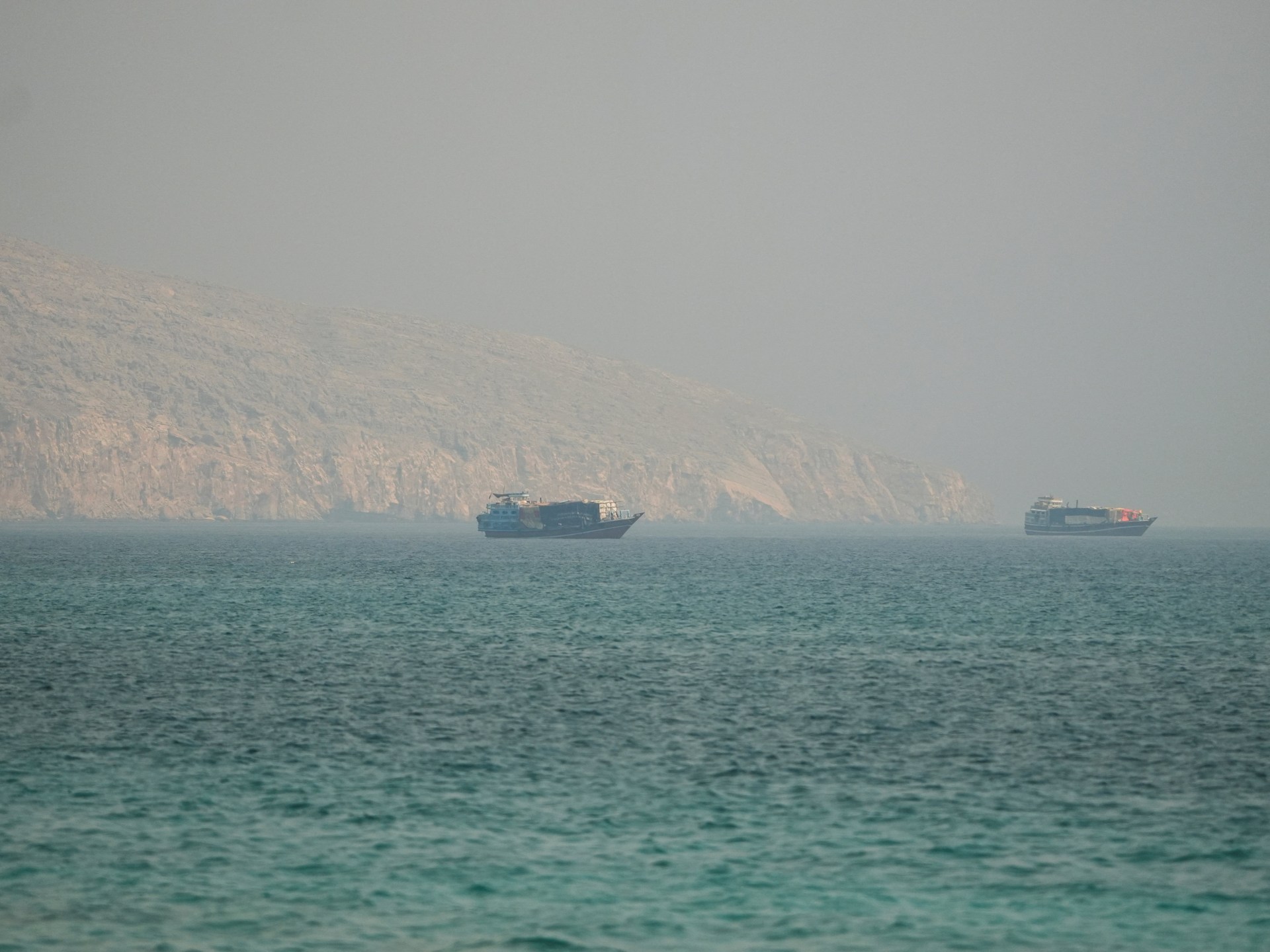
Earlier this week, three commercial tankers were attacked while attempting to use a US-recommended route through Omani waters. Iran has repeatedly said the only “safe” route is through its waters. Iranian officials said subsequent US strikes killed 17 people and injured 115. Iran responded with strikes on US allies in the Gulf.
US officials say they have demanded through mediators that Iran publicly declare the Strait of Hormuz open and stop firing on commercial ships. According to US media, Iran told American officials the tanker attacks were a mistake and blamed a rogue internal group. Al Jazeera reported that unnamed Trump administration officials described the faction as “errant” hardliners trying to undermine negotiations.
Iranian authorities, meanwhile, say they intend to exercise control over transit through the strait. The Islamic Revolutionary Guard Corps Navy said Thursday that traffic had recovered to about 50 percent of pre-war levels before the latest strikes, but that ships must use designated routes and foreigners “will have no share” in managing the waterway.
The International Maritime Organization on Friday strongly condemned Iran’s creation of an entity “purporting to control traffic through the strait” and urged member states not to recognise Iranian claims that interfere with international navigation. The same day, the US Treasury imposed new Iran-related sanctions, including on Ali Ansari, described as a financial facilitator with reported links to Mojtaba Khamenei, and several currency exchange houses.
Despite the threats, talks continue through intermediaries. Al Jazeera reported that Qatari mediators visited Iran on Friday and that Iran’s foreign minister travelled to Oman on Saturday. Ali Vaez of the Crisis Group said both sides appear to recognise that further escalation would be difficult to control. “The real test is not what Iranian officials reportedly said in private, but whether both sides can find a way to stop exchanging fire and return to exchanging words,” he said.




Be First to Comment