Key takeaways:
- Graham Platner must withdraw by 5 p.m. ET on July 13 for Maine Democrats to replace him on the November ballot.
- The Maine Democratic Party would have until 5 p.m. ET on July 27 to select a replacement nominee if Platner exits.
- Potential replacements being discussed include Shenna Bellows, Troy Jackson and Nirav Shah, all of whom have called on Platner to step down.
Democrats in Maine are racing against a tight legal deadline as pressure mounts on Graham Platner to leave the state’s U.S. Senate race after a sexual assault allegation that he denies.
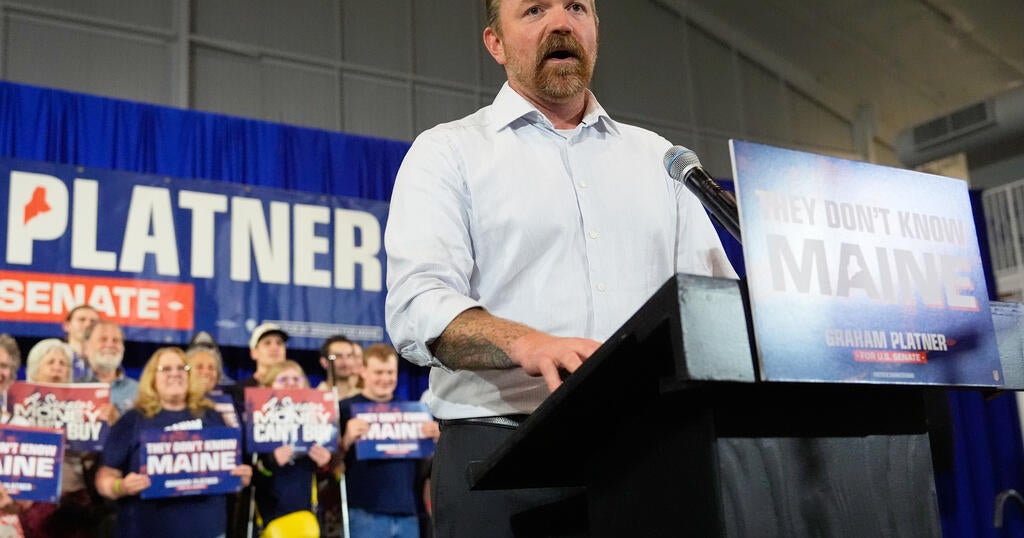
Platner, the Democratic nominee challenging Republican Sen. Susan Collins, has faced a rapid collapse in support since Jenny Racicot, a Maine woman he previously dated, told Politico and CNN that Platner sexually assaulted her in 2021. Platner denied the allegation Monday and said he was “taking the time to reflect on the best path forward,” The Guardian reported.
The fallout has been swift. Senior Democrats have withdrawn endorsements, the Maine Democratic Party has urged him to quit, and the Democratic Senatorial Campaign Committee has said it will not spend more money in Maine unless Platner withdraws. The race is among Democrats’ most important Senate pickup opportunities as the party seeks to regain control of the chamber. Collins, a five-term Republican, is seeking a sixth term.
Maine law gives Platner until 5 p.m. ET Monday, July 13, to withdraw and remove his name from the November ballot. If he does, the Maine Democratic Party would have until 5 p.m. July 27 to choose a replacement. The law says that if a party makes a replacement nomination by the deadline, “the Secretary of State shall produce new general election ballots or amend or supplement general election ballots already printed.”
The statute does not specify how Democrats must choose a new nominee. Devon Murphy-Anderson, the Maine Democratic Party’s executive director, said Tuesday that any replacement process would be “open, transparent, and inclusive,” with “broad participation of Mainers and Democratic voters.” She also said, “In no scenario is there a legal possibility for a nominee to be selected by an individual campaign.”
Dan Shea, a political science professor at Colby College, told CBS News the party would likely gather officials for some form of nominating convention, though the details remain unclear. “My guess is, they’ll do the best they can to make it open and democratic. So it’s going to be open and democratic and very efficient,” Shea said. “Those don’t usually go together.”
Platner won last month’s Democratic primary with 72% of the vote after outgoing Gov. Janet Mills suspended her campaign before the primary. It is unclear whether Mills, 78, would seek to reenter the race.
Several other Maine Democrats are being discussed as possible replacements, including Secretary of State Shenna Bellows, former state Senate President Troy Jackson and Nirav Shah, the former director of the Maine Center for Disease Control and Prevention. All three have called on Platner to step down.
Jackson, who had campaigned alongside Platner, said: “For too long, women who survive sexual violence have been told to stay quiet, to protect the men who hurt them, to think about the campaign, the party, the cause. We cannot ask women to trust us with their futures while looking the other way when one of our own hurts them.” He told the Bangor Daily News that if Platner leaves the race, he is “very, very interested and think I’m the best person to replace him.” On Tuesday, Jackson filed paperwork with the Federal Election Commission to form a U.S. Senate exploratory committee, CBS News reported.
Shah said in a social media video that he had “received hundreds of encouraging messages from folks across the state” and that his family was evaluating the possibility. He has called for a replacement process that is as transparent as possible, with debates and town halls.
Progressive groups that backed Platner have warned against replacing him with a more establishment-aligned candidate. “To the Democratic establishment: this is not your opening,” Our Revolution Executive Director Joseph Geevarghese wrote, specifically cautioning against a “status-quo candidate” such as Mills. Adam Green of the Progressive Change Campaign Committee said Democrats should nominate a “shake-up-the-system economic fighter who challenges powerful interests.”
Collins has proved difficult for Democrats to defeat. In 2020, she beat Democrat Sara Gideon by 8.6 points even as Joe Biden won Maine by nine points. Six years earlier, Collins defeated Bellows by more than 30 points.










Be First to Comment