Key takeaways:
- Mr Justice Nicklin dismissed all 97 allegations against Associated Newspapers, saying the claimants could not rely on suspicion and had to prove unlawful information gathering.
- Prince Harry brought the case with Elton John, David Furnish, Elizabeth Hurley, Sadie Frost, Simon Hughes and Baroness Doreen Lawrence.
- Associated Newspapers denied wrongdoing and said the case wasted more than £50m in legal costs; Simon Hughes called the ruling “very disappointing.”
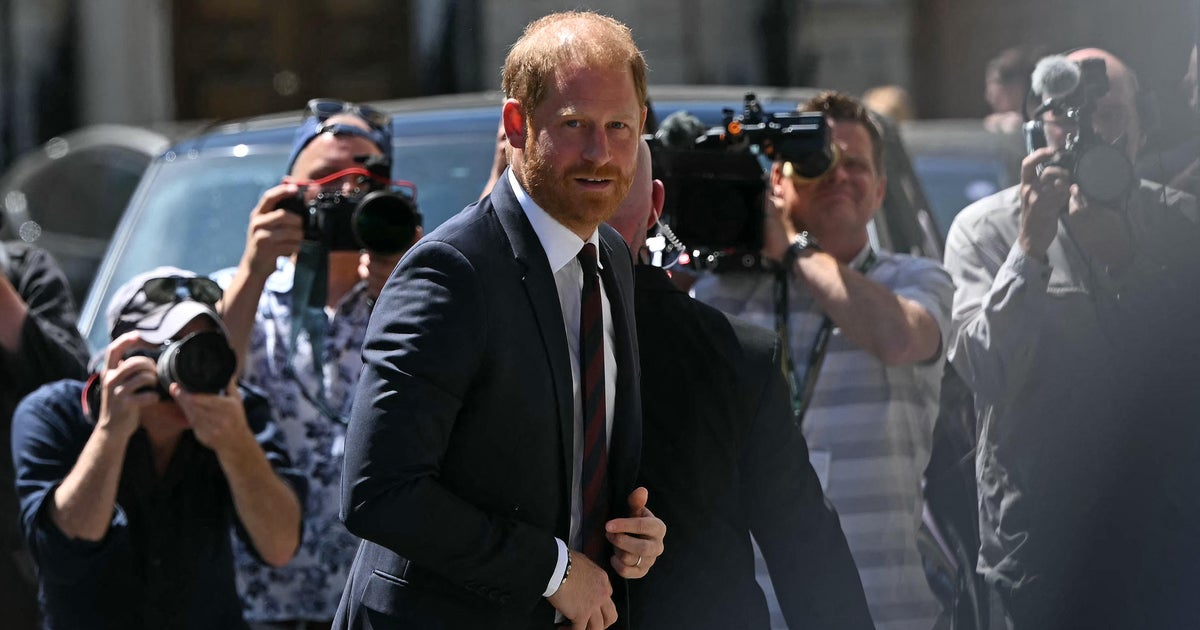
Prince Harry and six other public figures have lost a High Court privacy case against the publisher of the Daily Mail and Mail on Sunday, with a judge dismissing all 97 allegations that the newspapers unlawfully gathered information for stories.
Mr Justice Nicklin ruled Tuesday that the claimants had failed to prove their claims against Associated Newspapers, which had denied wrongdoing throughout the case. The Duke of Sussex brought the lawsuit alongside singer Elton John and his husband David Furnish, actors Elizabeth Hurley and Sadie Frost, former Liberal Democrat minister Simon Hughes, and Baroness Doreen Lawrence, the mother of Stephen Lawrence, who was murdered in 1993.
The group accused Associated Newspapers of using unlawful methods including phone tapping, intercepting voicemails and impersonating people to obtain personal information. Lawyers for the claimants said the alleged conduct took place between 1993 and 2011 and continued into 2018. Associated Newspapers called the allegations “preposterous” and argued that the articles cited in the case were based on information gathered lawfully through people close to the claimants.
In a summary of his ruling, Nicklin said the allegations were serious and required convincing evidence. The claimants could not rely on “suspicion, even where understandable,” he said, and had to prove that information had been obtained unlawfully.
The judge said he accepted the denials of Associated Newspapers journalists “who gave lawful explanations for the sourcing of the disputed articles and incidents.” He also rejected claims that three senior Associated executives — former editors Paul Dacre and Peter Wright, and the publisher’s current senior lawyer Elizabeth Hartley — had lied in evidence to the Leveson Inquiry when they said there was no unlawful activity at the Daily Mail and Mail on Sunday.
In one disputed article, the Daily Mail’s royal editor wrote in 2013 that Harry faced a lonely New Year’s Eve without his girlfriend Cressida Bonas. Harry said in a witness statement that the article was “creepy” and that he did not know how the paper had obtained details about the couple’s separate whereabouts. Nicklin said he accepted that Harry found the article intrusive, but added: “Suspicion, even understandable suspicion, is not proof.”
During the trial earlier this year, Harry said press snooping had made him “paranoid beyond belief” and became emotional while describing the impact of the articles on him and those close to him. He said Associated Newspapers had made the life of his wife, Meghan, the Duchess of Sussex, “an absolute misery.”
Associated Newspapers described the judgment as an “overwhelming victory for the Daily Mail and its journalists.” A spokesperson said the judge had “dismissed every single one of the 97 allegations made by the claimants” and called the ruling “a magnificent vindication of the Daily Mail’s journalism.” The spokesperson also said the case had “wasted so much valuable court time and more than £50m in legal costs.” Dacre, Associated Newspapers’ editor-in-chief and former Daily Mail editor, said the case was “trumped-up” and “should never have been brought to trial.”
Hughes called the judgment “very disappointing” and said he would “take time to consider” the judge’s findings. A further two-day hearing is expected to begin July 29.
The ruling is widely expected to be the last in a series of legal battles Harry has brought against British media outlets. In 2023, he won 15 of 33 claims in a phone-hacking case against Mirror Group Newspapers and was awarded about $180,000 in damages; the following year, the publisher paid him a further $370,000 to settle other claims. Last year, the publisher of The Sun paid him “substantial damages” and apologized to settle a long-running legal battle over claims of unlawful intrusion.
The verdict came as Harry began a rare visit to the United Kingdom, including an event in London for the Invictus Games, his charity for injured military veterans.



Be First to Comment