Key takeaways:
- Magnitude 7.2 and 7.5 earthquakes struck Venezuela within seconds around 18:00 local time Wednesday.
- The BBC reported more than 160 confirmed deaths and hundreds of injuries, while officials said losses in some hard-hit areas were still unknown.
- Authorities declared a state of emergency, suspended classes, closed the main airport and urged healthcare workers to report to hospitals.
Two powerful earthquakes struck Venezuela within seconds on Wednesday evening, collapsing buildings in Caracas and other hard-hit areas, cutting communications and sending thousands of terrified residents into the streets as rescuers searched through rubble for survivors.
The back-to-back quakes hit around 18:00 local time, or 22:00 GMT, with magnitudes of 7.2 and 7.5. More than 160 people have been confirmed dead so far and hundreds more are injured, the BBC reported, while authorities warned they have not yet begun to measure losses in some of the worst-affected areas. Al Jazeera cited Venezuelan authorities earlier as saying at least 32 people had been confirmed dead, with officials warning the toll was likely to rise.
Caracas, the capital, was among the places hit hardest. Debris covered streets as rescue workers dug through collapsed buildings. In some footage, people could be heard calling for help from the wreckage. Power and internet outages hampered efforts to assess damage in other parts of the country.
Verónica, who was at home in Caracas celebrating a national holiday with her mother, said she feared the walls of her apartment would collapse around them. “I thought I was going to die,” she told BBC Mundo. After hours without contact, she later confirmed that she and her mother were safe, but said her home was likely lost. “The building is completely destroyed, the walls are cracked,” she said.
Others described violent shaking and sudden panic. Jesus Alejandro Pina, a 38-year-old engineer in Caracas, told Al Jazeera he was on the top floor of a seven-storey building when the quakes struck. “It was very, very strong,” he said. “Glasses were breaking, pictures were falling, the television too. Everything was falling. The lamps, anything made of glass, even the columns and beams were making noise.”
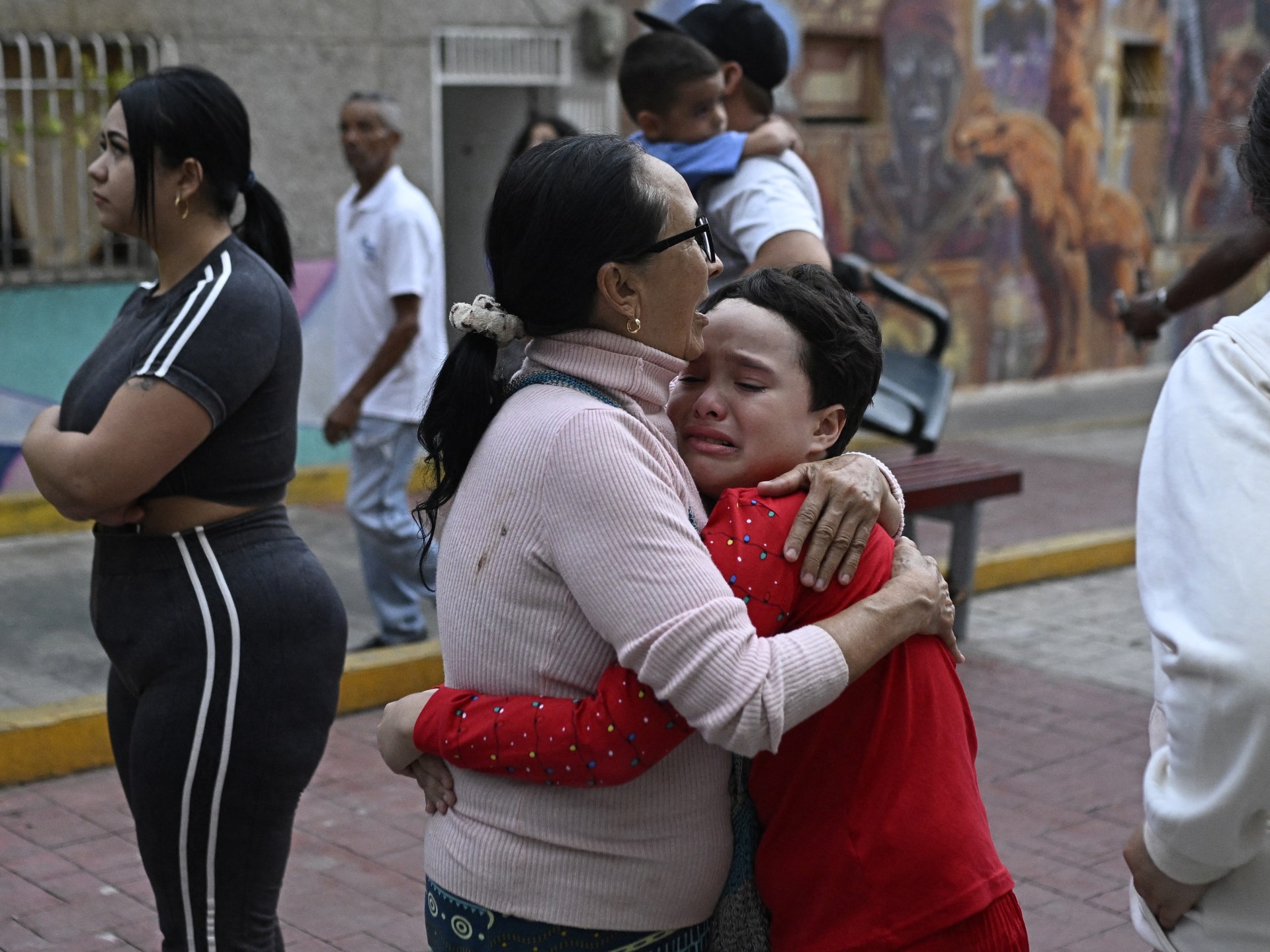
When the shaking stopped, residents poured into streets, squares and open spaces. Many stayed outside overnight, either unable to return home or afraid of aftershocks. Tents lined sections of pavement, and parked cars became makeshift beds.
Luis Alejandro Ruiz Garcia, 25, said a Google earthquake alert appeared on his phone moments before his apartment began to shake. “My mother and my sister, who were with me, got up from their beds in fear,” he told Al Jazeera. “We hugged each other and, as soon as we could, managed to go downstairs and get out of my building as quickly as possible.”
He said orange dust filled the air after a residential building collapsed three blocks away. Later, while checking on his grandmother, he found streets crowded with people searching for relatives and helping neighbours flee damaged buildings. “The building across the street was a wreck. It looked like one of those images from a country at war. You could hear people screaming for help so they could get out,” he said.
Authorities declared a state of emergency, suspended classes, closed the country’s main airport and urged healthcare workers to report to hospitals, Al Jazeera reported.
La Guaira, north of Caracas, was described as the most affected state, though infrastructure damage limited information from the area. Images and footage showed flattened buildings, large fires and injured people arriving at field hospitals in the state capital. Interim President Delcy Rodríguez said “dozens” of buildings had collapsed there, calling it a “disaster zone” and a “true tragedy.” Miranda, Aragua, Carabobo and Falcón were also reported among the hard-hit states.
The United States Geological Survey said there was a 44 percent chance of more than 10,000 deaths and a 33 percent chance that the toll could surpass 100,000, according to Al Jazeera. Communications outages continued to leave many families unable to reach relatives as rescue teams worked through the night.







Be First to Comment