Key takeaways:
- The Liberian-flagged Stoic Warrior and other vessels used a route near Oman that avoids Iranian waters despite warnings from Iran’s Revolutionary Guard Navy.
- Kpler said more than 70 ships had transited the Strait of Hormuz since Wednesday, compared with more than 130 ships daily before the war.
- U.S. Secretary of State Marco Rubio said no country has the right to charge for use of international waterways, rejecting Iranian tolls or fees.
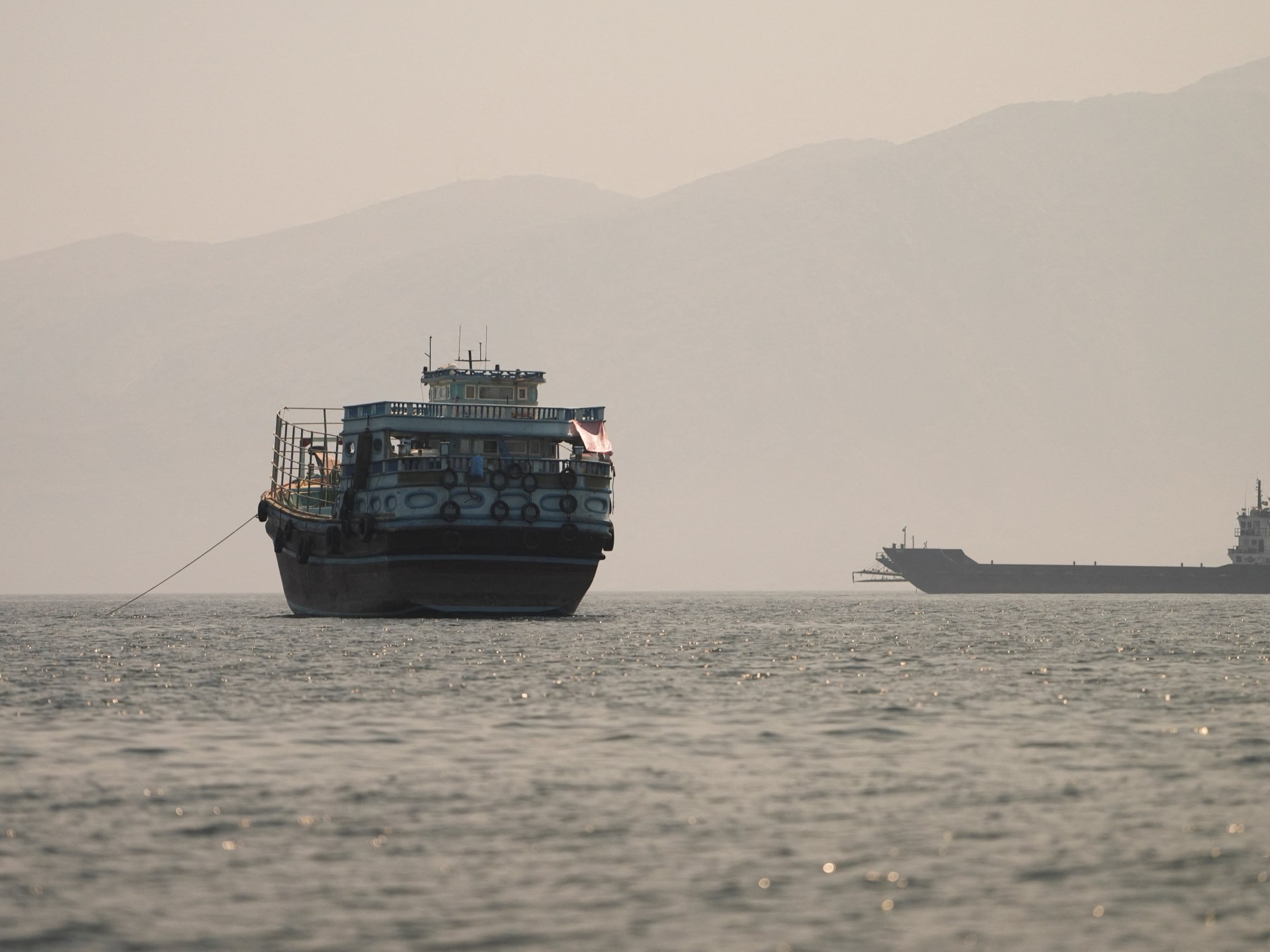
Oil tankers began edging out of the Persian Gulf through a U.N.-recommended route near Oman on Thursday, testing Iran’s warning that ships crossing the Strait of Hormuz without its authorization “will be dealt with.”
The Liberian-flagged Stoic Warrior sailed west along the coast of the United Arab Emirates, then moved close to Oman and around the Musandam Peninsula, avoiding Iranian waters. The British-flagged World Prize also appeared to be using the Omani route Thursday morning, according to an NBC News review of MarineTraffic data.
The crossings came as the United States and Iran remained at odds over how the vital waterway should operate under a temporary agreement that eased pressure on energy markets, shipping companies and thousands of sailors stranded in the region. The initial 60-day arrangement included reopening the strait, but left unresolved questions over traffic management, mine clearance and possible future charges.
Iran’s Revolutionary Guard Navy rejected the route laid out with the International Maritime Organization, the U.N. agency that oversees shipping at sea. It said vessels must use a route close to Iran’s coastline and described any other transit as “highly dangerous and prohibited.”
“A few hours ago, without prior notice or coordination with the Islamic Republic of Iran, certain authorities announced a new route for vessel traffic in the Strait of Hormuz,” the Revolutionary Guard Navy said. “The only authorised route for passage through the Strait of Hormuz is the route announced by the Islamic Republic of Iran,” it said in a separate statement reported by Al Jazeera.
The strait, a narrow passage between Iran and Oman, normally carries roughly 20 percent of the world’s crude oil and liquefied natural gas, according to Al Jazeera. At its narrowest point, it is about 30 kilometers, or 18 miles, wide.
Since 5 a.m. ET Thursday, about two dozen ships had taken the Omani route, though at least three ships exiting the Persian Gulf turned back, NBC News reported. Kpler, a marine tracking firm, said more than 70 ships had transited the waterway since Wednesday, still far below the more than 130 ships that passed through daily before the war. About 35 million barrels of oil have exited the region through the strait since the agreement was signed, Kpler said.
The slow flow has helped ease energy markets. Brent crude, the international benchmark, traded around $72 a barrel Thursday, down sharply from its April wartime peak of $126. Several airlines have also reduced fuel surcharges.
But ship owners remain cautious. “Most of what we’ve seen so far is inventories being shipped out, not much if any of fresh loadings in the Gulf, barring Iranians,” Halvor Ellefsen, a director at Fearnleys Shipbrokers, told NBC News. It will take weeks “before we see production coming back on track in earnest in the Gulf,” he said.
Lloyd’s List Intelligence said in a briefing that “tankers appear to be racing to exploit a 60-day window to move Middle East Gulf crude before the Hormuz reopening expires.”
The IMO said this week it had secured “necessary safety guarantees” for a plan to evacuate about 11,000 seafarers from the region. As of Thursday morning, U.N. shipping agency data showed about 57 ships carrying an estimated 1,100 seafarers had passed through the strait under the plan.
The dispute over control and fees remains sharp. Iran has been charging passage tolls for weeks along its preferred route, NBC News reported, while Tehran has described future charges as maritime service fees rather than tolls, according to Al Jazeera. Iran and Oman said Tuesday they would study the “costs” of services related to administration of the strait.
U.S. Secretary of State Marco Rubio, visiting Gulf countries, said in Bahrain that Washington would not accept any tolls or fees. “The reality of it is that no country on Earth has the right to charge for the use of international waterways,” Rubio said. “And that will never be an acceptable condition of any deal.”
A senior United Arab Emirates diplomat, Anwar Gargash, warned on X that “new geopolitical realities cannot be imposed on the Gulf Arab states as a result of treacherous aggression.” He added: “Imposing a fait accompli born of aggression does not establish stability, but rather sows the seeds of future discord and conflict. This is precisely what applies to the Strait of Hormuz.”






Be First to Comment